
If you have ever stood in front of a stained oven door, you will know the dilemma: everything shines on the outside, the Sunday roast is cooking inside, yet between the panes it looks like a chip shop after closing time. Hardly anyone dares tackle this difficult-to-reach area, often for fear of damaging something. Yet there is a surprisingly straightforward technique that many professionals use and that is easy to replicate at home.
Why dirt between oven door panes is so frustrating
The door of a modern oven usually consists of two or even three glass panes. The gap between them is needed for safety and heat insulation, but it becomes a problem area during cooking. Splashes from bakes, chicken or pizza rise with the hot steam, enter the door’s ventilation slots and eventually settle where an ordinary cloth cannot reach.
Many people diligently wipe the inside and outside, only to wonder about brown shadows, streaks and crumbs that appear to be trapped “inside the glass”. That is exactly where the grime is: between the panes, clearly visible but awkward to access.
Some ovens allow the door or individual glass panes to be removed fairly easily. The instructions are usually found in the user manual. In practice, however, two things often stand in the way: a lack of suitable tools and concern about damaging the delicate insulation or fixings. As a result, many leave it alone and feel frustrated every time they look at the door.
The gap inside an oven door is a typical “blind spot” in the home – visibly dirty, yet completely beyond the reach of normal cleaning.
The simple household remedy: a vinegar-and-water mixture for gleaming glass
Before trying the main technique, you need a cleaning solution that removes grease reliably without attacking the glass or seals. For many professional chefs and home-cleaning experts, a blend of water and clear household vinegar is the standard choice.
How to mix the cleaner correctly
- 1 empty spray bottle
- 1 part water, preferably lukewarm
- 1 part white household vinegar
- 1 microfibre cloth or another absorbent cloth
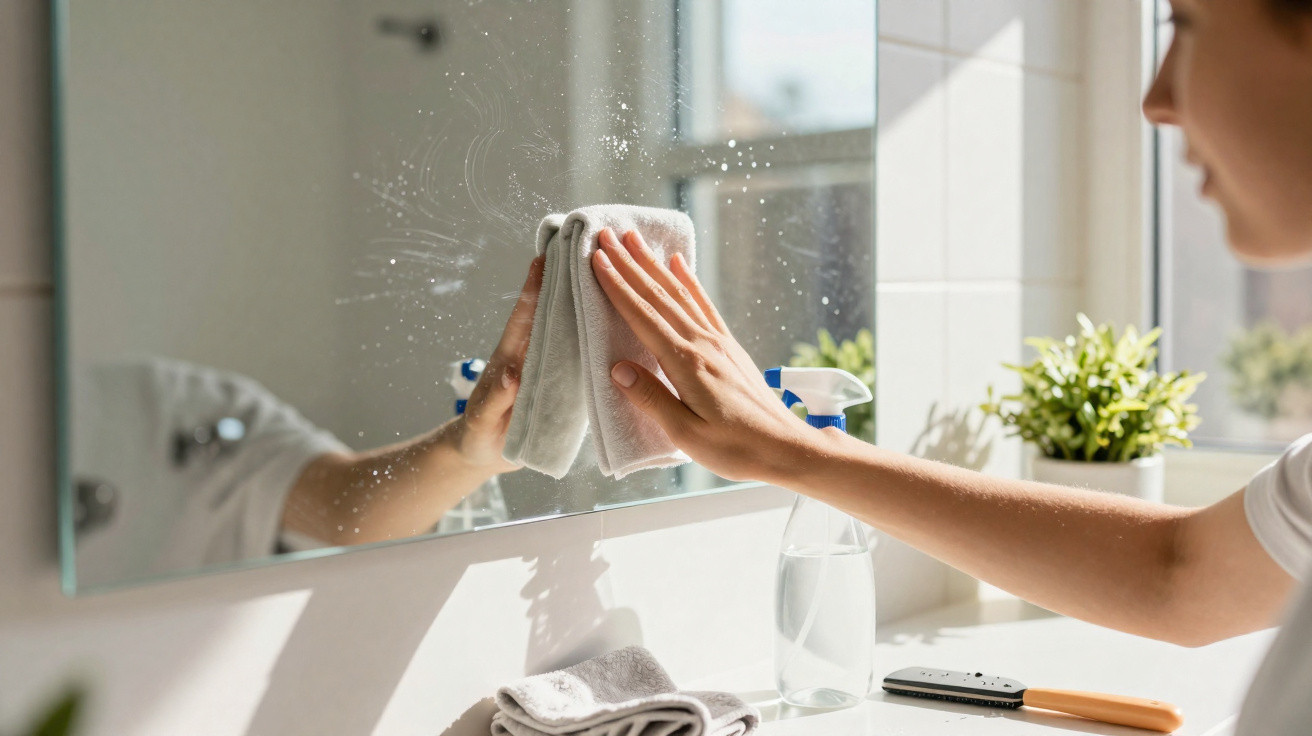
Pour the water and vinegar into the spray bottle, then shake it briefly. The vinegar loosens grease and dried-on splashes, while the water dilutes the mixture so that it is less irritating to materials and noses. Strongly fragranced cleaners are less suitable here, as their scents may become unpleasantly noticeable when the oven is heated later.
If, according to the manufacturer’s instructions, you can safely take the oven door apart, spray the vinegar solution directly onto both sides of the glass panes. Leave it to work briefly, then wipe it away with a damp cloth. Treat stubborn marks gently with the rough side of a non-scratch sponge.
Clever professional trick: reach between oven door panes without removing them
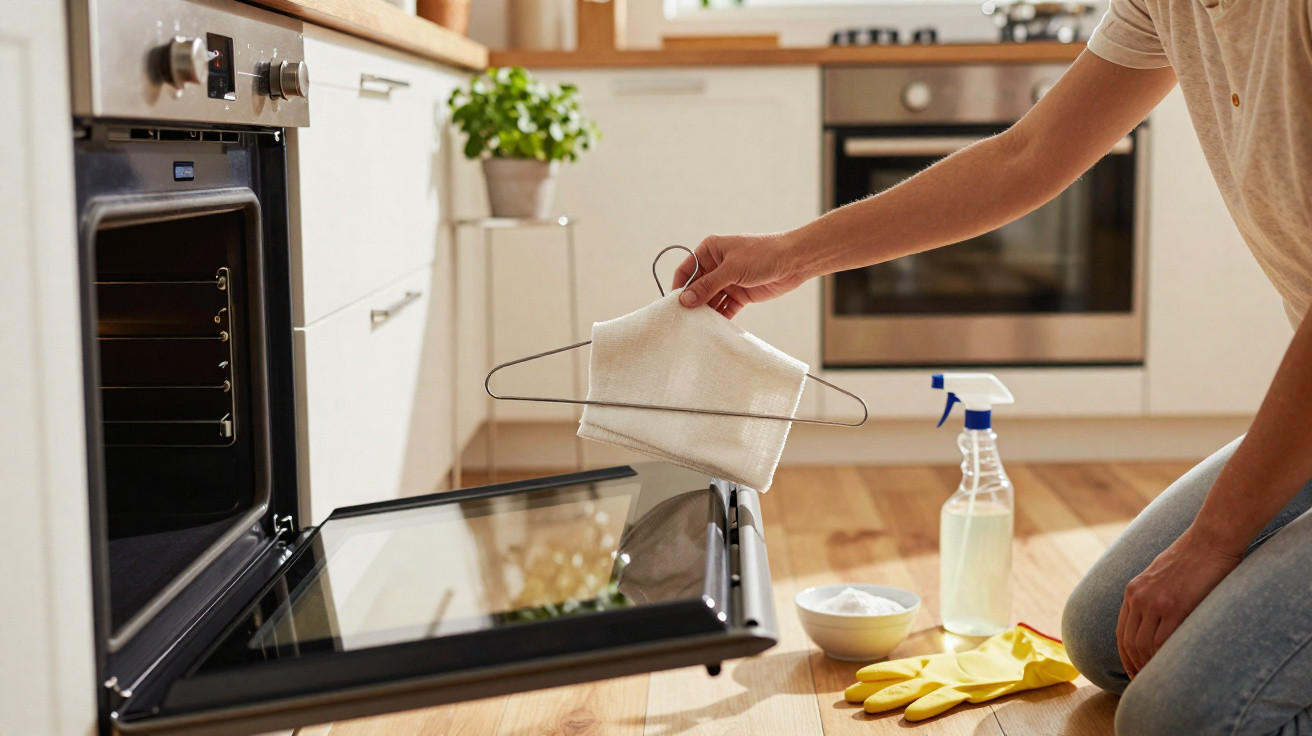
It becomes particularly useful with ovens whose glass panes cannot simply be removed. This is where an everyday item that almost everyone has hanging in a wardrobe comes in: an ordinary metal clothes hanger.
Step-by-step guide using a clothes hanger
Using a clothes hanger as an extension of your arm lets you reach even the furthest corner of the space between the panes, without undoing a single screw. Here is how:
- Pull out the storage drawer beneath the oven completely, if there is one, so that you have a clear view of the underside of the door.
- Locate the ventilation or service openings along the lower edge of the door. Air passes through these slots – and your cleaning tool can later enter the gap through them too.
- Straighten out a metal clothes hanger until it forms the longest, straightest rod possible.
- Wrap a microfibre cloth around one end and secure it firmly with a strong elastic band or adhesive tape. The cloth must not slip.
- Moisten the cloth end well with the vinegar-and-water solution, but do not soak it dripping wet, so that liquid cannot run into the oven’s interior.
- Carefully feed the rod through one of the openings at the bottom of the door, guiding it slowly between the panes.
- Wipe the internal glass surfaces using calm, even movements – first to remove the main dirt, then to “polish”.
- Wring out the cloth regularly, dampen it again and repeat the process until the panes look visibly clearer.
With a simple clothes hanger, the inaccessible gap between oven door panes suddenly becomes as reachable as the outer glass pane.
What to keep in mind when cleaning
Although this technique looks simple, there are several points to consider to prevent anything from going wrong:
- Allow the oven to cool completely: Never work on a warm or hot door. There is a risk of burns and of stress cracks in the glass.
- Avoid sharp edges: Always cover the metal end of the hanger thoroughly with cloth to prevent scratches on the glass.
- Keep an eye on moisture: Use the cloth only well dampened, never soaking wet, so liquid cannot enter the insulation or electronics.
- Work slowly: Do not force anything. If the opening is too small, stop rather than damage seals or fixings.
- Rinse and dry afterwards: Finally, secure a fresh cloth that is only lightly dampened to remove any vinegar residue, then wipe again using a dry cloth.
How often should oven door panes be cleaned?
The good news is that you do not need to carry out the major clothes-hanger clean every few weeks. Regular light wiping helps prevent dirt from settling between the panes in the first place.
A practical schedule for many households is:
- Outer and inner panes: briefly after every substantial roasting or baking session, once the first splashes are visible
- Gap between the panes with a clothes hanger: around two to four times a year, depending on how often the oven is used
Anyone who roasts, gratinates or cooks at high temperatures frequently will benefit from checking the oven door more often. The newer the stains, the more easily they can be removed.
Alternative cleaners – when they are useful
Vinegar is sufficient in many cases. Sometimes, however, the grime is so firmly stuck that a stronger mixture is required. The following options may then be suitable:
- Baking powder paste: Mix baking powder with a little water to make a paste, apply it to stubborn marks, leave it to work briefly and then remove it. Use it extremely sparingly in the gap between the panes to avoid residue.
- Specialist oven cleaner: Use this only for the inside of the cooking cavity and according to the manufacturer’s instructions. It is often too aggressive or too foamy for the gaps between panes.
- Neutral washing-up liquid solution: Mild, suitable for light dirt and gentle on materials – ideal for routine care.
Strong abrasive cleaners and wire wool are unsuitable for glass surfaces. They leave fine scratches in which dirt can settle even more quickly.
Frequently asked practical questions
Could the guarantee be voided?
Completely dismantling the oven door may risk voiding the guarantee on some models, particularly if damage occurs in the process. The clothes-hanger technique avoids taking the door apart and is considered a gentle method. Even so, it is worth checking the user manual to establish which parts must not be opened or interfered with.
Can vinegar be used on every oven?
Most manufacturers do not object to a mild vinegar-and-water mixture, provided it does not run into gaps or electronics. If you are unsure, or own a particularly high-end designer oven, choose an even milder solution with a little washing-up liquid instead and first test the vinegar on an inconspicuous area of the outer pane.
Why a clean oven offers more than better appearance
A clear oven door does not merely look well cared for. When you can see inside easily while baking and roasting, you open the door less often. This saves energy because less heat escapes. At the same time, food often turns out better because the temperature inside the cooking cavity remains more stable.
There is another consideration: residue from grease and food can produce unpleasant odours at high temperatures and may even partly transfer to other dishes. Clean panes and a well-maintained interior therefore provide a more neutral taste – especially important when the same oven is used for fish one day and cake the next.
Once you have tried the straightforward clothes-hanger and vinegar-mixture technique, you will usually view the oven door differently. The supposedly “lost” gap becomes a surface that can be maintained just as effectively as the hob with a little care. That is often what makes the difference in everyday life: small techniques that make housework noticeably easier rather than more complicated.


Comments
No comments yet. Be the first to comment!
Leave a Comment