
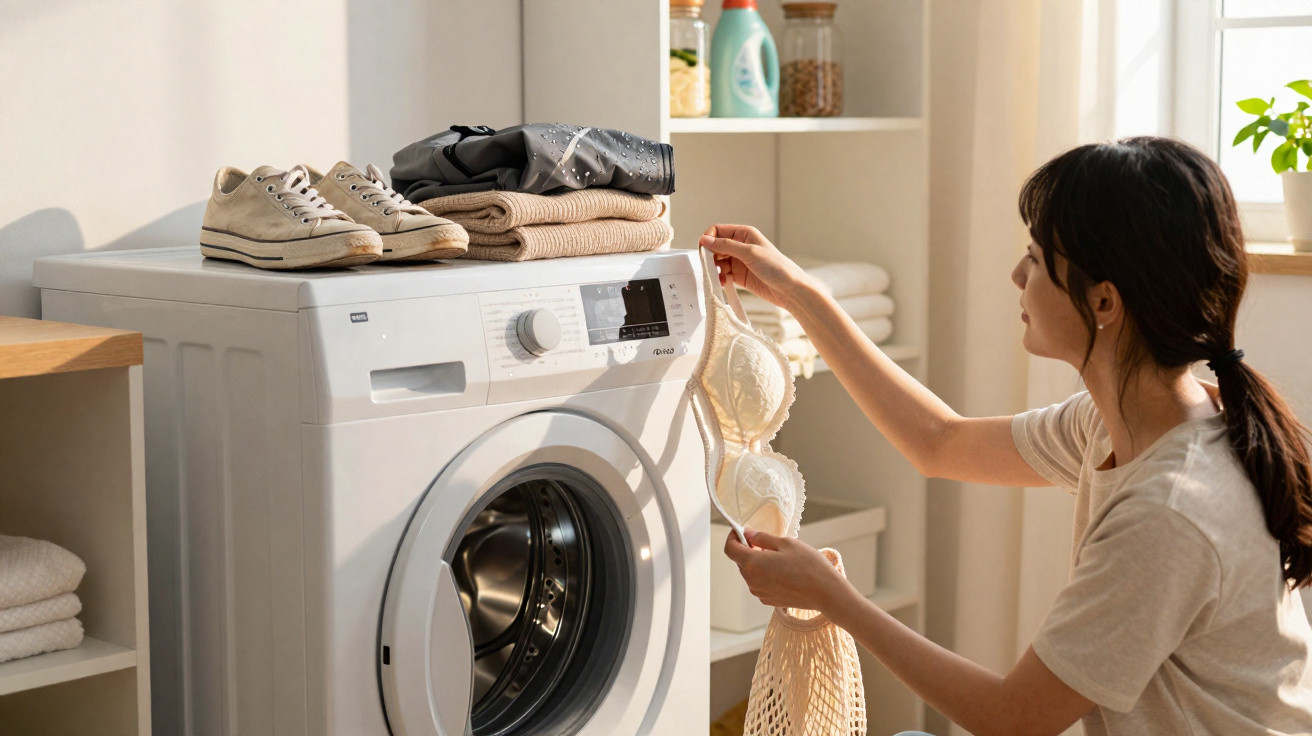
A quick wash between appointments, press the button and move on – that is how laundry works in most homes. Until the machine suddenly vibrates, bangs loudly or a favourite jumper comes out almost unrecognisable. These mishaps are rarely caused by a faulty appliance; more often, certain delicate textiles have been handled incorrectly and simply cannot cope with life inside the drum.
Why some items push a washing machine to its limits
A washing machine drum may seem robust, but it is not a safe. It rotates, speeds up and slows down – while anything hard, heavy or unbalanced repeatedly crashes against it. The forces acting on the bearings, suspension and drum become especially intense during the spin cycle.
The garments themselves can suffer too: delicate fabrics snag, fibres are overstretched and shapes lose their structure. The same troublemakers appear in many households: metal components in underwear, heavy shoe soles, sensitive wool fibres and fabrics that trap water like a sponge.
“Anyone who washes everything ‘as usual’ risks ending up with a vibrating machine, damaged bearings and clothes that age faster than they need to.”
Three warning signs indicate that the washing machine is overloaded:
- unusually loud knocking or rumbling
- a spin cycle that repeatedly stops or seems to be ‘searching’
- clothes emerging from the drum noticeably misshapen, stretched out or snagged
When this happens, extra detergent or a more intensive programme is not the answer. What is needed is clearer separation: which items can the washing machine genuinely handle, and which require special care?
Problem 1: Bras – small metal parts, major drum damage
Bras may appear harmless, but they can cause a surprising amount of trouble inside a washing machine. Their hooks catch on other garments, pull threads and tear delicate lace. The underwires are even more problematic: movement can bend them, force them through the fabric and leave them loose in the drum like small metal pins.
They can then scrape the inside of the drum, leave scratches and strike the metal like tiny hammers at high spin speeds. In the worst case, they pass through the drum holes into the outer tub, where they may obstruct the pump or heating element.
“Just one bent bra underwire can make the bra unusable and cause costly damage to the washing machine.”
How to protect bras and the drum
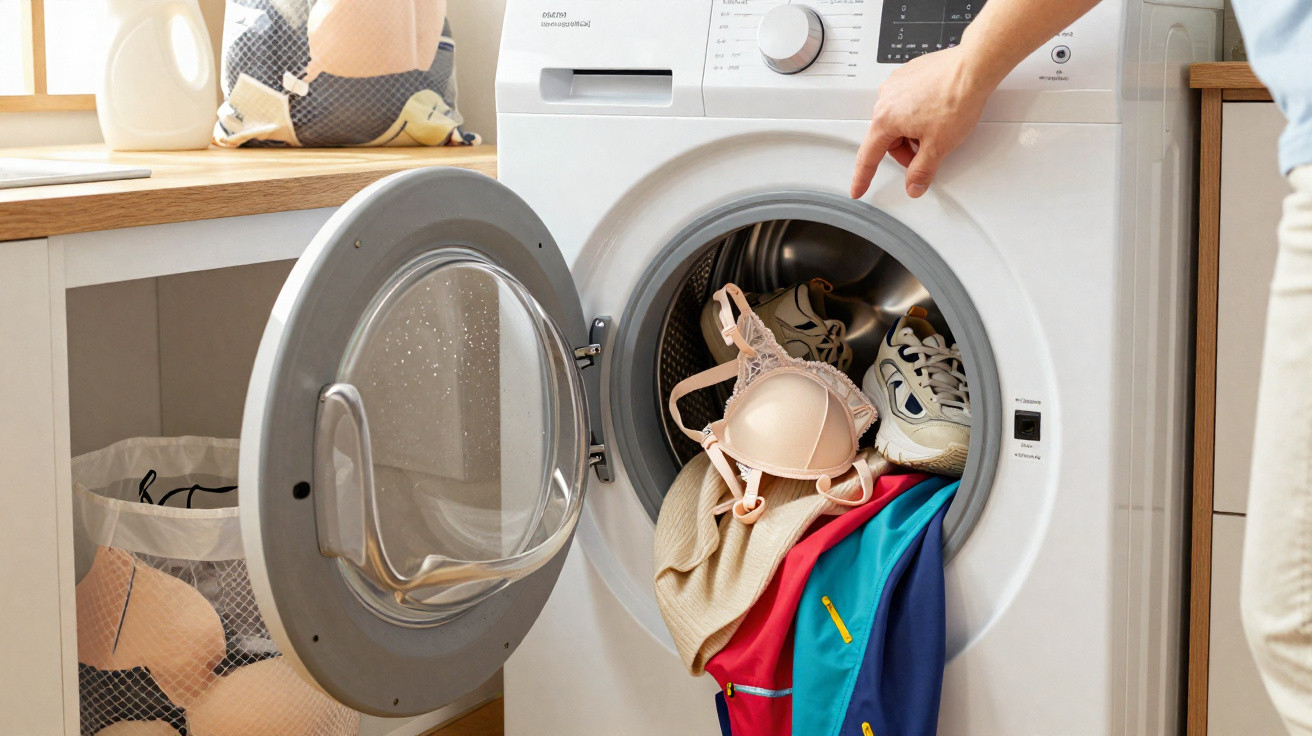
- Always put bras in a laundry bag
- Fasten the hooks so that they cannot catch on anything
- Select a delicate programme with a low spin speed
- Do not put them in the tumble dryer; dry them flat instead
Anyone with particularly expensive lingerie can go one step further and hand-wash it in lukewarm water. It takes a few extra minutes, but can significantly extend the lifespan of each item.
Problem 2: Shoes – when the washing machine becomes a shaker plate
Trainers and canvas shoes are increasingly put in the washing machine for convenience. It may be practical, but their heavy soles become rolling battering rams inside the drum. They hit the drum and door glass, cause the machine to move around and create severe imbalance.
For the appliance, this means faster wear on the bearings, strain on the suspension, and electronics that constantly detect imbalance and cancel spin cycles. The outcome is not much better for the shoes: glued components can come apart, cushioning elements may distort, and leather or faux leather is more likely to crack.
How to clean shoes safely
- Only wash shoes in a sturdy laundry bag or a dedicated washing box
- Add 1–2 large towels to cushion the impacts
- Set a low temperature and reduced spin speed
- Wash insoles and laces separately
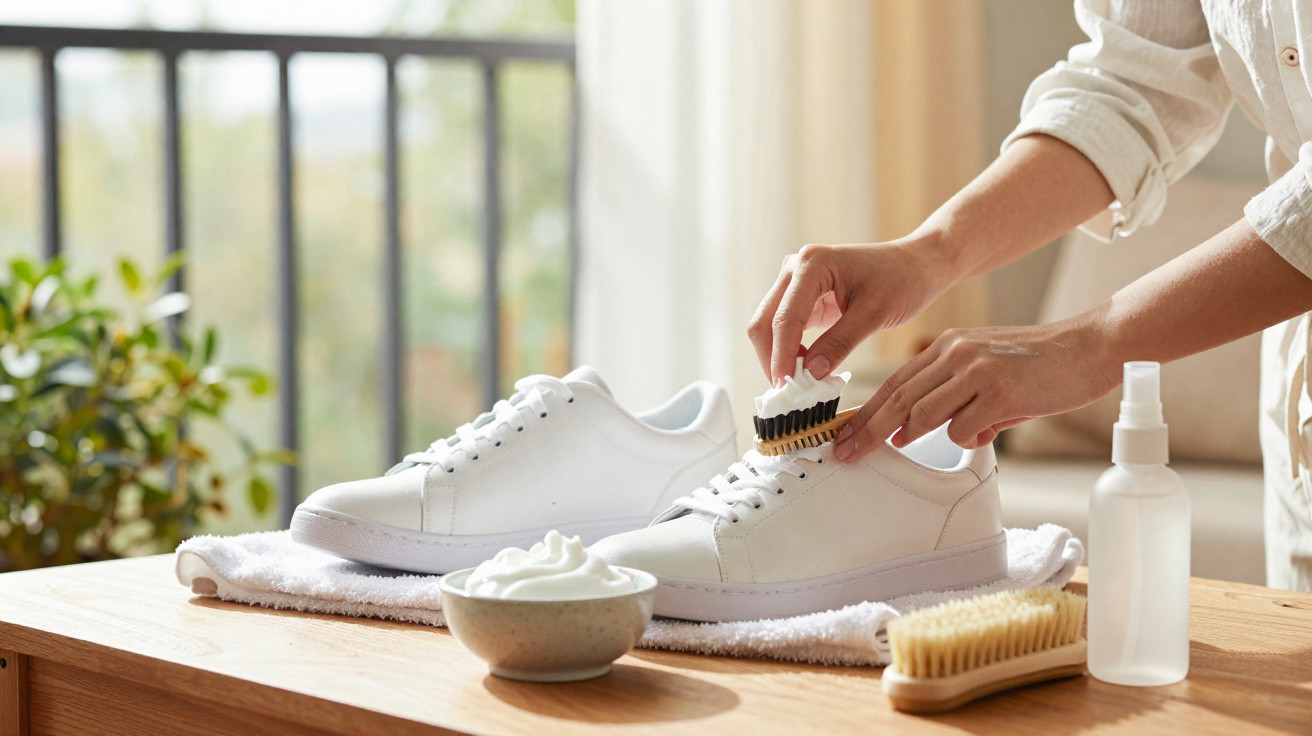
Hand-cleaning offers even more control: loosen dirt with a brush, use lukewarm water with a little mild detergent, then leave the shoes to air-dry – never on a radiator, as this can distort adhesives and materials.
Problem 3: Wool – a normal programme turns a favourite jumper child-sized
Wool plays by its own rules. Heat and vigorous movement make its fibres interlock, causing the fabric to felt and shrink. One ordinary cotton cycle can turn a perfectly fitting jumper into a stiff item that is far too small.
Wool fibres are naturally elastic, but they lose that quality when squeezed, twisted or spun too aggressively. Afterwards, the garment can look ‘tired’, hang unevenly and feel itchier.
“Wool is not merely delicate; it takes it personally when it is treated like a T-shirt.”
The right care for wool garments
- Always choose cold water or water that is no warmer than hand-warm
- Use a wool or delicate-wash programme
- Use a specialist wool detergent, never a standard heavy-duty detergent
- Spin only lightly, preferably at low speeds
- Never wring it out; press it in a towel and dry it flat
If in doubt, take the care label seriously. Terms such as “hand wash” are not decorative; they are clear warnings. A gentle wool cycle can sometimes still work, but it always involves a small risk.
Problem 4: Waterproof textiles – hidden weights in the spinning drum
Membrane jackets, waterproof trousers and outdoor cover-ups share a tricky characteristic: they do not let water pass through, but they can hold it in folds and compartments. Their weight rises rapidly during washing, and in the spin cycle this water load often slips to one side.
The result is a badly unbalanced drum: the machine ‘jumps’, spin cycles are interrupted and the mechanics face unusually heavy strain. The fabric can also suffer if treated with unsuitable products, such as fabric softener, which damages its protective layer.
How to wash waterproof fabrics correctly
- Wash only a few items at a time
- Choose a gentle spin cycle that increases gradually
- Do not use fabric softener
- Use a specialist reproofing product when needed
- Air-dry, or briefly reactivate in the tumble dryer according to the manufacturer’s instructions
If the washing machine becomes unusually noisy or moves excessively during spinning, stop the cycle, rearrange the items and reduce the load. This keeps the strain on the appliance within a safe range.
A quick everyday reference guide
| Textile | Main risk | Recommended solution |
|---|---|---|
| Bras | bent underwires, scratches in the drum | laundry bag, fasten hooks, gentle programme |
| Shoes | heavy impacts, imbalance, loss of shape | protective bag, towels for cushioning, low temperature |
| Wool | felting, shrinkage, loss of elasticity | wash cold, wool programme, dry flat |
| waterproof fabrics | trapped water, drum imbalance | small load, gentle spin, no fabric softener |
Why the extra effort makes financial sense
A replacement washing machine can easily cost several hundred pounds, while a technician’s repair bill often runs to three figures. In comparison, a few simple aids are inexpensive: a laundry bag, shoe bag and specialist detergents for wool and technical clothing. These usually cost single-digit or low double-digit amounts and can save money over time.
There is an emotional cost as well: a shrunken wool coat that no longer fits, or trainers made unwearable by the wrong wash cycle, can rarely be replaced like for like. Sorting items carefully and selecting suitable programmes can substantially extend the life of every garment.
Practical routines that make everyday laundry easier
A small laundry station at home can help: keep a basket for delicate items, with laundry bags inside and a separate compartment for wool and technical clothing. This prevents those items from ending up in an ordinary wash in the first place. Many people also place a short list on the washing machine showing the programmes suited to particular textiles, including the maximum spin speed.
A quick check before starting for bras, wool jumpers, shoes or waterproof jackets protects both the washing machine and the wardrobe. The key question before every cycle is: when wet, does this garment behave like an ordinary T-shirt – or does it contain weight, metal, special fibres or trapped liquid that deserves special treatment?

Comments
No comments yet. Be the first to comment!
Leave a Comment