
The first time I realised my towels had become instruments of punishment was on a hurried Tuesday morning, with water dripping from my hair onto the bathroom floor.
I grabbed a clean towel expecting a soft embrace, only to find something more like very fine sandpaper. The detergent, fabric softener and washing machine were all the same. Still, everything had become rigid, rough and slightly… worn out. It felt as though my laundry had simply stopped trying to be comfortable.
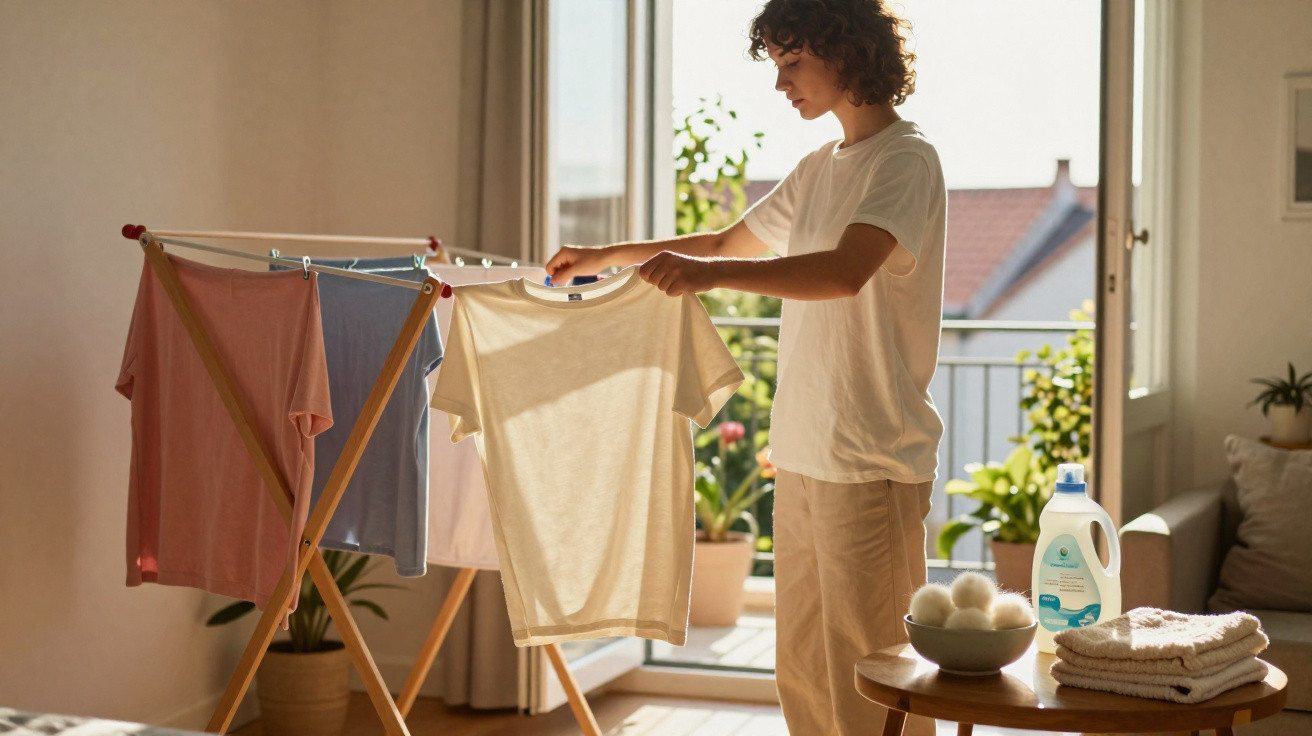
At first, I blamed the washing powder, then the water, then the towel brand. One drowsy weekend, though, I watched washing drip slowly from an airer beside the window and understood that the difference was not what I used to wash it, but how it dried. That was when I unexpectedly picked a side in a debate I had never imagined caring about: tumble dryer versus air drying, and why one can leave clothes harsh while the other makes them feel cloud-soft. Suddenly, the ordinary job of “doing the washing” had a hidden lesson to reveal.
The overlooked reason clothes become stiff
There is one unexciting factor that most of us ignore when pulling washing from the machine: hard water. In hard-water areas, which cover large parts of the UK, each wash can leave minute mineral deposits behind in fabric. They are invisible, yet you notice them in the cardboard-like rigidity of towels and jeans, particularly when they dry too quickly or at excessive heat. The fibres have no opportunity to loosen, so they dry in that state.
Heat is another culprit. A tumble dryer on its hottest setting certainly delivers on speed, but intense heat can be unexpectedly tough on cotton fibres. They contract a little, bunch together and hold mineral residue between them. When you fold jeans fresh from the dryer, you can almost hear that soft, paper-like crackle. Over time, all that friction transforms once-gentle fabric into material that feels exhausted, despite being perfectly clean.
It is easy to blame detergent or assume extra softener will solve the issue. Honestly, hardly anyone studies the label every single time. We pour in “a bit more”, hoping a capful will deliver softness. Yet softener can also accumulate, covering fibres with a thin, glue-like coating. Then we put everything through a hot drying cycle and question why our T-shirts feel as if they have endured basic training.
Tumble dryer and air drying: the benefit of taking it slowly
My own turning point arrived during a damp spring, when my ageing tumble dryer finally stopped working. For a while, all the washing had to dry on a clothes horse in the spare room, with the windows slightly open and the radiator gently ticking along. I expected nothing remarkable; it was simply the available option. But after a few weeks, I noticed that my T-shirts felt… changed. They were softer, more relaxed, almost as if they had enjoyed a peaceful spa day rather than military camp.
Allowing laundry to dry gradually on an airer or washing line gives the fibres time to open up again. As garments hang, gravity lightly draws them back into shape. Without aggressive heat forcing them into close, rigid arrangements, the fibres dry as they were made: with a little natural flexibility. That creates the familiar softness you feel when taking an item from a line after it has moved gently in the breeze.
Mechanical wear is reduced too. Inside a tumble dryer, garments repeatedly collide with the drum and one another. That ongoing tumbling and twisting roughens the fabric surface. On a rack or line, very little occurs: clothes simply hang, drip and dry quietly. It may take longer, but that unhurried process is exactly what helps them remain pleasant against your skin rather than feeling like armour.
The useful half-and-half method
Here is what no one tends to mention in the laundry aisle: a middle option works remarkably well. Begin by drying laundry on an airer or washing line until it is nearly dry, with only the slightest trace of dampness remaining, then use a short tumble on a low setting. Ten to fifteen minutes is enough. That brief combination of movement and warm air can fluff the fibres without overheating them.
This two-stage routine can seem indulgent, but it becomes logical once you notice the results. Slow air drying does most of the work by leaving fibres relaxed. The quick tumble then raises the fabric and loosens any stiffness before it can settle in. Towels in particular can emerge softer this way than they would after an entire hot cycle. It is similar to the difference between hair dried in the sun until it becomes straw-like, and hair allowed to air dry before being finished with a gentle blast from a cool dryer.
Why line-dried laundry need not be “crispy”
If you were raised with washing fluttering outdoors, you may remember the slightly crisp, cardboard texture of line-dried towels. They smelled wonderfully fresh, but they were not especially snuggly. The key point is that line drying itself is not what causes stiffness; it is the length of time items remain there and what happens afterwards. When washing sits in direct sunshine until completely dry, the fibres set into a flat, inflexible form.
One simple practice makes a real difference: remove items when they have only just dried, rather than leaving them outside for hours. Catching that “barely dry” stage helps fabric retain its natural suppleness. This is especially important for heavier pieces such as jeans and towels, which are quickest to become plank-like. Bring them in while they still feel cool in your hands, and complete the drying indoors if necessary. A little restraint stops softness disappearing with the final moisture.
The modest shake with impressive results
There is a small, traditional habit that previous generations often performed without thinking: shaking the laundry. Watch a person who has always line-dried their clothes and you will spot it. They take a T-shirt from the line, give it a firm snap and then fold it. That motion releases stiffness and separates fibres that have dried too closely together.
Use the same approach for towels. Once you have taken them down, grip two corners and give them two or three decisive shakes. You will often notice the material soften beneath your hands almost at once. It is not magic; it is simply physics. The fibres receive a brief massage before storage rather than being folded in their rigid, clinging state. The result feels less like a budget hotel towel and more like an “actually looking forward to my shower” towel.
The indoor airer that makes a quiet difference
Not everyone has a garden or balcony, and the British weather is rarely predictable, so much of the soft-laundry effect now happens inside. A basic folding airer by a window, or beneath a ceiling airer, can alter the feel of your washing without making it obvious why. Air circulates just enough, slowly and gently, preventing garments from drying into flat, brittle forms. It is the complete opposite of a blast furnace: calm, patient and unremarkable.
There is a compromise, naturally. Clothes need more time, and you must arrange your home around them. An airer in the sitting room is hardly ideal Instagram décor. Yet there is something oddly reassuring about seeing a favourite jumper hanging there as it gradually returns to life. The room takes on a faint laundry scent, a soapy warmth suggesting that everyday jobs are being completed. On chilly evenings, moisture from drying clothes mingles with the radiator’s hiss and the gentle movement of hangers.
Softness without a chemical cloud
The more you adopt slower drying, the less likely you are to depend on large amounts of fabric softener. A solid spin cycle, mild detergent and patient drying naturally provide much of the softness. A small amount of softener-or none at all for towels, if you want them to remain properly absorbent-can then be sufficient. Fabrics begin to feel like themselves again rather than as though they have been soaked in fragrance.
There is also satisfaction in moving away from the belief that every issue requires a “product”. Often, time and air are all that is needed. Leave jeans to hang overnight instead of forcing them into a fiercely hot dryer. Lay jumpers flat on a rack so their fibres do not stretch and break. These small, unglamorous choices can add up to clothing that remains comforting after one year, two years or five years.
The emotional value of soft laundry
Most of us know the feeling of putting on a favourite hoodie straight after washing it and sensing mild disappointment. It is clean, technically, but the lining has become coarse, the sleeves feel a little narrow and the whole garment seems somehow wrong. You no longer feel entirely at ease in it. Repeated hot drying does exactly that: gradually taking away the comfort of clothes that once felt like a second skin.
Soft laundry is not merely about how it feels; it affects your mood too. There is a small personal luxury in wearing a T-shirt that is gentle rather than scratchy, or wrapping a baby in a blanket that feels soft instead of strangely crisp. Our skin remembers these textures, even when our minds have already moved to the next job on the list. On days that seem hurried and sharp, softness can become a quiet kind of emotional armour.
Once you view drying as part of garment care rather than an afterthought, washing feels less like a blunt household task. It turns into a collection of small decisions that benefit your future self: hanging items properly, leaving space between them and checking them before they become overdone. You begin to recognise the difference between the hoodie hurried through the dryer and the one allowed to dry beside the window. Only one feels like a hug.
A straightforward routine for softer clothes that last
The approach that consistently works is almost deliberately simple: a good spin, a gentle wash, slow air drying and a brief fluff. Choose a reasonable spin speed so garments are not dripping wet, but avoid one so fast that delicate fibres are strained. Hang pieces with room between them rather than layering them into a thick curtain. Return once or twice to turn heavier garments, such as jeans or hoodies, so they dry evenly.
When items are almost ready-not wet, but slightly cool and not fully crisp-decide what they need next. Some can be folded immediately after a quick shake to restore softness. Others, including towels and bed sheets, benefit from a brief low tumble. Those 10–15 minutes are often enough to take them from “fine” to “oh, that’s nice”. There is no need for boiling heat, baking or marathon drying cycles.
An added benefit is that clothes last longer. Less heat and harsh treatment lead to fewer tiny fibre breaks, fewer bobbles and fewer sad, misshapen jumpers. Your wardrobe no longer feels like a conveyor belt of garments that looked brilliant for three washes before becoming sulky. Whenever you pull on a T-shirt and find it soft rather than stiff, you are reminded of a modest everyday truth: the gentlest approach can quietly prove to be the best one.
So, when you next feel tempted to put everything on “extra dry” and forget it, stop briefly. Think of the airer in the corner, the washing line moving slowly in the breeze and the almost-dry towel waiting for its short, softening tumble. Laundry will never be glamorous, but with a little patience it can be far kinder to your clothes-and to you.


Comments
No comments yet. Be the first to comment!
Leave a Comment