
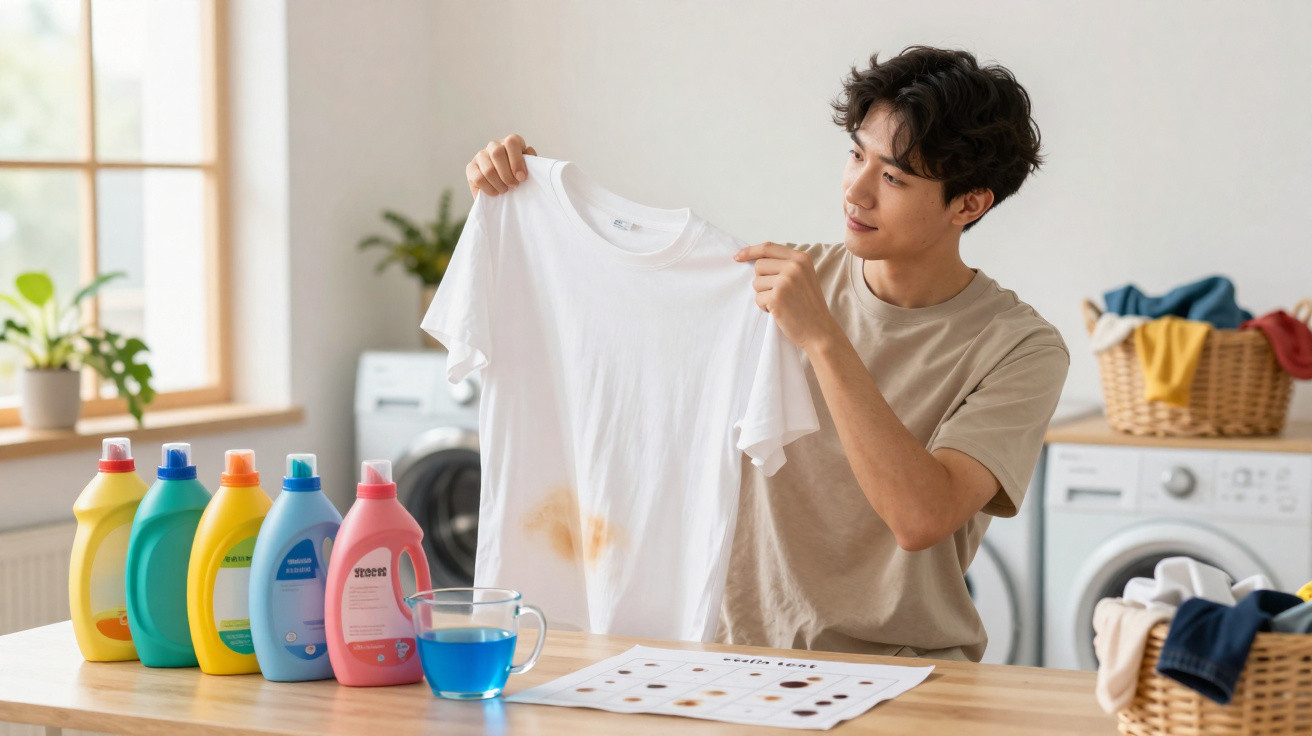
Many households automatically reach for a bottle of liquid detergent, only to be frustrated by greying or stubborn stains afterwards. A recent practical test from France put eight widely available liquid detergents through their paces. The key question was simple: which one genuinely removes everyday dirt without needing extra scrubbing at the sink?
How the large liquid detergent test was carried out
Eight common supermarket liquid detergents were assessed. The aim was to reflect everyday washing conditions as closely as possible. Rather than relying on laboratory conditions, the test focused on the kinds of marks that commonly end up on tablecloths, T-shirts and children’s clothes.
- 11 typical problem stains applied to identical fabrics
- A machine wash run according to each manufacturer’s instructions
- No careful soaking or pre-wash brushing
The fabrics were marked with, among other things:
- Liquid foundation and lipstick
- Ballpoint pen ink
- Fruit, including berries
- Chocolate dessert and coffee
- Red wine and oil
- Meat sauce and tomato purée
- Soil stains
The assessors then judged how clean the fabric appeared, whether traces of stains remained and how bright the white shades looked. Annual cost was also included, calculated for a typical family household that does frequent loads of washing.
Ariel Original comes out on top
In the head-to-head comparison, Ariel Original took first place. The liquid detergent removed most of the 11 test stains, including particularly difficult ones such as tomato, meat sauce and berries.
Ariel Original is considered the test’s most powerful stain remover and also delivers exceptionally bright whites.
Testers praised the noticeably whiter appearance of the fabric after washing, even without extensive pre-treatment. That is a strong advantage for heavily soiled white towels, bedding or tea towels.
However, the overall winner does have two notable drawbacks:
- Price: At around €63.27 per year for the model household, Ariel Original was the most expensive product in the comparison.
- Colour care: With very frequent use, coloured textiles may gradually appear duller.
Anyone who mainly washes white items and regularly deals with ingrained stains will get very good results from Ariel Original. For wardrobes full of favourite colourful garments, it is better used more selectively, such as for particularly dirty loads.
Carrefour Expert and Epsil: strong results at a lower price
Carrefour Expert Optimal Clean: dependable cleaning for frequent washing
Carrefour Expert Optimal Clean claimed second place. According to the test, this detergent produced a very clean overall result and handled most everyday marks well.
A small residue occasionally remained on more challenging stains, such as lipstick or ballpoint pen. Even so, its performance will be sufficient for many households, particularly when washing sweaty sportswear, everyday T-shirts or bedding without extreme staining.
Anyone who runs the washing machine every other day benefits greatly from this own-brand product’s value for money.
Its costs were considerably lower than those of the top-ranked product: at approximately €22.37 in annual costs, Carrefour Expert sat towards the cheaper end of the test group. This is a clear benefit for families with several children or shared homes where washing is constantly being done.
Epsil Perfect Fraîcheur: affordable with brief pre-treatment
Epsil Perfect Fraîcheur ranked third. This detergent performed particularly well when users briefly applied a little liquid detergent directly to stains and gently worked it in before the wash cycle.
With this small additional step, Epsil achieved a very good balance between effectiveness and cost. The estimated annual spend is around €21.38, making it slightly cheaper than Carrefour Expert.
Those prepared to quickly dab visible marks before washing get a budget-conscious product with respectable cleaning performance and a fragrance described as pleasant.
Which liquid detergent suits each household?
Rather than recommending one universal “miracle product”, the testers categorised the detergents according to different priorities. Three questions are especially useful before choosing a product from the shelf:
- How often does heavily soiled white laundry go into the machine?
- How important is keeping the annual detergent budget under control?
- Am I willing to pre-treat individual stains briefly?
| Priority | Recommended product | Key feature |
|---|---|---|
| Maximum stain removal on whites | Ariel Original | Very powerful performance, high price |
| Good cleaning on a limited budget | Carrefour Expert Optimal Clean | Affordable, dependable stain removal |
| Savings with pre-treatment | Epsil Perfect Fraîcheur | Excellent value for money with brief pre-treatment |
What shoppers should consider besides cleaning power
Stain-removal performance is only one part of the decision. Liquid detergents also differ in their formulations. Some products contain preservatives that can irritate sensitive skin.
The testers particularly highlighted:
- Isothiazolinones: preservatives that can trigger allergies even in small quantities.
- Phenoxyethanol: another preservative with allergenic potential.
These substances are more commonly found in liquid products because their water content needs preserving. Washing powders and capsules often do not require these additives. Many consumer tests therefore give powder a slight advantage for skin compatibility.
Liquid detergents are popular, easy to dose and often smell more pleasant – but anyone with problematic skin should check the small print.
Why washing powder often performs better on stains
One interesting point is that traditional powders achieve slightly better stain-removal results on average than liquid detergents in many comparison tests. Although the current comparison looked only at liquid versions, it again points to this trend.
One reason is the formulation: powders often contain more bleaching agents and enzymes. This particularly benefits white and very light-coloured fabrics. Liquid products, by contrast, score for ease of use, lower washing-temperature requirements and a fragrance often seen as more modern.
For households with lots of coloured garments, a combination can make sense: powder for light towels and bedding, and liquid detergent for colourful everyday clothes and delicate items.
Practical tips: getting laundry truly clean with liquid detergent
Whichever product is chosen, washing habits often have a major influence on the result. A few straightforward routines can quickly improve performance:
- Do not allow stains to dry in; wash garments as soon as possible.
- Adjust the dose to water hardness and the level of soiling rather than relying on guesswork.
- Wash heavily soiled items separately from lightly worn everyday laundry.
- Apply liquid detergent to very noticeable stains briefly and leave it to work.
- Clean the washing machine regularly to prevent greying.
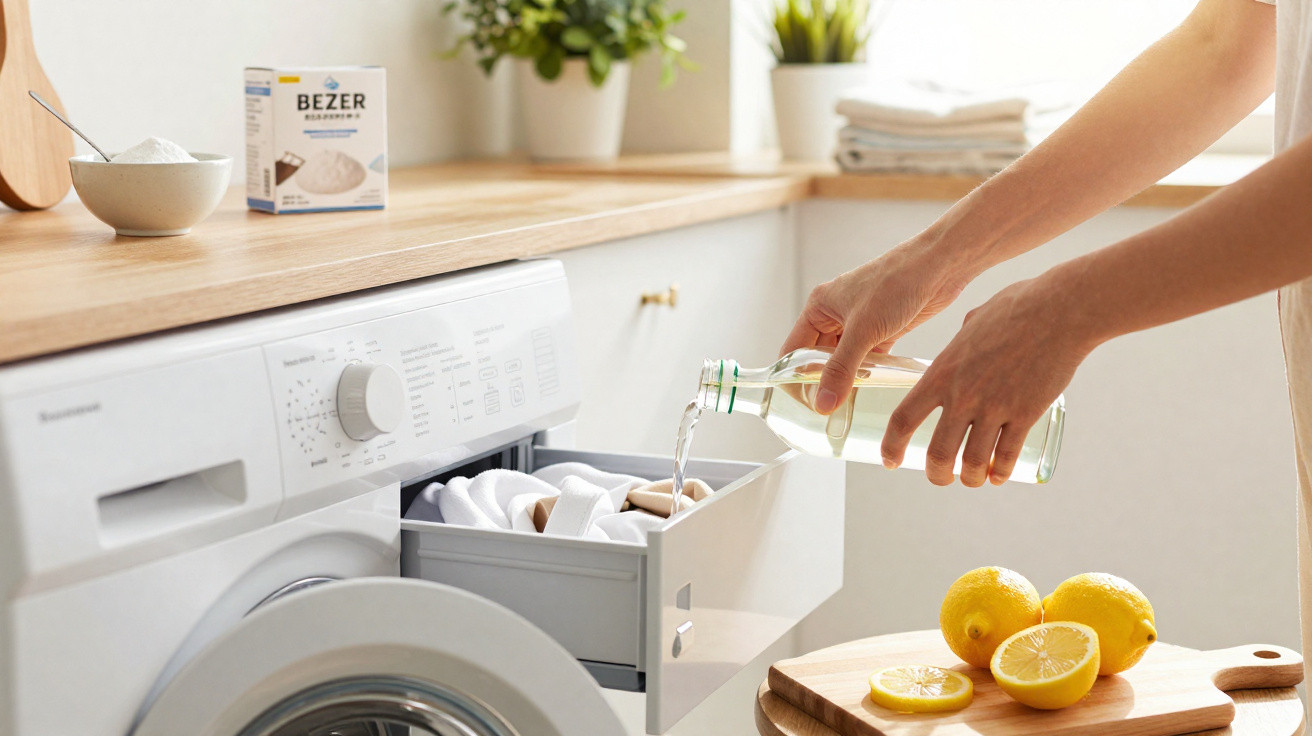
The final point in particular is often overlooked in daily life: deposits inside the appliance can affect washing results over time and may also intensify odours. An empty 60°C or 90°C wash with washing-machine cleaner or powder detergent helps to remove build-up.
A guide for the shopping basket
Anyone faced with special offers, fragrance options and marketing claims in the detergent aisle can follow a simple rule of thumb: for stubborn stains on whites, it can be worth paying more for detergent, as Ariel Original demonstrates. For busy family households where the machine is constantly in use, lower-priced brands such as Carrefour Expert or Epsil offer convincing basic performance – especially when individual stains are given a few seconds of attention before the wash.
Checking the ingredients, understanding the correct dosage and deciding which laundry really needs to be “clinically clean” can ultimately save not only money, but also frustration when looking into the drum.



Comments
No comments yet. Be the first to comment!
Leave a Comment