
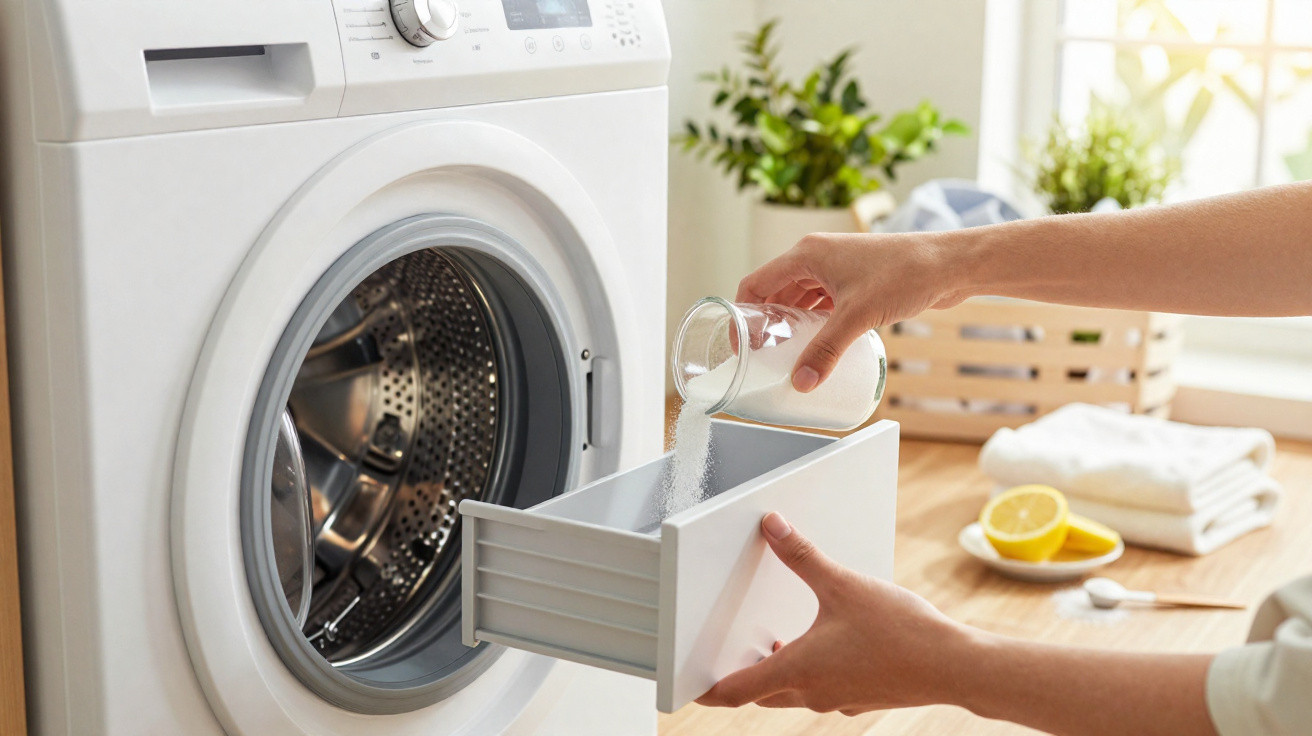
Citric acid can help shift mineral build-up, soap scum and some of the grime that collects inside a washing machine - the kind of residue that often leads to unpleasant-smelling laundry. The drum, detergent drawer and the rubber door seal stay damp after a cycle and, without regular cleaning, they can develop a film of deposits where micro-organisms can thrive.
Why does a washing machine start to leave a musty smell?
A musty odour usually does not come from one single wash. Traces of detergent and fabric conditioner, body oils, lint and moisture can linger in poorly ventilated areas and gradually form stuck-on deposits. Front-loading machines need extra attention around the door seal, because the folds in the rubber can hold onto water for a long time after the programme ends.
- Using too much detergent or fabric conditioner, which then isn’t fully rinsed away
- Water sitting in the folds of the rubber door seal
- A detergent drawer that stays damp most of the time
- Frequent washes at low temperatures
- Closing the door straight after use
How does citric acid work on drum residue?
Citric acid is particularly effective against mineral deposits left by hard water and against limescale that combines with residues from washing products. Because it is acidic, it helps loosen this material from internal surfaces, making it easier to flush out during an empty cleaning cycle.
That said, it should not be treated as a single product that will remove every type of biofilm or contamination on its own. If you can see stains, sludge, or there is a persistent smell on the door seal and in the drawer, those parts still need hands-on cleaning. An internal cleaning cycle works best when it is paired with manual removal of built-up dirt.
How to clean it without putting clothes in
For this procedure, the machine needs to be empty, and the amount of product used should follow the washing machine manufacturer’s guidance. Different models use different rubbers, metals and coatings, so it is not advisable to turn a strong “homemade” mixture into a universal rule for every washer.
- Remove all laundry from the drum
- Wipe away lint and any visible dirt from the door seal
- Wash the detergent drawer separately
- Use the drum-clean programme, if your machine has one
- When finished, leave the door and the drawer open until the inside is dry
Can bleach and citric acid be used together?
No. Citric acid and bleach should never be mixed. Hypochlorite-based products can release irritating, dangerous gases when they come into contact with acidic substances. If the machine has run a bleach cycle, the system must be thoroughly rinsed before any acidic product is used.
It is also not accurate to say that bleach always damages the machine’s rubber seal. Some manufacturers allow bleach in specific concentrations and programmes, while others recommend dedicated drum-cleaning products instead. Problems are more likely with excessive use, overly strong solutions, or use outside the instructions, which can attack components and shorten their service life.
What stops the smell coming back after cleaning?
Citric acid can remove some existing build-up, but preventing odours depends on controlling moisture and residue after each wash. Measuring detergent and fabric conditioner properly reduces how much product is left behind in the drum, while leaving the door slightly open helps trapped water evaporate from internal surfaces.
The door seal should also be dried and checked regularly, especially along the lower folds where water, hair and small items often hide. When the drum, drawer and seal are kept clean and well ventilated, there is less material available for biofilm to form, and the musty smell is less likely to return on future loads.


Comments
No comments yet. Be the first to comment!
Leave a Comment