
Childhood habits and thermostat settings
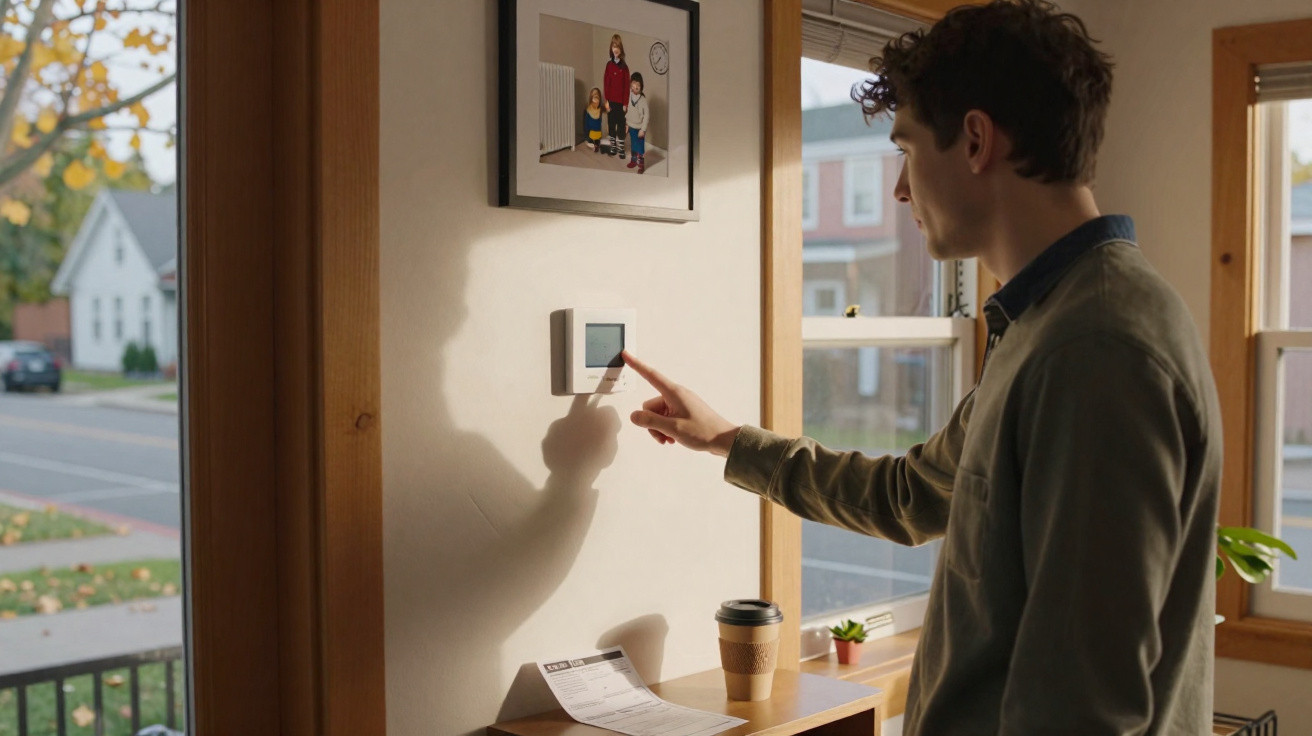
Habits formed during childhood are often difficult to shake off. Findings from a new survey indicate that the way people set their thermostats today may be shaped by the homes in which they were raised.
A recent paper, cheekily entitled "Turn down for watt", indicates that the average American is reluctant to lower their thermostat, despite heating and cooling making up a substantial share of household energy costs.
Instead, people commonly appear to adopt the approach taken by their parents.
"Specifically, individuals who grew up in warmer homes tend to maintain higher thermostat settings in their current homes, suggesting a lasting influence of early thermal environments on current temperature preferences," write organisational behaviour researcher Dritjon Gruda of Maynooth University in Ireland and Paul Hanges, an organisational psychologist at the University of Maryland in the US.
Residential energy use now represents 21 percent of total energy consumption in the US, with household heating and cooling accounting for more than half of that amount.
Although half of US homes are unoccupied during the day, many households still leave their heating or air conditioning running while nobody is there. Some surveys indicate that just 42 percent of American homeowners change their thermostat settings to reduce energy use and costs.
These routines both waste energy and push up domestic bills. The new survey suggests that such preferences could take root in childhood.
"Understanding what motivates consumer heating and cooling choice is an important avenue for potentially reducing the burning of fossil fuels," write Gruda and Hanges.
Survey findings on heating and cooling
The researchers surveyed 2,128 people from around the United States. Participants were asked for the average winter thermostat setting in their adult homes and in the homes where they grew up. They also rated how emotionally connected they felt to their community.
Participants living in colder winter areas who had been raised in warmer homes – maintained at 26.67 degrees Celsius (80 degrees Fahrenheit) – preferred to keep their adult homes warmer than those raised in colder childhood homes – maintained at 21.11 degrees Celsius (70 degrees Fahrenheit).
The pattern remained even after accounting for race, education, household income and geographical mobility.
While Gruda and Hanges note that childhood habits can be "deeply entrenched and difficult to change", they say this does not make them impossible to alter.
Community connection and thermostat use
How strongly participants identified with or related to their community was found to "strongly" shape the link between their present thermostat use and their upbringing.
For example, people who relocated to colder winter locations such as New York and felt strongly connected to their local community generally kept their thermostats lower than participants who felt less at home in their community.
As might be expected, people in warmer places such as Florida generally rely less on central heating and use air conditioning to cool their homes, including during winter. Yet, once more, the extent to which someone feels they belong in their community can partly disrupt this tendency.
"Individuals who indicated high community fit reported higher home temperatures, due to likely more limited air conditioning," the psychologists note.
This implies that peers may influence energy consumption. However, because the researchers did not directly measure community norms, they caution that the findings should be interpreted carefully.
The results rely on self-reported information, meaning there is no guarantee that participants accurately reported thermostat settings from either adulthood or childhood.
Moreover, a thermostat setting may not reflect a home's real temperature, which can be particularly hard to regulate in older and less well-insulated properties.
Gruda and Hanges argue that future research should address these limitations and investigate the cultural influences affecting how people heat and cool their homes.
"Without understanding the underlying psychological mechanisms and drivers of behavior," the psychologists write, we will fail to explain "why rational consumers do not necessarily strive to optimize their energy consumption."
The study was published in PLOS Climate.




Comments
No comments yet. Be the first to comment!
Leave a Comment