
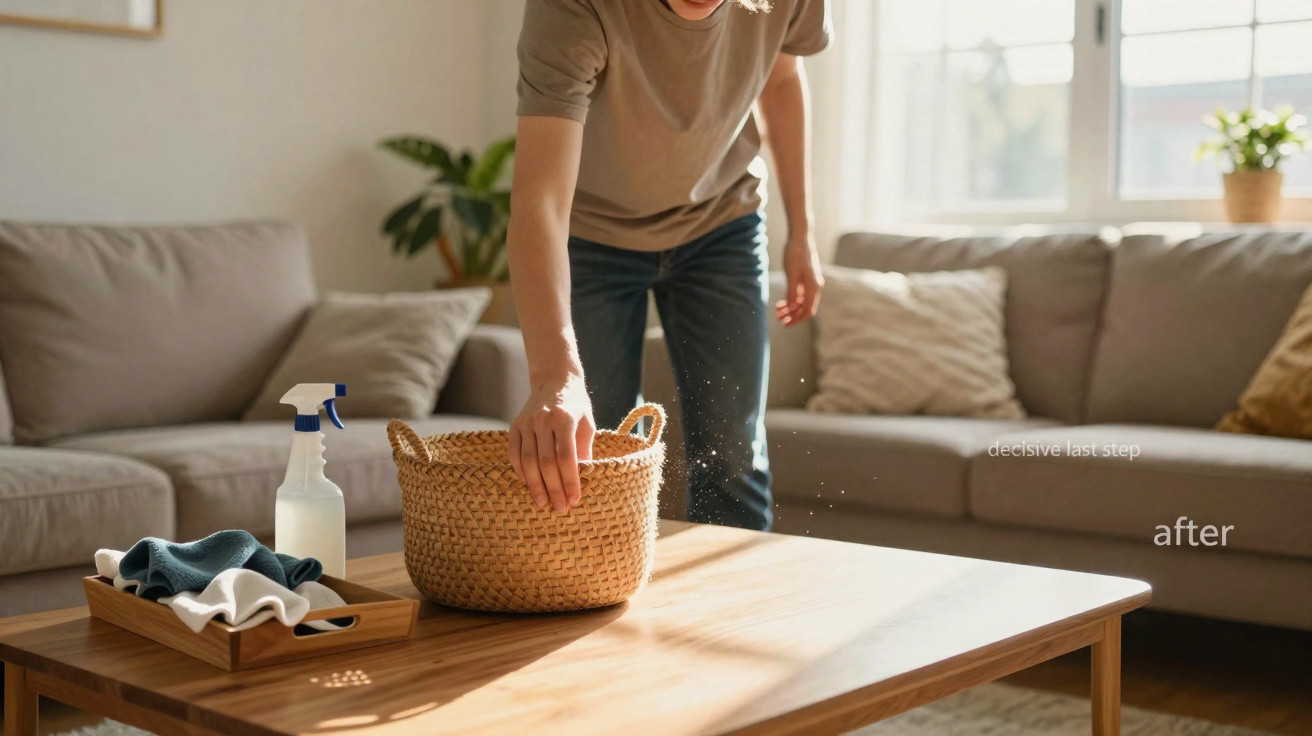
The cloth skims across the worktop in one smooth, satisfying swoop.
Crumbs are gone, smudges vanish, and the kitchen looks “finished” in less than a minute. You drop the cloth into the sink-half pleased with yourself for being so quick, half aware you ignored a few awkward edges. The pan is “soaking”, the floor “can wait”, and the bathroom “isn’t that bad”. Technically, you cleaned. Sort of.
A few days later, that same worktop feels strangely tacky near the coffee machine. The pan in the sink has become a full-blown science project. The bathroom odour reaches you before the light switch does. Those cleaning shortcuts felt like they saved you earlier in the week. Now they’re coming back to bite.
One habit, especially, feels brilliantly efficient in the moment… while quietly increasing your workload, your stress, and even what you spend later. And chances are it’s woven into your everyday routine.
The cleaning shortcut that’s quietly sabotaging your home
The main shortcut is simple: “surface cleaning” rather than proper cleaning. A quick wipe, a spritz of spray, a rapid run with the vacuum-and that’s the job “done”. On Instagram, the place looks great. To the naked eye, you’re on top of it.
But beneath that thin layer of “looks tidy”, other things are happening. Grease sets hard around the edges of the hob. Soap scum dries and bakes into the shower. Dust slides behind the telly, then into vents, and then into the air you breathe. It’s a bit like painting over a crack in the wall: it looks fine-until it doesn’t.
We often mistake “looks clean” for “is clean”. And that mix-up costs you time later, because every unfinished job starts to grow teeth.
One Tuesday evening in a London flat, I watched a friend tear through her kitchen in six minutes. Timer running, podcast on, one multi-purpose spray used for everything. Worktops wiped, sink rinsed, floors ignored. It was genuinely impressive-exactly the sort of thing you could film as a productivity trick.
Two weeks later, I was back. The oven door had a cloudy grey film. The chrome tap was marked with pale, chalky rings. The cupboard under the bin smelt like pure regret. She ended up spending a whole Sunday “deep cleaning” what those shortcuts had quietly allowed to build.
She didn’t just spend longer; she had to work harder. Out came stronger products, scouring pads, rubber gloves. Things that would have taken 30 seconds at the time had turned into 30-minute battles. That “efficient” routine came back like a boomerang.
Here’s the dull truth about dirt: it compounds. A faint layer of limescale encourages more limescale. Sticky patches attract more stickiness. Once grime bonds to a surface, every future wipe needs extra effort, extra time, and sometimes extra money on harsher cleaners.
When we do “just enough to look okay”, we don’t reset the space-we simply pause the mess. It’s like paying only the minimum on a credit card: the debt doesn’t disappear; it quietly grows in the background.
And psychologically, this shortcut affects you as well. That low-level feeling that your home is never truly clean comes from knowing-somewhere in the back of your mind-that you’ve only dealt with what’s visible. Your brain keeps a running to-do list your eyes can’t see.
The tiny shift that beats shortcuts: cleaning to zero
There’s another method that sounds slower, yet usually saves hours: cleaning “to zero”. Not flawless, not obsessive-just finishing the job to the point where nothing is silently waiting for “later”.
In the kitchen, cleaning to zero means washing the pan straight after dinner instead of leaving it to soak until tomorrow. It means wiping under the toaster rather than around it. It means sweeping up the crumbs instead of nudging them towards the skirting board with your foot. You close the loop rather than leaving a small mess-tab open in your head.
It’s a subtle mental switch: I’m not making it appear clean; I’m putting it back to neutral.
On paper, cleaning to zero sounds draining. In practice, it often takes roughly the same amount of time as the shortcut-just spread differently. Two extra minutes to scrub the pan before food dries on. Thirty seconds to wipe the bathroom sink rather than just splashing water about. A quick pass over the floor while you’re already there.
On a hectic family morning, one parent I spoke to does what they call a “micro-zero”: breakfast dishes straight into the dishwasher, the table wiped once, and the floor checked for spills. That’s all. No grand reset. Yet at weekends, they no longer need the dreaded three-hour “house rescue”.
They’ve stopped paying compound interest on mess. Their home still isn’t perfect, but it also doesn’t slide into that heavier, stickier kind of dirt that steals whole afternoons.
Cleaning to zero also cuts decision fatigue. You’re no longer stuck in the debate of: “Do I deal with this now or later?” The rule decides for you. If you used it and dirt happened, you reset it as far as is reasonably possible. No drama. No bargaining with yourself over a pan that’s been “soaking” for 48 hours.
How to break the shortcut habit without burning out
A practical way to stop the time-wasting shortcut is to choose just three “no-shortcut zones” at home-areas where grime escalates quickly. Think: kitchen sink, hob, and bathroom sink. These become your daily “always to zero” spots.
Each time you use them, you do the whole job. Wash the dishes or load the dishwasher, wipe the sink, clear the drain trap. Clean the hob properly, not only the visible splatters. Give the bathroom sink a quick wipe, including the taps and around the plug. It’s a small daily discipline with a big, hidden payoff.
Everything else? You can be looser. You don’t need to live in a showroom in order to live well.
We all know the moment when a message pops up-“We’re five minutes away”-and you suddenly unlock a level of speed you didn’t know you had. That panic-clean is basically one enormous shortcut: things shoved under beds, into cupboards, behind shower curtains.
The issue is when that becomes normal. The laundry basket turns into permanent storage. The coffee table becomes a mountain of paperwork. Your brain starts linking “cleaning” with rushing and hiding, rather than calm maintenance. Let’s be honest: nobody truly does that every day.
A gentler strategy is to attach tiny, specific cleaning actions to habits you already have. After brushing your teeth, wipe the bathroom sink. After making coffee, empty the dishwasher. After dinner, put the pan under hot water and scrub for 60 seconds. No timers, no elaborate planner-just a small rhythm that stops grime building a fortress.
“Most of us don’t need a stricter cleaning routine,” explains a professional organiser I interviewed. “We need fewer half-done tasks hanging over us. The real time-saver is finishing small jobs fully, not doing more of them.”
This mindset shift is hardest when you’re tired or overwhelmed. Shortcut you wants to sweep things off the worktop, spray something that smells nice, and claim a win. But future you is the one kneeling down, scraping dried pasta sauce off the skirting board.
To make it easier, choose tools that feel good in your hands: a scrub brush that fits properly, a microfibre cloth that actually lifts dirt, a cleaner that smells like somewhere you’d like to be. Small sensory wins make it more likely you’ll do the extra 30 seconds that takes you from “looks okay” to “properly done”.
- Pick three “no-shortcut zones” and clean them to zero every day.
- Tie one tiny cleaning action to habits you already do.
- Buy one tool that makes scrubbing quicker, not more aggressive.
Why this one change can quietly change how your home feels
When you stop leaning on shortcuts and start completing small cleaning tasks properly, something unexpected happens: your home stops bouncing between “fine” and “disaster”. It settles into a calmer, steadier version of “good enough”.
You walk into the kitchen and you don’t catch a whiff of last night’s dinner. You step into the shower and there isn’t a ring of shame around the bath. The bathroom tap reflects light again, instead of diffusing it through layers of limescale. It’s subtle, but it changes how you feel in your own space.
The other shift happens in your head. You’re not weighed down by invisible jobs lurking underneath the surface. That pan isn’t waiting. That sink isn’t half-finished. Most of the mess debt is paid off in tiny coins of effort rather than huge weekend withdrawals. You’re not pursuing a spotless life-you’re simply avoiding the trap of fake efficiency that steals time later.
And perhaps that’s the only shortcut worth having: not a miracle spray or a viral hack, but fewer things quietly getting worse while you’re busy acting as though you’ve already dealt with them.
| Key point | Detail | Benefit for the reader |
|---|---|---|
| Surface cleaning vs proper cleaning | Quick wipes disguise grime that later requires heavy scrubbing | Understand why “false time-savers” are so exhausting |
| Cleaning “to zero” | Properly finishing a few targeted tasks, especially in the kitchen and bathroom | Reduce weekend deep-cleans and mental load |
| Mini routines | Linking a micro-cleaning action to an existing habit | Change habits without burnout or becoming obsessive |
FAQ:
- What exactly is a cleaning shortcut that backfires? It’s any habit that makes a room look clean without removing the actual dirt, like wiping around objects, leaving pans to “soak” for days, or spraying fragrance instead of washing surfaces.
- Isn’t a quick tidy better than nothing? Yes, a quick tidy helps mentally, but when it replaces real cleaning in key spots, the grime builds up and costs you far more time and effort later.
- How long should “cleaning to zero” take each day? For most homes, 10–20 minutes spread through the day is enough if you focus on three no-shortcut zones and finish those tasks fully.
- Do I need special products to avoid this problem? No. Basic tools used consistently beat expensive products used only during crisis deep cleans.
- What if my home is already in “deep mess” mode? Start by rescuing just one area (often the kitchen sink), bring it to zero once, then maintain it daily before moving on to the next zone.
Comments
No comments yet. Be the first to comment!
Leave a Comment