
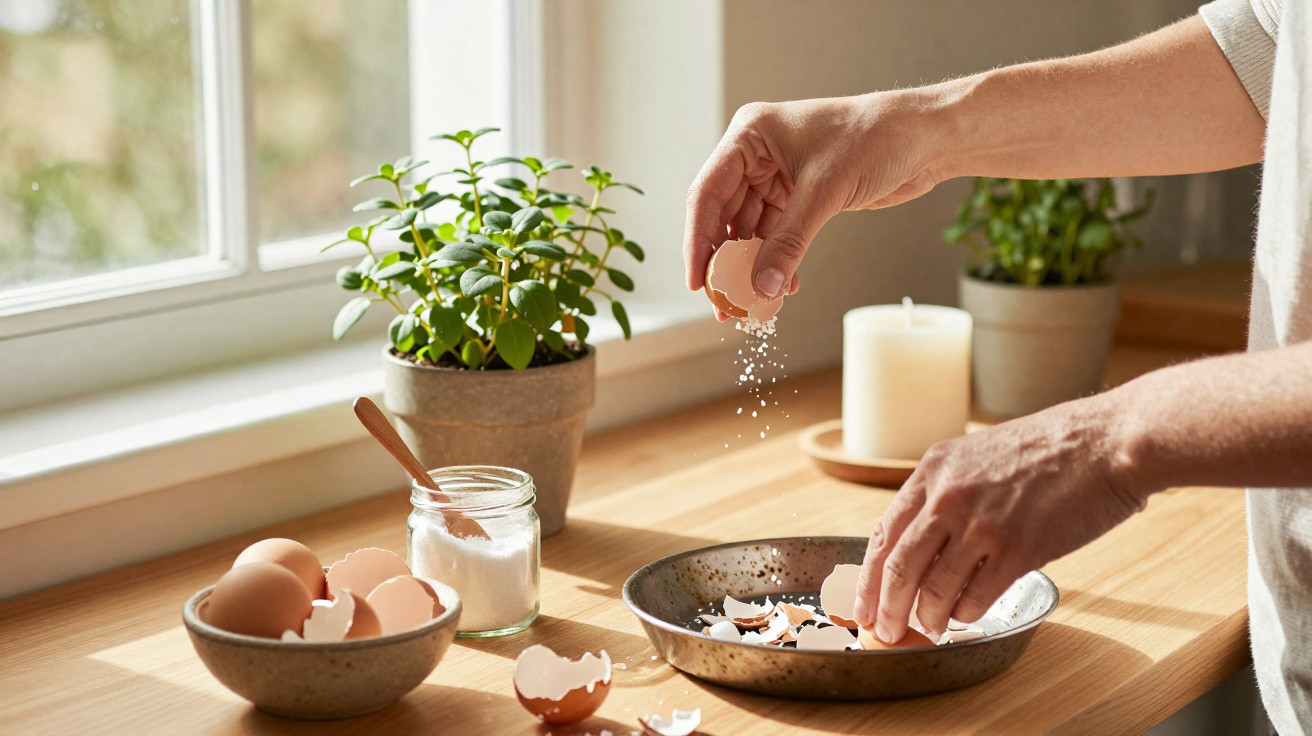
Eggshells, which often end up straight in the bin, can be repurposed for a range of everyday jobs. With the right preparation, they can help with household cleaning, support the health of your garden and potted plants, provide a creative material for small decorative projects, and reduce kitchen waste as part of your normal routine.
How do you prepare and properly sanitise eggshells?
Before using eggshells for anything, they need to be cleaned thoroughly. Once you have emptied the egg, rinse the shells under running water to remove any traces of white and yolk. If you like, soak them for a few minutes in water with a splash of vinegar to help cut down on lingering smells.
For safe use in the garden, in cleaning mixes, or for crafts, it is common to heat the shells briefly-either in the oven or in a dry frying pan over a low heat-until they are completely dry and brittle. Once cooled, store them in tightly sealed containers, either whole or already crushed. Keep the jar somewhere dry and well ventilated to prevent mould.
How can you use eggshells for household cleaning?
When it comes to cleaning, eggshell works as a gentle abrasive, useful for shifting stubborn grime without scratching as much as harder materials might. Crushed into small pieces, it can help loosen baked-on grease in saucepans, roasting tins, and heavily used utensils.
A simple way to use them is to combine crushed shells with mild washing-up liquid or a soft soap paste, making a cleaning “scrub”. This can be handy for certain areas of the home, as long as you rinse thoroughly afterwards to avoid blocking drains and steer clear of very delicate surfaces.
- Saucepans and roasting trays with grease or stuck-on residue;
- Oven racks, grills and supports with leftover food debris;
- Some rough outdoor flooring where dirt is more persistent.
How can you use eggshells in the garden and in pots?
In the garden, eggshell is used both as a slow-release source of calcium and as a physical barrier against some crawling pests. When crushed to an almost powdery texture, it can be mixed into the soil in small amounts, complementing routine care for vegetables, flowers, and container plants.
To make it easier to use consistently, it helps to follow a straightforward prep-and-apply habit. That way, the shells become a regular helper without overdoing the quantity, while keeping the soil well balanced.
- Set aside and thoroughly clean the used shells.
- Dry them in the oven or in the sun until they become brittle.
- Crush them with a pestle and mortar or use a blender to make fine grains or powder.
- Sprinkle a thin layer around the plants and lightly work it into the soil.
How can you use eggshells in decoration and around the home?
For decoration, eggshells can be used in mosaics, small pictures, photo frames, and table ornaments. When they are properly cleaned, dried, and odour-free, they can be coloured with dyes or water-based paints, broken into fragments, and fixed in place with white glue to create interesting textured effects.
To make this kind of reuse part of everyday life, it helps to keep a dedicated container in the kitchen for shells that have already been rinsed, then dry a batch every so often. Once it becomes a habit, you are more likely to have material ready to try different uses-from cleaning to the garden-alongside creative projects that turn a common bit of waste into something genuinely useful.



Comments
No comments yet. Be the first to comment!
Leave a Comment