
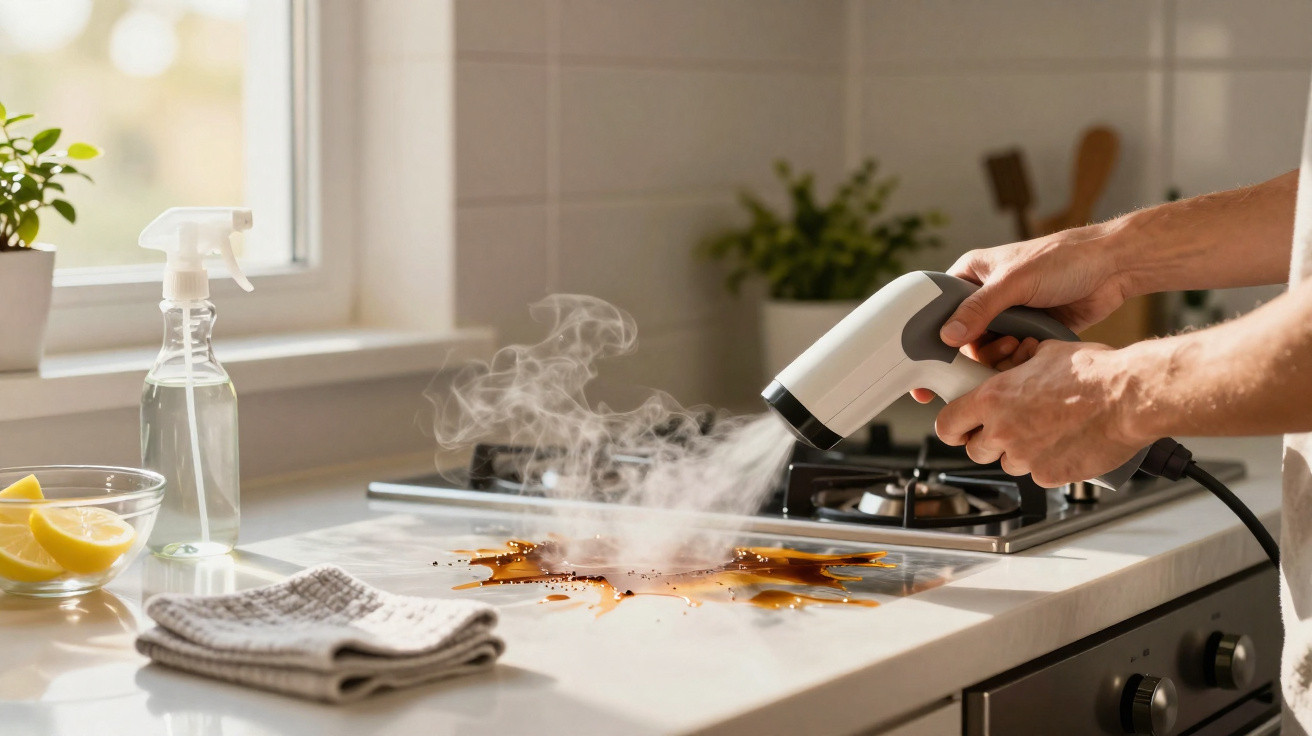
A stubborn, sticky halo can form above the hob - the sort that shrugs off sprays and sponges. Airborne grease drifts into seams, sets hard, and practically challenges you to clamber up with a scouring pad. Cleaning professionals are increasingly relying on a low-key solution: a surge of hot vapour that softens the build-up and helps it slip off the cooker hood with very little effort. No scraping. No harsh chemical pong. Just steam doing the hard work.
A kettle started to rumble and send up thick plumes, and the cook nudged it beneath the hood like a magician positioning a prop. Within minutes, the dull, tacky film on the metal began to soften, turn slightly glossy, and gather into tiny amber beads. It felt almost like cheating.
As the light caught those droplets, they rolled towards the filters. One pass with a microfibre cloth and the fabric came away brown, as if the grime had finally given up. No aching elbows. No gritty paste. Just warmth and a little time. The grease simply released.
Steam over steel: why vapour melts hood grease
Grease on a cooker hood is more than just oil; it’s a mix of airborne fat, smoke residue and dust that slowly “bakes on” into a sticky varnish. What the cleaning experts highlight is straightforward: steam doesn’t merely warm the surface - it clings to it, delivering heat right where the muck is embedded. Once the metal reaches that gentle, warming sweet spot, the stubborn film loosens and starts to slide, rather like butter in a hot frying pan.
There’s also a practical advantage: steam moves. As it rises, it wraps around the hood canopy and then drifts into the filters and channels, carrying liquefied residue with it. If you then set the fan to low, that airflow helps draw the softened grease through the mesh, so you’re not battling it only on the surface. The effect is surprisingly neat - like mist cleaning a pane of glass from the inside.
The science helps too. When hot vapour meets cooler steel, it condenses and releases a burst of heat at the point of contact, weakening the bond between fat and metal. Those tiny droplets act like little carriers, grabbing dirt and pulling it down with gravity. No abrasives, no scratches, and no threat to brushed finishes. You’re harnessing the same heat that cooks dinner to undo what cooking leaves behind.
The effortless vapour method, step by step
Start by preparing the area. Lay an old towel over the hob to catch drips, then set a wide saucepan or Dutch oven on a powerful burner and fill it with about 5–8 cm of water. For deodorising, add a splash of white vinegar or a strip of lemon peel (avoid vinegar if your hood is bare aluminium). Bring the water to a rolling boil, then move the pot so it sits directly beneath the centre of the hood canopy.
Allow the steam to rise with the fan switched off for 3–4 minutes so the vapour can thoroughly bathe the metal. After that, switch the fan to low for another 3–5 minutes to draw steam through the filters. You should notice beads forming and running. Turn off the heat, wait a minute for the heaviest fog to settle, and then wipe using a warm, damp microfibre cloth - no pressure, just gentle contact. As for the filters, rinse them under hot tap water in the sink and watch the loosened film wash away. That’s no scrubbing in real life.
We’ve all had that moment where the hood feels too grim to deal with, so take it easy on yourself. The most common pitfalls are not letting the water properly boil, aiming a jet steamer directly at light fittings, or using a cold cloth that makes grease set again. Put on oven gloves, keep your hands out of the steam’s path, and give the metal time to warm before you touch it. Let’s be honest: nobody actually does that every day. Aim for once a month, or after a big frying session, and you’ll make life easier for your future self.
“Steam is patient power. Give heat a few quiet minutes and the hood lets go-no drama, no gouging your finish.”
- Quick kit: wide pot, kettle (optional), white vinegar or lemon, microfibre cloths, tongs, heat-proof gloves, old towel for drips.
- Fan timing: off first to bathe the canopy, low later to draw steam through filters.
- Surface notes: stainless loves this; if you have aluminium, keep acids away and wipe promptly.
- Safety: avoid blasting electronics, lights off, slow movements around hot vapour.
What changes when grease stops sticking
The kitchen feels different when your hood shifts from crusty to manageable. After a hard sear, the air clears more quickly, and the room smells of what you’ve just cooked rather than yesterday’s leftovers. You start cooking more boldly again - fish midweek, bacon on impulse - because cleaning no longer feels like a penalty. With filters that aren’t clogged, the fan often sounds quieter. The lights over the pan look brighter too. Pass the tip on to the friend who’s convinced their hood is beyond saving and watch their eyebrows rise. There’s a small satisfaction in winning with softness where you used to rely on force, and a calm comfort in knowing your kitchen can breathe as freely as you do.
| Key point | Detail | Benefit for the reader |
|---|---|---|
| Heat + humidity do the heavy lifting | Condensing vapour delivers targeted heat that liquefies grease bonds | Less effort, no abrasives, protects finishes |
| Two-phase steam flow works smarter | Fan off to bathe surfaces, fan low to pull through filters | Faster results and cleaner internals without disassembly |
| Small setup, big payoff | Pot, water, microfibre, 10–12 minutes of gentle steam | Realistically repeatable after messy cooks, better air and lighting |
FAQ:
- Can I use a kettle instead of a pot? Yes. Hold the spout below the hood and sweep the steam slowly. A wide pot under the canopy gives broader coverage with less hand work.
- Will steam damage the fan or lights? Used moderately, no. Keep direct jets away from switches, control panels, and bulbs, and give things time to dry before turning lights back on.
- What about charcoal or foam filters? Don’t soak charcoal. Use gentle steam exposure and replace when airflow drops or odour returns. Mesh baffles can handle more vapour and a hot rinse.
- Does vinegar leave a smell? It fades as the kitchen cools. Add lemon peel or a cinnamon stick to the pot if you want a warmer scent while you work.
- How often should I do the vapour method? Monthly is a good rhythm, or right after heavy frying or steak night. If the hood feels tacky again, it’s time.



Comments
No comments yet. Be the first to comment!
Leave a Comment