
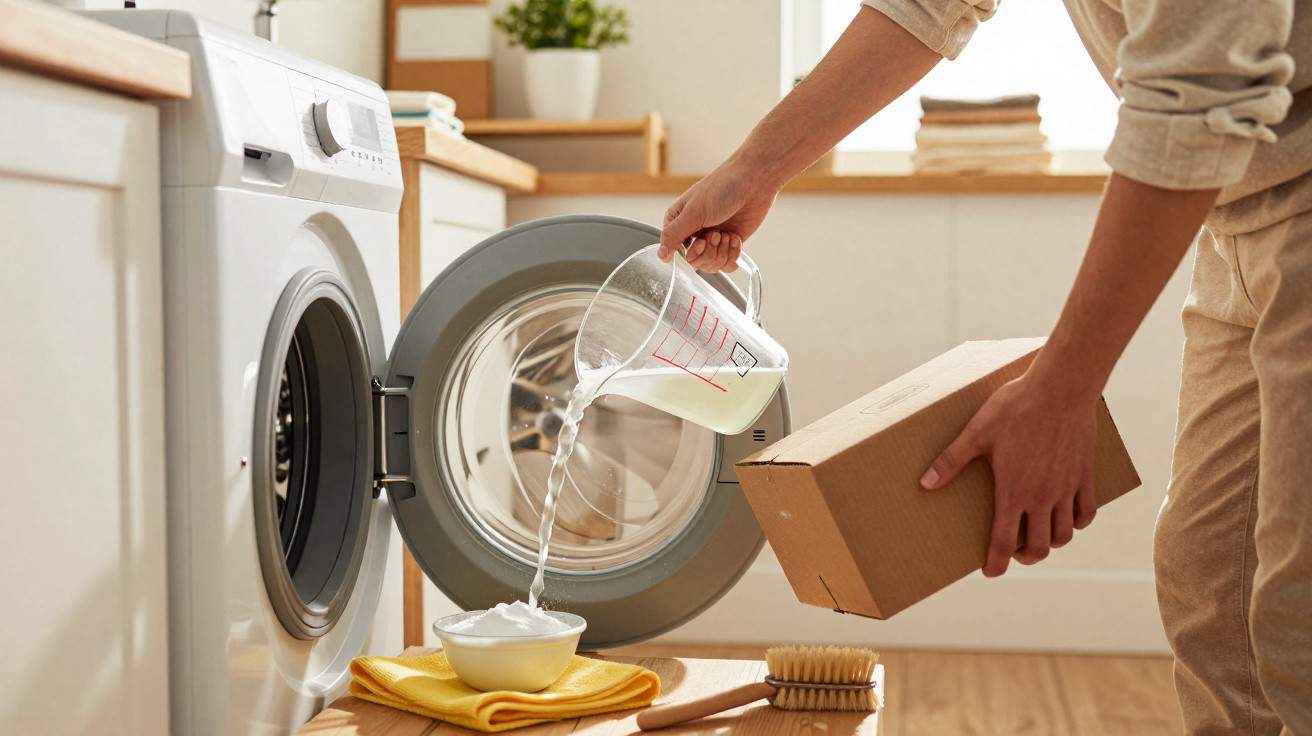
Over time, a washing machine can build up leftover detergent, fabric conditioner, lint and even grease from clothing. That residue can lead to unpleasant smells and, in some cases, small marks showing up on freshly washed items. The good news is that you can improve this a great deal with a straightforward mix of everyday household products and the right wash cycle-without taking anything apart-helping the machine run better and last longer.
How does the simple combination to clean the washing machine work?
The most common blend for cleaning the drum and rubber seals combines white distilled vinegar with bicarbonate of soda. The vinegar helps cut through grease, break down soap residue and neutralise odours, while the bicarbonate of soda works as a gentle “light scrub”, loosening stuck-on grime without damaging components.
For the drum, on a typical-sized machine, it usually works well to use 1 to 2 cups of white distilled vinegar (about 250–500 ml) and 3 to 5 tablespoons of bicarbonate of soda (about 45–75 ml). On larger models, you can increase the amount slightly, but avoid overdoing it to prevent excessive foaming. Always choose white distilled vinegar; avoid coloured or flavoured/infused vinegars, as these can stain or leave a strong lingering smell.
How do you clean the drum and rubber seals step by step?
To clean the inside properly, start with the rubber seals and the detergent drawer, removing the worst of the visible build-up first. On front-loading machines, paying attention to the door seal is particularly important, because moisture, detergent residue and mould often collect there.
Once that quick manual pre-clean is done, follow this simple, safe process to get the interior into much better shape:
- Unplug the machine before doing any hands-on cleaning to stay safe and avoid any nasty surprises.
- Remove any clothes and stray items left in the drum-coins, clips, bits of paper, and lint gathered in corners.
- Wipe the rubber seals with a damp cloth and a little white distilled vinegar, gently pulling back the folds to reach into the creases. If there’s heavier grime or mould staining, sprinkle a little bicarbonate of soda onto a cloth or a soft brush and scrub lightly.
- Clean the detergent drawer for detergent and fabric conditioner. If your model allows, take it out and wash it with warm water and a brush to lift the slime that sticks in the corners.
- Pour the vinegar straight into the drum, using roughly 1 to 2 cups (about 250–500 ml) and letting it spread across the bottom.
- Add the bicarbonate of soda into the drum, scattering the tablespoons in different spots so it mixes as the cycle fills.
- Close the machine and select the most suitable cycle so the internal clean is genuinely effective.
Which cycle should you use to boost the machine’s internal clean?
To get the most from the vinegar and bicarbonate of soda, choose a long cycle with hot water, if your machine offers that option. Hot water helps loosen grease, old detergent and built-up deposits, and it reaches the drum and the internal channels where water circulates.
Many newer machines include programmes such as “drum clean” or “tub clean”, which are ideal for this job. In those cases, don’t add detergent or fabric conditioner-use only the recommended mixture. When the cycle finishes, leave the lid or door open so the inside can air out and dry thoroughly.
How often should you clean the inside of a washing machine?
How often you need to do this depends on usage. In homes where the machine runs a few times a week, a monthly clean is usually enough. Where use is heavier-such as larger households or small laundry set-ups-it may be better to reduce the gap to every 15 days.
A few simple day-to-day habits also help keep the drum smelling fresh and reduce the risk of mould, extending the benefits of the internal clean:
- Leave the lid or door slightly open after washes so the inside can dry and ventilate.
- Take washing out as soon as the cycle ends, rather than letting it sit damp inside.
- Dry the rubber seals with a clean cloth, especially on colder or more humid days.
- Don’t overuse detergent or fabric conditioner, as this increases internal build-up.
By watching for signs such as bad smells, staining on the seals, excessive foam and tiny specks of dirt on clothes, you can fine-tune your cleaning routine. That helps the machine run more efficiently, reduces the need for major maintenance, and can extend the appliance’s lifespan.


Comments
No comments yet. Be the first to comment!
Leave a Comment