
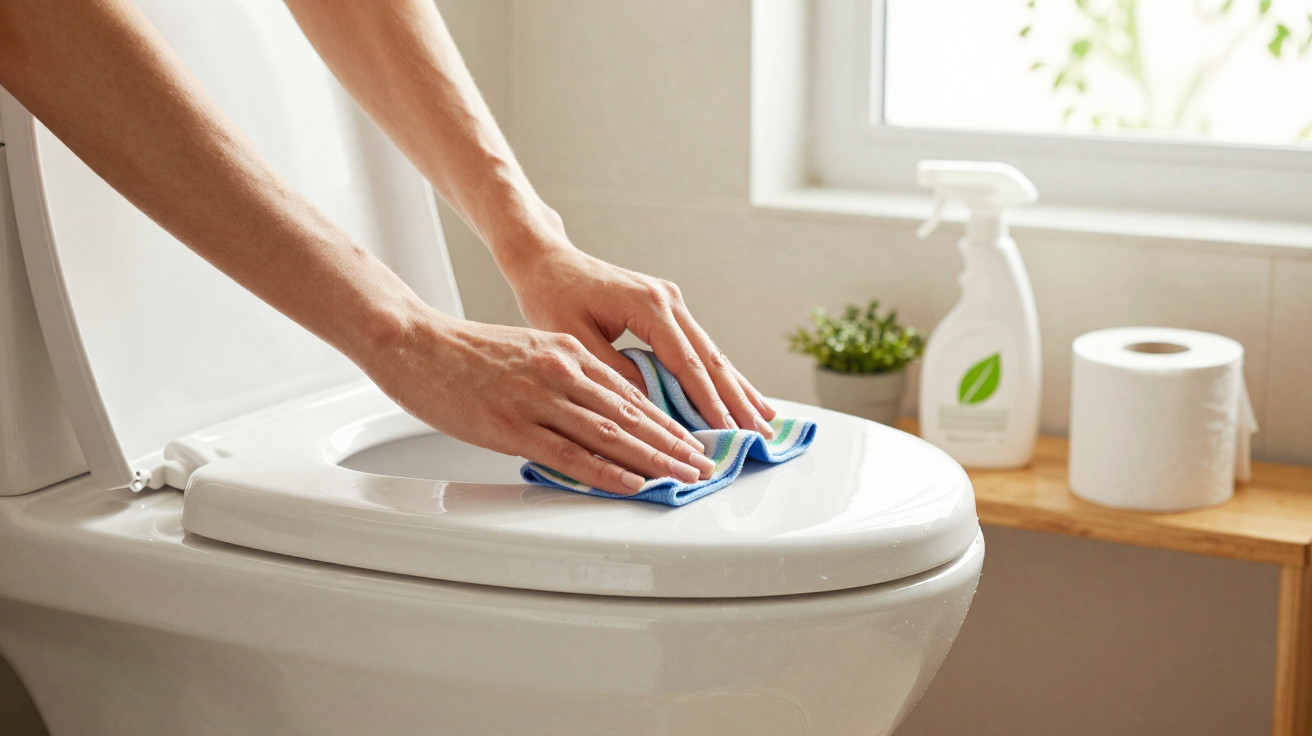
Wiping toilet seat with toilet paper might remove a visible splash, but it is not the same as properly cleaning it. When dry paper is rubbed hard and often, its fibres can also shed and leave residue, while repeated friction may wear the plastic finish-particularly on glossy seats.
Why isn’t toilet paper suitable for cleaning the toilet seat?
Toilet paper is designed to break down quickly when it meets moisture, not to clean hard surfaces. In practice, it can release tiny fibres, move dirt around the area, and soak up liquid without properly lifting residues such as body oils, urine, or built-up product.
- It can leave lint on a wet surface;
- It does not spread cleaning product evenly;
- It tears easily when it comes into contact with water or detergent;
- It may simply smear residue rather than remove it;
- It does not replace the cleaning action of a cloth with mild washing-up liquid;
- Repeated rubbing can dull delicate finishes.
Can toilet paper actually scratch plastic?
Occasional, gentle use is unlikely to cause immediate, obvious damage. The issue is the habit of scrubbing with dry paper, applying pressure, several times a week. Depending on the seat’s material and how rough the paper is, that friction can contribute to minor marks and a gradual loss of shine.
Warnings about cleaning a toilet seat with toilet paper do not mean that touching the surface once with paper will ruin the material. The point is to avoid turning this makeshift approach into your regular method of hygiene.
What is the correct way to clean the toilet seat?
Use a soft cloth or a sponge with no abrasive side, dampened with warm water and a small amount of mild washing-up liquid. Wipe the top, underside, lid and hinges without heavy scrubbing, then remove any remaining residue with a second damp cloth.
- Lift the seat to reach the underside;
- Remove dust and loose debris before wiping;
- Use mild washing-up liquid diluted in water;
- Choose a soft cloth reserved only for the bathroom;
- Rinse the cloth as you clean;
- Dry the seat and hinges when you finish.
Which products can damage a toilet seat?
Wire wool, green scouring pads, abrasive powders and very stiff brushes can scratch plastic quickly. Concentrated products based on chlorine, alcohol, solvents or acids can also cause staining, discolouration, drying and damage to hinges, depending on the material.
Before using a disinfectant, check the toilet seat manufacturer’s instructions and follow the contact time shown on the label. The product should not be mixed with other cleaners, and any excess must be wiped away so it does not remain in contact with skin or the finish.
Can toilet paper be used only to dry a splash?
In a one-off situation, toilet paper can absorb a small splash, as long as it is dabbed on gently and disposed of straight away. Even then, this quick drying does not sanitise the surface when there is visible residue or when the bathroom is shared by several people.
For day-to-day upkeep, the safest approach is a soft cloth and mild washing-up liquid, followed by thorough drying. As well as cleaning more effectively, this helps preserve shine, reduces residue build-up and extends the life of the seat.
Comments
No comments yet. Be the first to comment!
Leave a Comment