
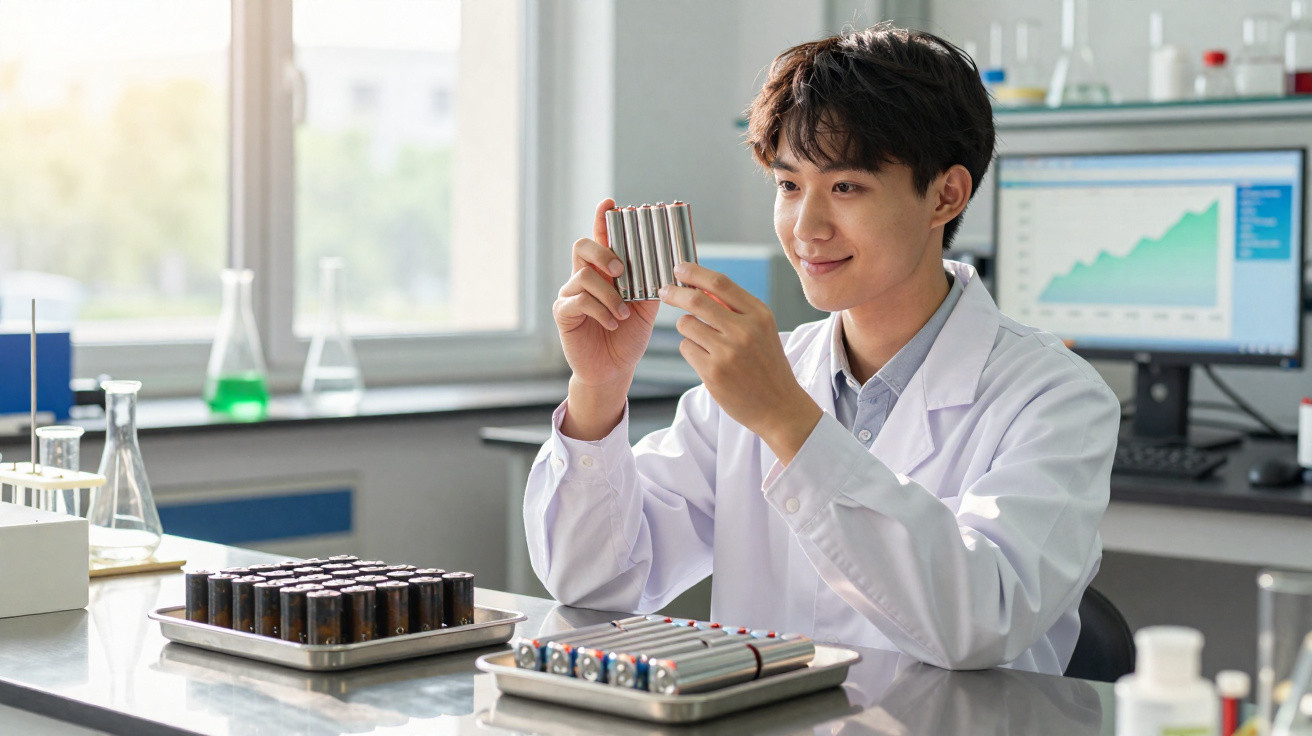
Sustainable recycling of energy components has taken a major technological step forward thanks to work by highly skilled scientists. The approach can restore up to ninety-five per cent of the original capacity of used batteries, sharply lowering operating costs while protecting valuable materials-without the need to shred the structures.
How does the DEER method change battery recovery?
Cornell University has introduced a new way to reuse discarded electrical components. Known as the DEER method, it uses an electrochemical bath that cleans and revitalises working surfaces efficiently, sidestepping invasive routes that often destroy usable material during recovery.
Conventional traditional techniques frequently melt down or shred an entire pack to extract metals. By contrast, this process keeps components in a functional state, ensuring the cathode and anode remain intact after stripping away the harmful chemical film that builds up during operation.
Does an electric car battery really lose all usefulness?
Many parts inside discarded batteries remain in good condition after long use and can be treated with innovative methods… Read more
What are the financial and operational impacts of this innovation?
Using a dedicated electrochemical bath streamlines materials treatment and can reduce processing costs by as much as fifty-six per cent. That cost advantage makes direct recycling a practical option for cutting expenditure across the mobility supply chain.
Beyond lowering the price of the operation, the treatment restores the electrodes in a clean, direct manner. It removes the passive layer that forms on the structure, bringing back the efficiency required for the parts to be reused in new systems without sacrificing storage capacity.
Below is a video from the YouTube channel Argonne Meetings, Webinars, and Lectures that explores the points discussed in this topic:
How do chemical compounds work in the cleaning process?
The reagent 1,3-dimethyl-2-imidazolidinone acts directly to detach impurities trapped on the components. This organic compound can dissolve the degraded film without harming the graphite anode structure, preserving the physical integrity of the conductive material for a new cycle of use.
Efficient restoration of NMC electrodes allows the cathode material to regain its functionality without relying on newly mined inputs. Researchers Vibha Kalra and Kiwon Kim showed that the technique cleans the surfaces while keeping operational performance high after the recycling treatment.
Battery Recovery
Pillars of the DEER Method Key advances this technology brings to industry include:
- Preserving the NMC electrode with no need for mechanical shredding;
- Effective removal of the passive layer using a specialised solvent;
- A substantial cost reduction compared with traditional processes.
Which institutions are leading this technological research?
The work carried out by the scientific teams is strongly supported by the ReCell Center and Argonne National Laboratory. This institutional collaboration helps refine sustainable routes for reusing energy components from electric cars with high efficiency.
Bringing national laboratories together with universities speeds up validation for large-scale industrial processes. The central aim of these partnerships is to enable clean technologies that reduce reliance on mining and minimise improper disposal of valuable materials.
These are the main priorities for research partnerships in the sector:
- Developing environmentally responsible processes for treating batteries;
- Achieving major reductions in industrial operating costs;
- Maximising the service life of reusable lithium components.
What is the future of sustainable battery reuse?
Ongoing improvements to electrochemical-bath techniques are set to reshape the global electric-mobility landscape. The ability to retain up to ninety-five per cent of electrode performance without destroying them strengthens a credible green transition for the market.
With cleaner, more economically attractive solutions, component recycling is moving towards becoming the automotive industry standard. This progress directly reduces industrial waste and reinforces genuinely sustainable practices on a global scale.






Comments
No comments yet. Be the first to comment!
Leave a Comment