
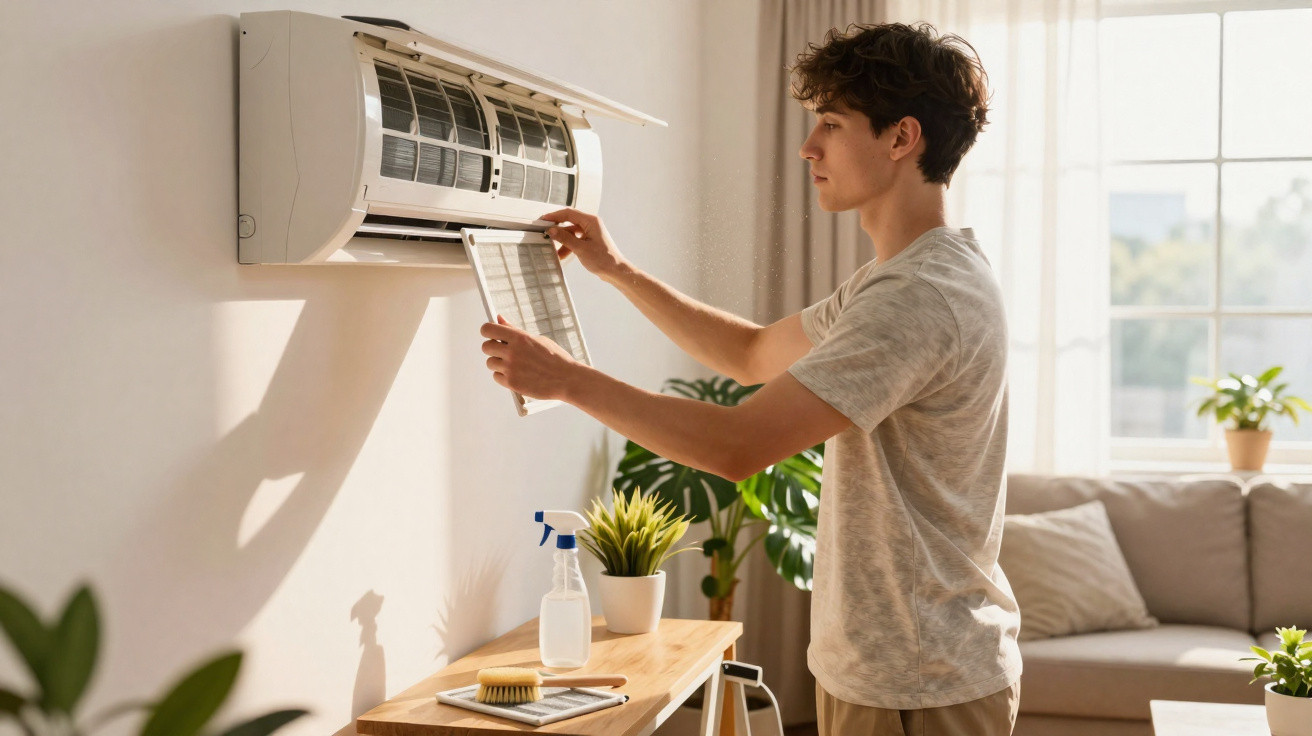
Living with the air conditioning running for much of the day, it is easy to notice when it starts to cool less effectively, becomes noisier, or leaves the room with an unpleasant smell. In many situations, the cause is a straightforward part: the air conditioning filter. Its job is to trap airborne impurities and, when it is ignored, it can affect both the unit’s performance and the quality of the air you breathe.
What actually builds up in the air conditioning filter?
The filter collects particles found indoors, including dust, fine debris, strands of hair, pet fur, and residue carried in from outside. In homes or buildings near busy roads, soot and traffic-related pollutants are also common.
Over time, this combination can create a thick layer that restricts airflow and makes it harder to cool the room. When a filter is damp and dirty, fungi and bacteria can thrive, which increases the likelihood of respiratory irritation and allergies.
How to clean the air conditioning filter simply and safely
Cleaning a domestic filter is quick and does not require special tools, as long as the unit is completely switched off. Following a proper routine helps prevent damage to the filter material and supports efficient climate control.
Once you have removed the filter carefully, the best approach is to rinse it under running water-ideally in the opposite direction to the normal airflow. If the dirt is heavier, you can use mild soap and a soft sponge, taking care not to scrub aggressively.
- Step 1: Switch the unit off at the power supply.
- Step 2: Open the cover and remove the filter carefully.
- Step 3: Rinse under running water and, if needed, use mild soap.
- Step 4: Leave it to dry completely in the shade.
- Step 5: Refit the filter and close the cover.
How often should the air conditioning filter be cleaned?
How frequently you should clean it depends on how the system is used and on the environment-such as the amount of dust, whether there are pets, and how many hours per day it runs. In general, homes tend to need maintenance at longer intervals than offices where the system operates continuously.
During very hot periods, when the air conditioning is on for longer, it is sensible to step up inspections even before the timeframe suggested by the manufacturer. For people with allergies, closer monitoring may be necessary, ideally with technical guidance.
- Residential space without pets: inspect every 30 to 45 days.
- Space with pets or lots of dust: clean every 15 to 30 days.
- Offices and commercial premises with continuous use: check fortnightly.
- People with allergies: monitor more often, with specialised support.
Why cleaning the filter cuts costs and improves indoor health
With a clean filter, air moves more freely through the indoor unit, helping the system reach the desired temperature faster. That reduces the time spent under high load, lowers energy consumption, and helps prevent excessive strain on the compressor and fan.
With less heat build-up in components and reduced vibration, the risk of premature faults drops and the equipment’s service life is more likely to increase. A well-maintained filter also helps limit the amount of dust and inhalable particles in the room, making extended air conditioning use more comfortable for anyone spending long hours in air-conditioned spaces.


Comments
No comments yet. Be the first to comment!
Leave a Comment