
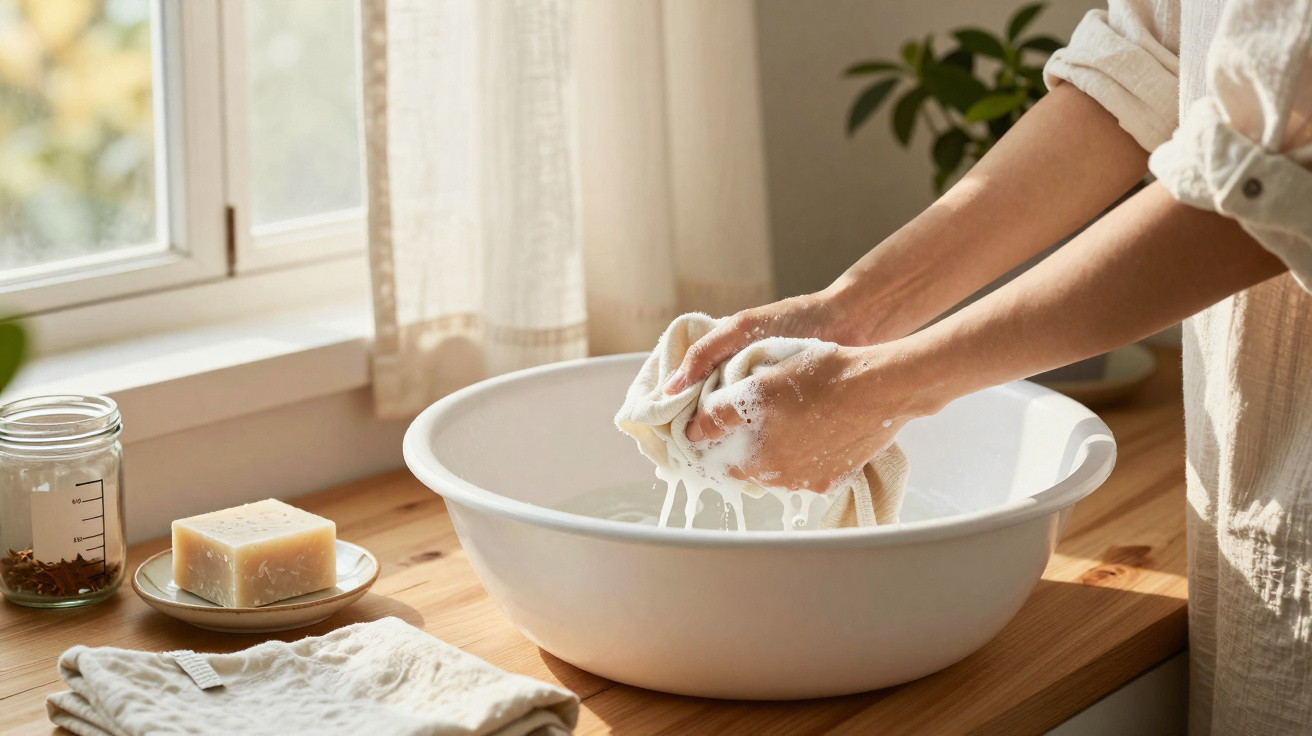
Keeping a linen curtain looking elegant takes a little care, as the natural fabric can be damaged if handled roughly. Regular build-up of dust can also affect the feel of your home, but coconut soap cleans the fabric thoroughly without spoiling its light, fluid drape.
Why is coconut soap ideal for cleaning linen?
Natural fabrics need a particularly gentle clean, so the original structure is protected and unwanted shrinkage is avoided. A neutral product lifts built-up dust without attacking the fabric’s delicate texture, helping to maintain the softness of the natural fibres safely.
Choosing this option also helps prevent the stiffness that often appears when harsh, everyday chemical detergents are used. As a practical home alternative, it supports a gentle wash, removing heavier dirt particles while restoring the flexibility that gives the curtain its attractive fabric drape.
How to clean wool garments without ruining the fibres?
Using a mild, baby-safe product removes deep impurities and protects wool’s natural softness when done… Read more
How should you prepare the curtain before you start washing?
Before you wet the linen, take off any metal or plastic accessories used to hang it on the track or rail. Removing these hooks helps prevent rust marks or tearing during washing, especially with direct contact with cold water and neutral coconut soap.
It also helps to vacuum the entire surface first to remove dry residue sitting on the linen curtain. This simple first step stops dust turning into sludge once wet, making an at-home gentle wash much easier.
Below, there is a video from the Uai Sil channel on YouTube that explores the points covered in this topic in more detail:
What is the step-by-step method for hand-washing linen?
Fully dissolve the soap in cold water before placing the fabric in the basin, as this reduces the chance of pale marks on the surface. Lower the curtain in slowly and move it gently, leaving it to sit for a few minutes so the product can effectively loosen all built-up dust.
Rinse very thoroughly until no foam remains, as leftover soap can make the fabric feel stiff afterwards. Never wring the curtain hard, because this aggressive action breaks fibres and affects the proper fabric drape, as advised by the care label.
Materials for washing linen
Required items - Set aside these essentials to achieve an effective clean:
- Neutral coconut soap (bar or liquid);
- Plenty of clean cold water;
- A vacuum cleaner with a soft brush attachment.
How do you dry it correctly to protect the fabric?
Always dry in the shade so direct sunlight does not over-dry the weave. Strong heat can fade colours and harm the natural fibres, which is why drying on the curtain pole (rehanging in its usual place) is the recommended approach.
Hanging the linen curtain back up while it is still slightly damp lets the fabric’s own weight straighten the threads naturally. This reduces creasing and often removes the need for ironing, restoring the light feel and neat fabric drape with minimal effort.
Below are the main benefits of keeping up this periodic care routine at home:
- Complete removal of household dust mites;
- Preservation of linen’s original colour;
- Return of the curtain’s natural flexibility.
How often should we clean curtains?
Preventative care should be done at least twice a year to stop heavy build-up of outdoor dirt in living areas. Homes with strong airflow or those on busy roads usually need more frequent gentle washing with neutral coconut soap.
Vacuuming the surface weekly helps extend the time between deeper washes and supports the wellbeing of allergy-prone household members. Keeping to this simple routine prevents built-up dust from settling in and helps your valuable linen curtain last as long as expected.



Comments
No comments yet. Be the first to comment!
Leave a Comment