
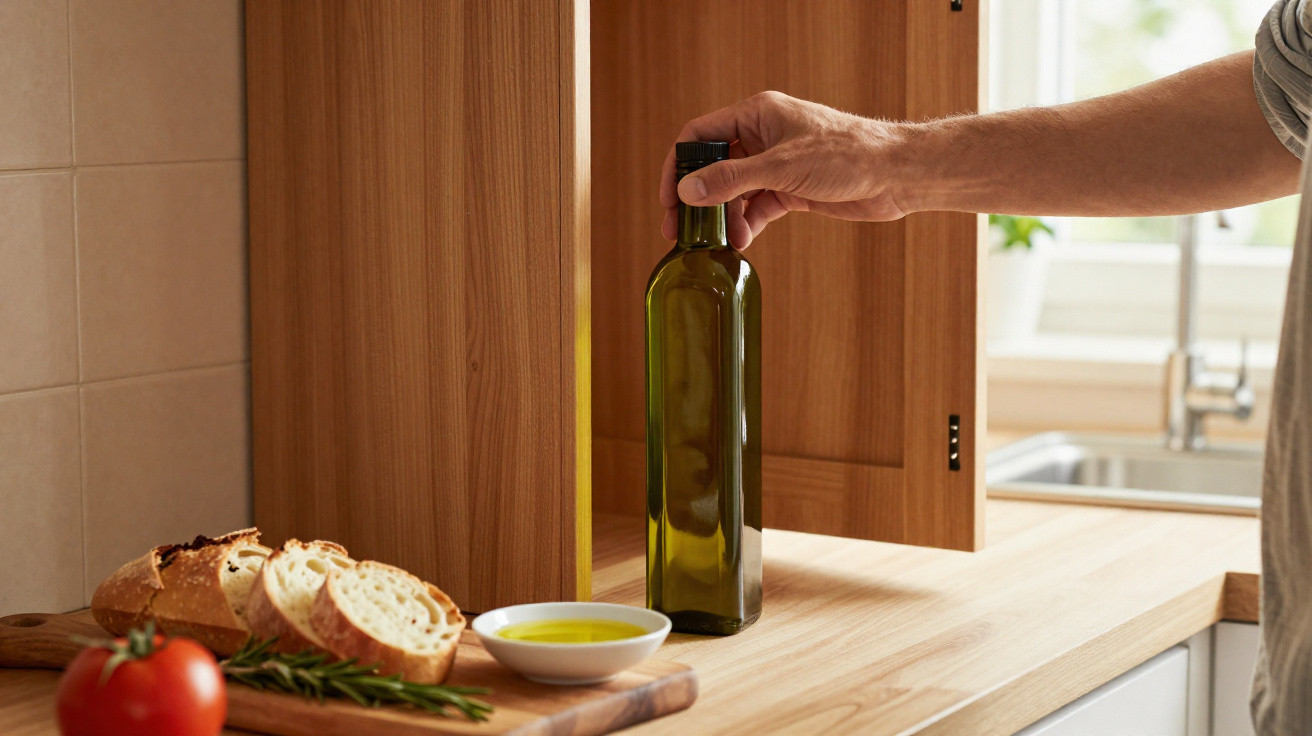
Storing olive oil properly is not just a question of leaving the bottle upright or on its side. The best approach is to keep it upright, tightly sealed, and away from light, heat and oxygen.
Why does olive oil go off faster when it’s stored badly?
Olive oil is sensitive to its surroundings because it oxidises when it comes into contact with air, heat and light. Over time, it loses its aroma, freshness and flavour, becoming duller, more bitter, or developing a rancid smell.
Olive oil is a plant oil extracted from olives, the fruit of the olive tree, and is widely used in Mediterranean cooking. Because it contains delicate aromatic compounds, it needs careful storage to preserve quality and taste.
The main enemies of olive oil are:
- Oxygen: speeds up oxidation after the bottle is opened.
- Heat: the hob, oven and direct sunlight reduce aroma and freshness.
- Light: clear packaging and bottles left on exposed worktops damage the oil.
- An open bottle: the emptier it gets, the more air remains inside.
- A loose cap: lets the olive oil “breathe” and lose quality.
Why shouldn’t you store a bottle of olive oil on its side?
If a bottle is only partly full and is laid down, the surface area where the oil meets the air can increase. That greater contact encourages oxidation, especially when the bottle has been opened many times during daily use.
Laying the bottle down can also keep the cap in constant contact with the oil, increasing the risk of leaks, trapped odours and mess on the outside of the packaging. For everyday cooking olive oils, keeping the bottle upright is more practical and safe.
What is the correct way to store olive oil?
Ideally, keep the bottle upright, always tightly closed, and stored in a cool, dark cupboard. Leaving it on the worktop next to the hob may feel convenient, but it exposes the oil to repeated heat, steam and temperature changes.
Protected olive oil lasts longer
The rule is to minimise light, air and heat.
Store the bottle upright and put the cap back on straight after using it.
Choose a closed cupboard, away from the hob, window and oven.
Dark bottles help, but they are not a magic fix if the oil is left in a warm spot. If your olive oil comes in a large container, a useful option is to decant small amounts for weekly use, keeping the rest sealed and protected in a suitable place.
To store it better, follow these tips:
- Keep the bottle upright and firmly capped.
- Store it in a dark, cool, dry cupboard.
- Avoid placing it near the hob, oven or window.
- Prefer smaller, dark bottles for everyday use.
- Wipe the neck of the bottle so it closes without residue.
How long does olive oil last after opening?
Once opened, olive oil is best used within 1 to 3 months to keep the aroma and freshness at their best. In good conditions it may last longer, but sensory quality tends to drop over time as oxidation progresses.
The timeframe also depends on the type of olive oil, the packaging, the kitchen temperature and how often the bottle is opened. The more empty space inside the bottle, the more air is present-and the faster the product may lose its fragrance and balance.
Look for these signs that quality is declining:
- A rancid smell, like old cooking oil or stale nuts.
- A muted, heavy flavour, or an unpleasant bitterness.
- Loss of a fresh, fruity or herbal aroma.
- The bottle has been left exposed to kitchen heat for too long.
How can you use olive oil routinely without losing flavour?
Just as olive oil lifts and transforms a dish, it needs to reach the food with its aroma intact. Storing it well is part of the flavour-not merely a matter of kitchen organisation.
The best habit is to buy quantities that match your household’s consumption, close the cap immediately, and avoid keeping a bottle open for months. This way, the olive oil retains more freshness, sheen and character on salads, vegetables, pasta and finishing drizzles.

Comments
No comments yet. Be the first to comment!
Leave a Comment