
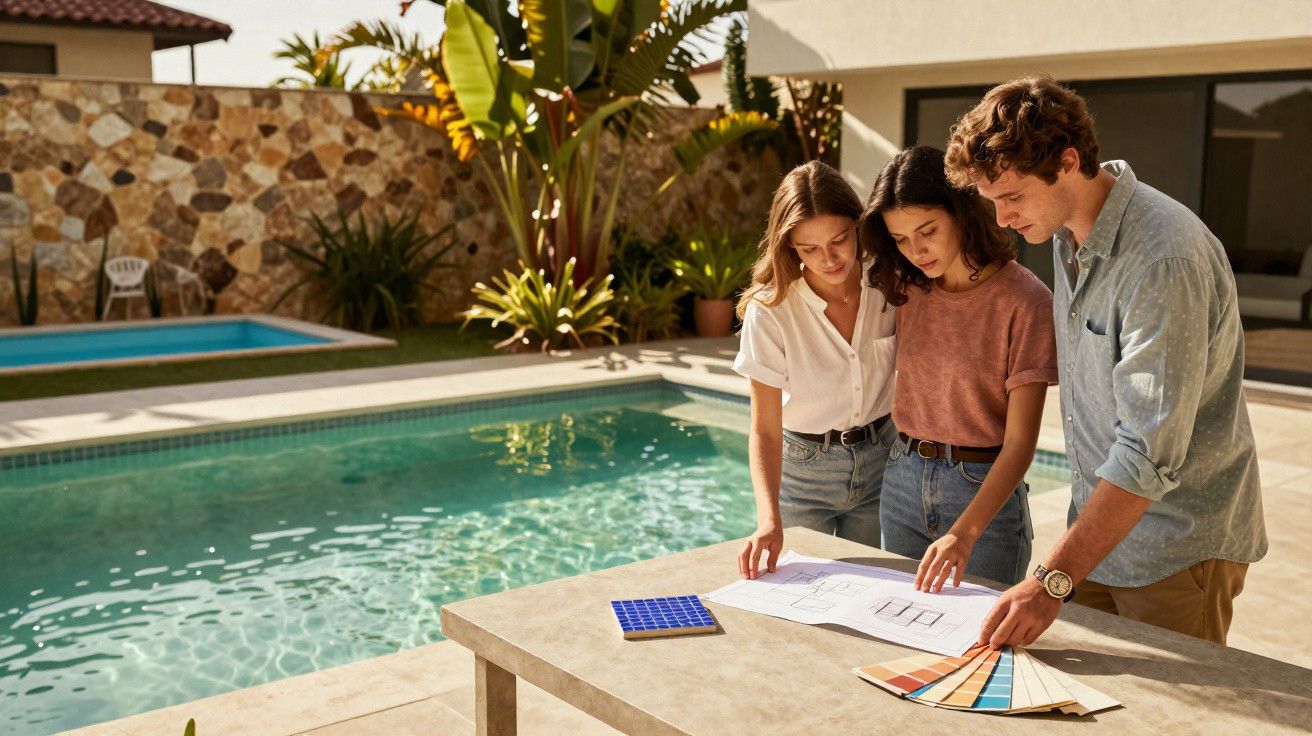
You know that feeling that every new swimming pool looks like it came off the same production line? A light-blue rectangle, white edging, surrounded by pale stone. That sameness is exactly what has been frustrating architects and engineers who are rethinking how residential swimming pools are designed.
The critique shaking up the architecture world
The spark came from an architect and an engineer interviewed by the Spanish magazine Arquitectura y Diseño. Their line quickly did the rounds: “we don’t like traditional blue pools because lately they’re all the same, they become tiring”. The complaint is about standardisation-not only of the shape, but also the finishes and even the perceived colour of the water.
In their view, the pool has stopped being a statement piece in the garden and turned into a catalogue item. The consequence is that back gardens in Spain, Portugal and Brazil can start to feel interchangeable, as if you could swap them around and nobody would notice.
- Repeated formula: the pale-blue rectangle has become the default in almost every new garden.
- Colours on the rise: sand, green, grey and even black are beginning to replace blue tiling.
- Natural integration: pools designed to read like ponds or reflecting pools are gaining ground.
- Free-form shapes: bespoke designs are once again highlighting the plot’s natural layout.
- Less is more: smaller, better-integrated pools can outshine oversized ones with no character.
Why so many back gardens ended up looking the same
There isn’t a single cause. A large share of today’s residential pools are selected from fibreglass catalogues or bought as ready-to-install kits, with predefined shapes and factory-blue finishes. It’s affordable and quick-but it also means your pool can end up looking just like your neighbour’s.
On top of that comes the influence of social media. One image takes off, and suddenly everyone wants that same infinity pool with a pale timber deck. Before long, an entire country is reproducing the exact same scene. Individual design takes a back seat, squeezed out by what looks best on Instagram.
The colour detail that changes everything in a design
A core part of the criticism focuses on the blue finish. For decades it has been treated as synonymous with “swimming pool”, yet architects now argue it’s an aesthetic preference, not a technical requirement. Water reads as blue because of the sky and the way light behaves-not because of the tiles.
The finish colour sets the mood of the pool
Each tone creates a different feeling
Sand-coloured finishes can give the water a Caribbean-beach look. Green tones evoke natural lagoons and sit beautifully alongside lush planting.
Greys, blacks and microcement, meanwhile, create the well-known reflecting-pool effect-sleek and modern-which is increasingly appearing in contemporary projects.
Moving away from traditional blue can feel bold, but it’s also one of the simplest and most cost-effective ways to avoid the obvious. The price is often similar, yet the visual impact can completely reframe the back garden.
It’s worth thinking differently before you build yours
If you’re planning a pool at home, the specialists’ advice is to pause and start with the setting, not the shape. The plot, planting, view and even the sun’s position should lead the design-not the other way round. A long, narrow pool can work in spaces where a standard design simply won’t.
Materials such as microcement, natural stone and timber are showing up more and more in residential schemes. They bring character without demanding massive building works, and they tend to age with more charm than glossy tiles.
A trend that has already reached Brazilian gardens
In Brazil, the shift is already clear in the work of architects opting for organic-shaped pools, shallow lounging ledges, integrated hot tubs and earthier tones. The pool stops being a generic postcard feature and becomes part of the home again-distinctive and personal.
Ultimately, the professionals’ point is less about the colour blue and more about creative laziness. A pool can be many things, and perhaps the real mistake was accepting that they all needed to be the same.
Like looking at swimming pools from a different angle? Share this with that friend who’s dreaming of building one at home.



Comments
No comments yet. Be the first to comment!
Leave a Comment