
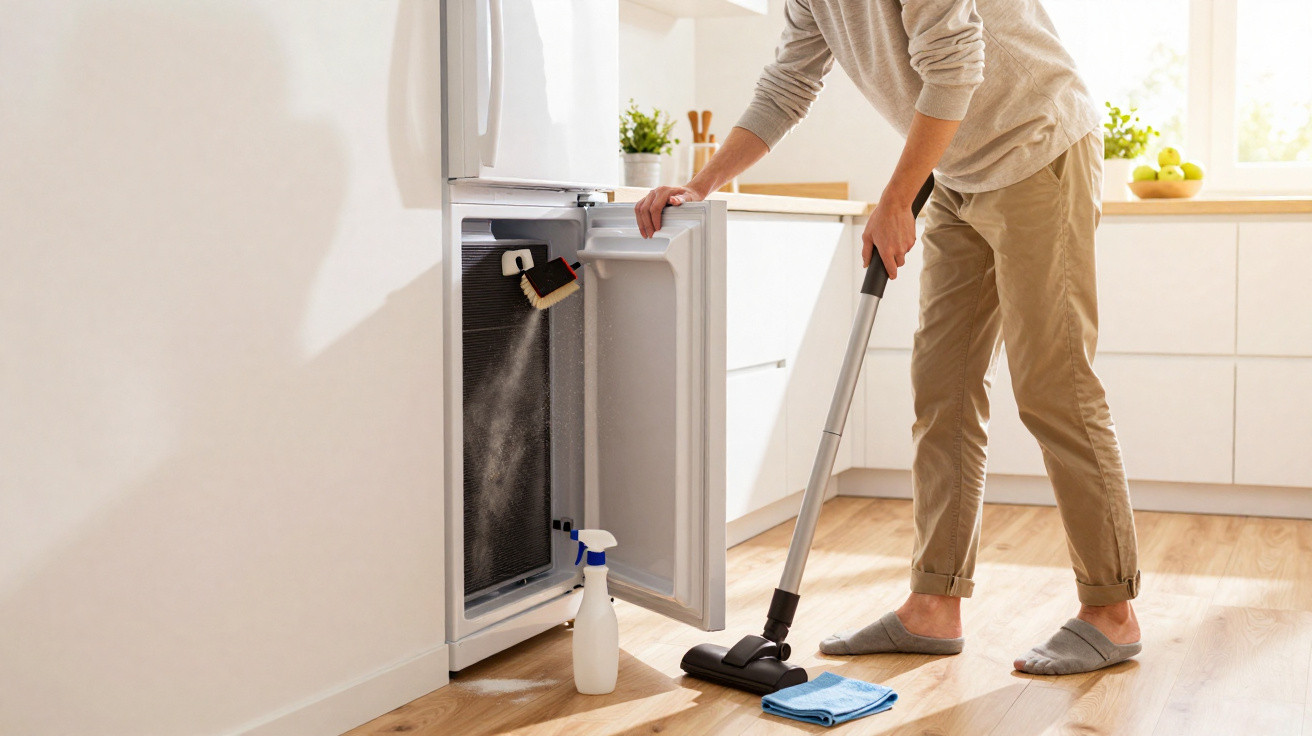
Cleaning the back of the fridge is often one of the most postponed jobs in the household routine, even though it has a direct effect on performance, electricity use and the appliance’s lifespan.
Why does cleaning the back of the fridge make such a difference?
On the rear of the appliance - or underneath on some newer models - you’ll find the condenser, compressor and pipework responsible for releasing the heat removed from inside the fridge. When this area builds up dust, fluff and grease, heat transfer is reduced and the unit has to work harder to cool.
That extra strain pushes energy consumption up, speeds up wear on components and can contribute to overheating and cooling problems. In more extreme cases, the dirt that collects can encourage unpleasant smells and increases the risk of excessive heat in parts that already run at high temperatures.
How often should you clean the back of the fridge at home?
The best interval for cleaning the back of the fridge depends on the environment where it sits. In homes with pets, carpets or lots of foot traffic, it’s worth doing it more often to prevent heavy build-up.
In those situations, it’s advisable to clean it every three or four months; in more stable environments, twice a year is usually enough. If you notice the rear feels very hot, the fridge is louder than normal, or there’s a sudden rise in your electricity bill, it makes sense to bring the clean forward.
How to clean the back of the fridge step by step, safely
The process is straightforward, but it does require a few basic precautions: always unplug the appliance before you start, and move it slowly - ideally with help - so you don’t damage the floor or strain cables. On modern models with covers or panels, check the manual and don’t force parts held in place by screws or clips.
Once you’ve cleared space and made sure the fridge is disconnected, follow an organised sequence to avoid damage and get a more effective result:
- Unplug from the socket: stop the power supply before any contact with the rear section.
- Pull the fridge away from the wall: create enough room to work, without yanking or putting tension on cables and hoses.
- Remove built-up dust: use a brush, soft brush head or a vacuum with a narrow nozzle on the coil, grille and corners.
- Wipe away greasy residue: use a cloth lightly dampened with water or a neutral solution, without soaking anything.
- Let it dry: wait until everything is completely dry before plugging the appliance back in and moving it close to the wall again.
- Put the fridge back in position: slide it back, keeping a gap at the rear so air can circulate.
What habits help keep the fridge efficient for longer?
As well as cleaning the back of the fridge regularly, a few simple habits can improve day-to-day performance. Ensuring good ventilation around the appliance - avoiding very tight spaces or placing it too close to heat sources - is one of the most important measures.
Other practical steps, such as checking the door seal, arranging items inside without blocking air outlets, and not opening the door unnecessarily, help keep cooling consistent and reduce the load on the motor. Combined with routine rear cleaning, these habits extend the equipment’s service life and help keep electricity consumption under control.






Comments
No comments yet. Be the first to comment!
Leave a Comment