
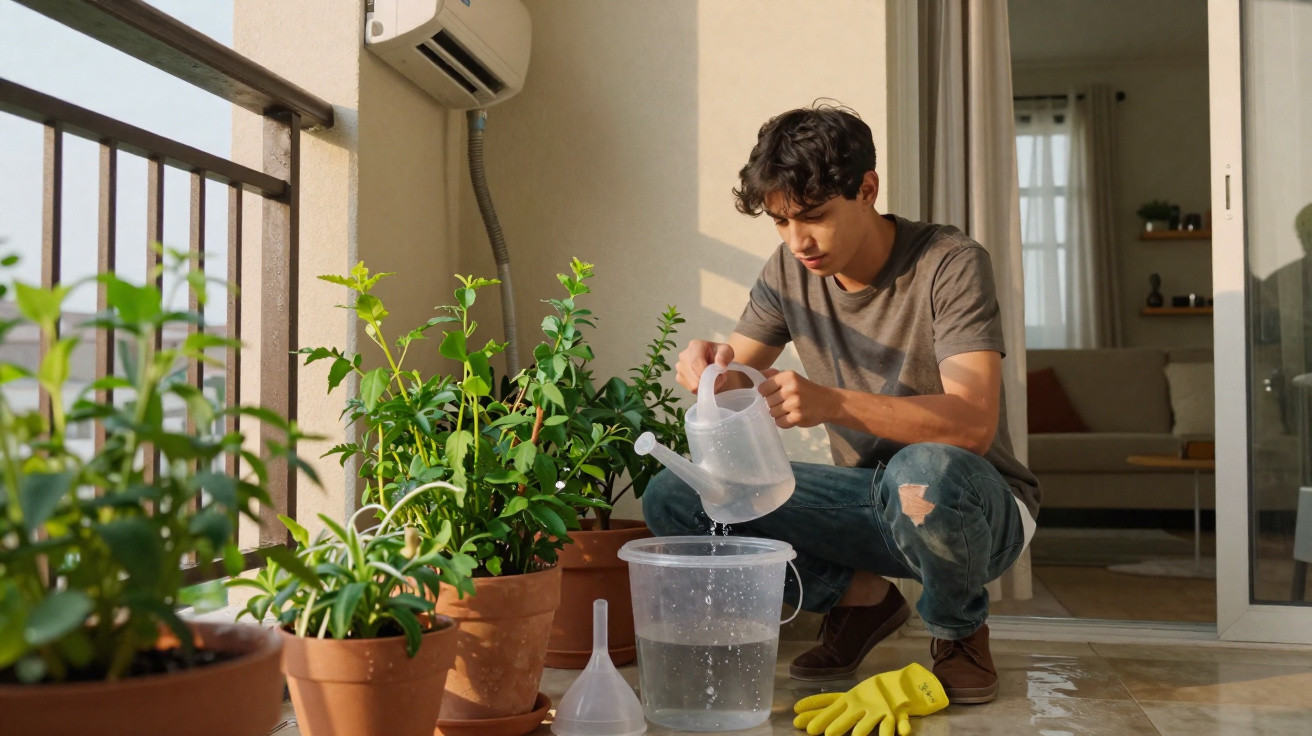
As temperatures rise, air conditioning becomes a regular fixture in many homes, bringing welcome relief from the heat. Alongside the cooler air, there is also the water that drips from the unit’s drain - often poured away without a second thought - even though it can be useful for a range of household jobs, provided clear safety limits are followed.
What is the water that comes out of the air conditioner?
The water that runs out of an air conditioner is created through condensation. As the unit cools indoor air, it removes some of the moisture in the room and turns it into small droplets that collect and flow towards the drain. For that reason, technicians commonly call it condensate water, or simply drain water.
From a physical and chemical perspective, it is low in minerals, sharing some characteristics with distilled water and typically containing no chlorine. However, as it passes through the inside of the equipment it can pick up dust, metallic particles, cleaning residues and microorganisms. Because of this, it is classed as non-potable and is not suitable for human or animal consumption.
What are the safe household uses for this water?
Reusing air conditioner water can be worked into everyday routines in a straightforward way, particularly for cleaning and upkeep indoors and outdoors. Ideally, collect it in clean containers, preferably with a lid, and use it within a few days to reduce the risk of insects and unpleasant smells.
Some household tasks stand out as practical and safe uses for this water, helping reduce reliance on treated mains water without compromising household cleanliness:
- Washing floors indoors or outdoors, together with appropriate cleaning products.
- Cleaning windows and mirrors, which can help prevent whitish limescale marks.
- Wiping dust from balcony furniture, external blinds, handrails and gates.
- Washing the car’s bodywork, reducing the marks often left by tap water.
- Cooling down terrace and balcony floors on very hot days.
How to use air conditioner water on plants safely?
In home gardening, this water can be used for ornamental plants, as long as it is not the only source of irrigation. Because it has a low salt content, it is less likely to leave deposits in the soil or on leaves, which can be helpful in areas where mains water is very hard or high in limescale.
To keep the soil balanced, it is best to alternate it with tap water or rainwater and supplement with fertilisers suited to each species. For vegetable plots, culinary herbs and fruit trees, however, use is not recommended, because impurities and microorganisms from the unit could come into contact with edible parts and are not considered safe.
What precautions and prohibitions should be followed when reusing this water?
Even if it looks clean to the naked eye, drain water should not be treated like treated public mains water and comes with important restrictions. It must not be used for drinking, cooking, washing food, filling animal water bowls, aquariums, humidifiers, steam irons, or for any personal hygiene purpose.
Regular air conditioner maintenance - including cleaning the filters, condensate tray and pipework - can improve the quality of this water, but it does not make it potable. To build reuse into your routine, direct the drain into sanitised containers, watch for changes in colour, smell or sediment, and discard it if contamination is suspected, keeping water-saving efforts aligned with your family’s safety.




Comments
No comments yet. Be the first to comment!
Leave a Comment