
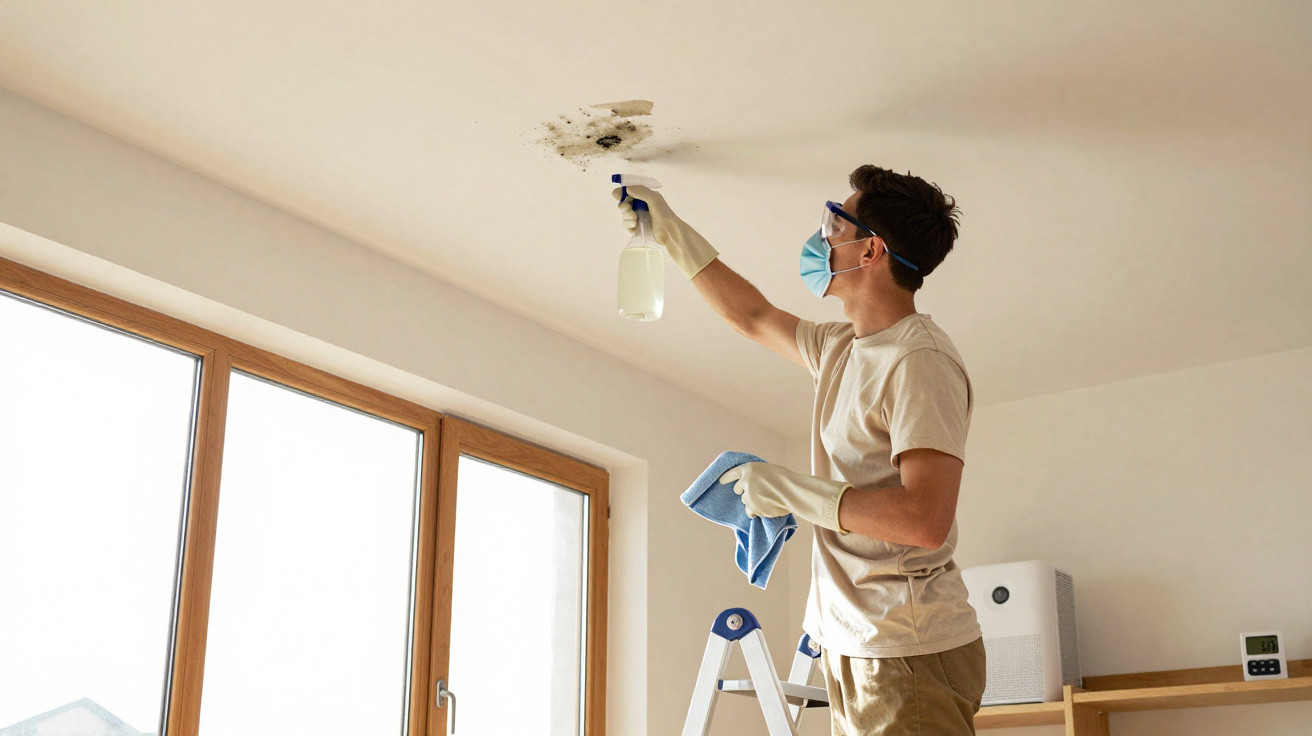
Removing mould from a ceiling calls for more care than cleaning a wall, because you are working overhead, there is a greater chance of splashes getting into your eyes, and the stain often returns when there is a leak, trapped steam, or poor ventilation. For small, surface-level patches, warm water, mild washing-up liquid, white vinegar and bicarbonate of soda can help lift the mould without resorting to harsh products.
Why does ceiling mould come back so often?
Ceilings are exposed to hot shower steam, condensation and limited air movement, especially in bathrooms without a window or extractor fan. When moisture stays above ideal levels for long periods, spores find a cool, damp surface and start growing again.
It is also common to mistake cleaning for a permanent fix. If there is a cracked roof tile, water seeping through a concrete slab, a leak from the flat above, or paint that is lifting due to damp, mould can return even after a thorough clean.
Which home remedy works best for small stains?
The safest approach starts with mild washing-up liquid and warm water to remove grime and any surface film. White vinegar is then used separately, as its acidity can help clear superficial mould on washable areas; bicarbonate of soda is saved for gently scrubbing away lingering marks and cutting odour.
- 1 litre of warm water with 1 teaspoon of mild washing-up liquid for the initial clean.
- Neat white vinegar in a spray bottle to apply after the surface is clean.
- 1 tablespoon of bicarbonate of soda with a little water to make a light paste.
- A clean cloth and a soft brush, so you do not pull off loose ceiling paint.
How do you apply it on the ceiling safely?
Before you begin, open doors and windows, and wear gloves, a mask and safety goggles. Use a sturdy step ladder with someone nearby, and never work from an unstable stool or on a wet floor.
Apply only a small amount at a time to the cloth, rather than spraying directly onto a soaked ceiling. This helps prevent splashes to your face and reduces the chance of moisture soaking further into paintwork or plasterboard.
What is the step-by-step process to remove mould?
This method is most suitable for small areas on washable paint with no signs of an active leak. If the ceiling feels soft, shows yellow staining, is peeling, or has a large area covered in mould, home cleaning will not address the root cause.
- Cover the floor and remove towels, bathmats and other items from the bathroom.
- Wipe the area with warm water and mild washing-up liquid to lift surface dirt.
- Dry the area with a second clean cloth.
- Put white vinegar on the cloth and press it onto the stain, without soaking the surface.
- Leave it for 30 to 60 minutes, keeping the bathroom well ventilated.
- Gently scrub only where marks remain, using a bicarbonate-of-soda paste.
- Wipe away residue with a damp cloth, dry thoroughly, and keep the room open to air.
Mould only stops coming back when moisture is controlled
After cleaning, the ceiling must dry out completely. Use the extractor fan, leave the door open after showering, avoid piles of damp towels, and keep indoor humidity low, because health bodies recommend controlling moisture and fixing leaks to prevent mould from returning.
If the stain reappears within a few days, grows larger, or comes with a strong smell, the cause is likely behind the paint layer. In that situation, repairs should focus on the leak, waterproofing, ventilation, or replacing damaged material before applying any further coat of anti-mould paint.





Comments
No comments yet. Be the first to comment!
Leave a Comment