
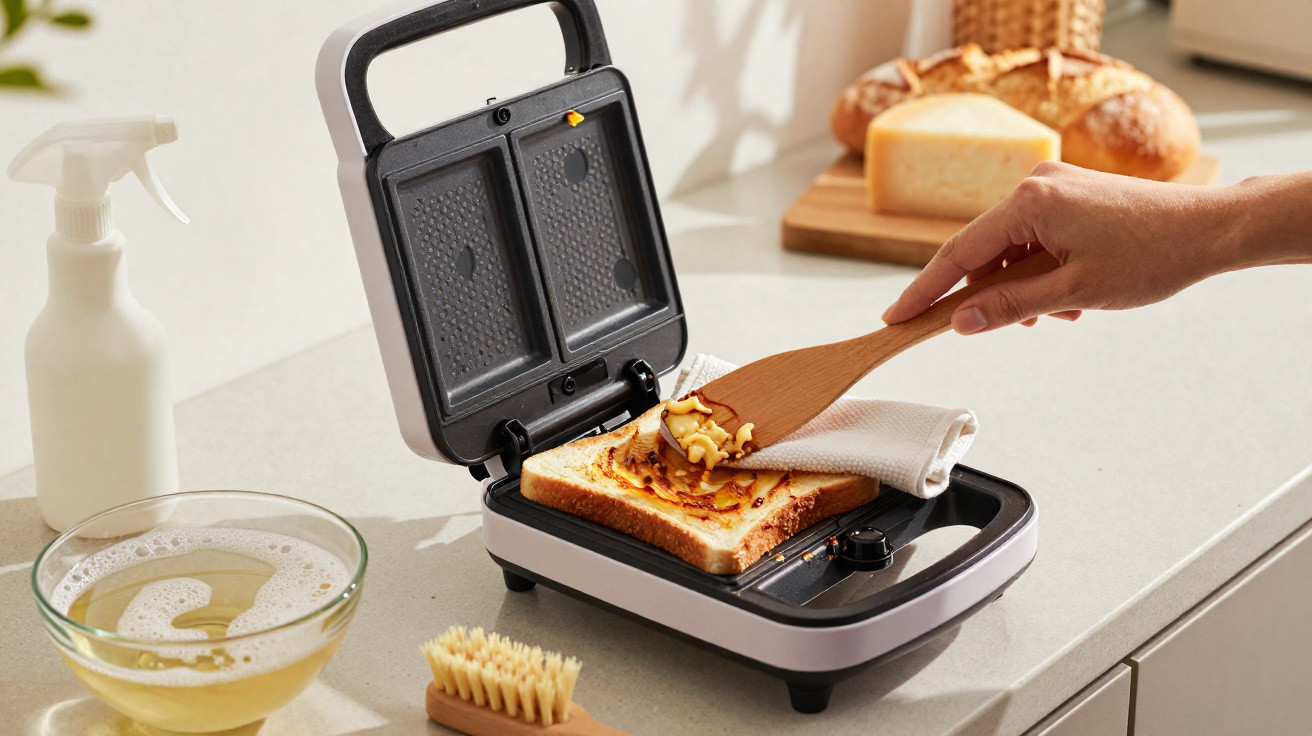
Cleaning a sandwich maker when food has baked onto the plates can be a real headache in many kitchens. Grease, melted cheese and bits of bread gradually build up, turning into stubborn crusts that don’t shift with a quick wipe. Over time, this can affect how well the appliance cooks and leave a lingering burnt smell.
Why does residue stick so firmly to the sandwich maker?
A sandwich maker is harder to clean because it operates at high temperatures and the food sits directly on the hot plates. When melted cheese, fat and batter or fillings run out, they scorch and form a hardened layer that can bond to the non-stick coating once the appliance cools without being cleaned.
Using knives, metal forks and other sharp utensils can also scratch the surface, creating tiny grooves where grime clings more easily. On top of that, a few everyday habits tend to make the build-up worse and make removal later far more time-consuming.
Which habits contribute to dirt build-up?
Certain preparation and cleaning routines encourage residue to accumulate and can shorten the life of the coating. Knowing which habits cause the problem makes it easier to adjust how you use your sandwich maker.
- Making very greasy sandwiches with no protection on the plates;
- Not wiping the plates with a damp cloth while the appliance is still warm;
- Using too much oil, which burns and darkens the surface;
- Putting the sandwich maker away with visible, already-dried residue;
- Cutting the sandwich directly on the plates with metal utensils.
How to do a safe deep clean on a sandwich maker
You can deep-clean a sandwich maker without harming the non-stick coating by relying on leftover heat, a damp cloth and gentle products. The key is to soften the crust before rubbing, avoiding excessive force and anything abrasive that could scratch the surface.
A straightforward method is to unplug the appliance, wait until it is warm (not hot), lay a damp cloth with a little washing-up liquid over the plate and close the lid for a few minutes. Then clean with a soft sponge and, for very stubborn spots, use a mild paste of bicarbonate of soda and water. Finish by wiping away all residue with a well-wrung cloth.
What daily safety and prevention steps should you follow?
When cleaning, always unplug the sandwich maker, avoid immersing it in water, and never use wire wool, harsh chemicals or pointed objects. If you notice cracks, a constant burnt smell, or exposed wiring, the safest option is to contact a qualified repair service.
To prevent residue build-up, wipe the plates while they are still warm using a damp cloth and mild detergent, remove any cheese that spills out promptly, use greaseproof paper or grill sheets when the manual allows, and store the appliance clean, dry and protected from humidity to maintain durability and consistent performance.




Comments
No comments yet. Be the first to comment!
Leave a Comment