
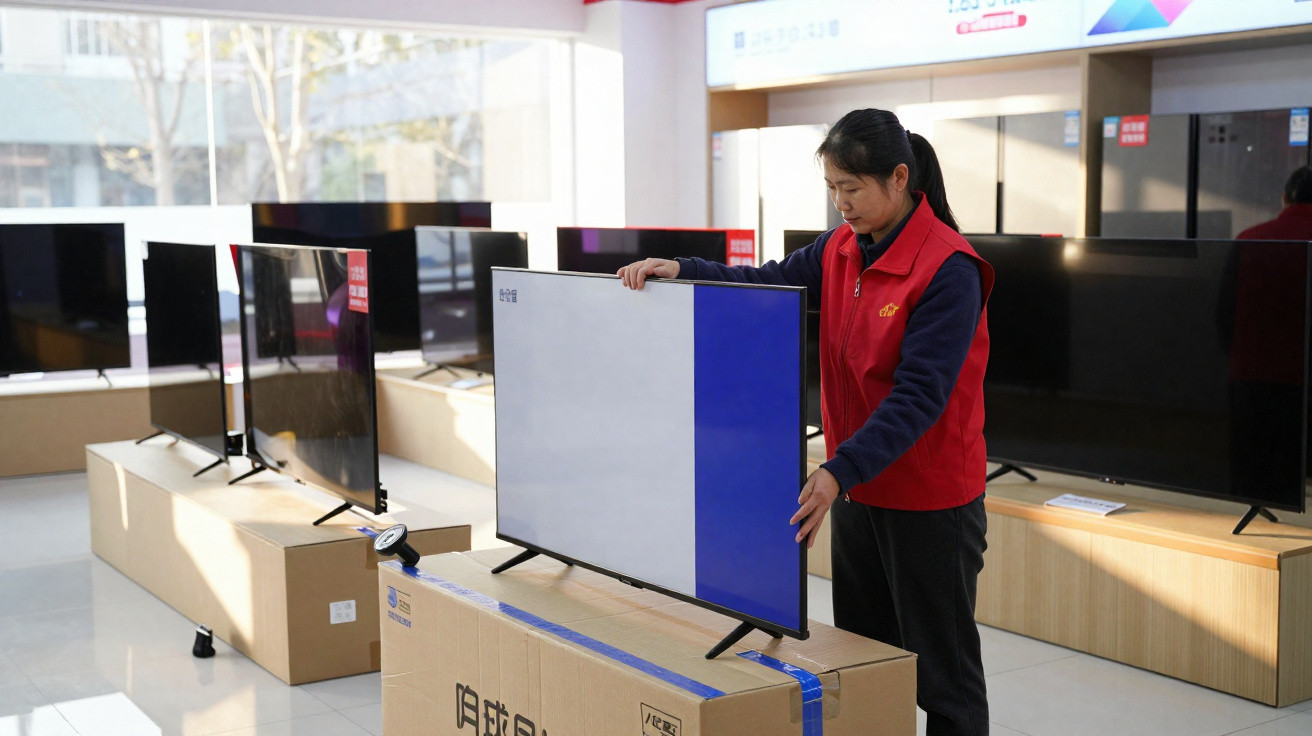
Samsung, the South Korean company, announced on Thursday that it will stop selling all of its home-appliance products in mainland China - a move it linked to a "rapidly changing market environment".
In a statement, the firm said that, after a "prudent study", it had chosen to discontinue sales in mainland China across its entire range of household products.
Samsung added that it will continue to provide after-sales service to customers who have already bought these products, in line with the regulations currently in force.
Which Samsung products are being withdrawn in mainland China
According to information available on Samsung’s official website in China, mobile phones will continue to be sold as normal. The withdrawal, however, covers televisions, monitors, large-format commercial displays, air conditioners, refrigerators, washing machines, tumble dryers, sound equipment, projectors, vacuum cleaners and air purifiers, among other devices.
Samsung’s presence in China and the shift in competition
Samsung officially entered the Chinese market in 1992, when it began manufacturing and selling in the country. For years, it held a significant position in categories such as televisions, refrigerators and washing machines, with a brand image associated with the mid-to-high end of the market.
However, the rise of Chinese manufacturers in home appliances and consumer electronics has steadily eroded its share in an increasingly competitive marketplace.
Market share figures cited by Red Star News
According to figures cited by the Chinese outlet Red Star News, last April Samsung held, in physical retail channels, a sales share of 3,62% in televisions, 0,41 % in refrigerators and 0,38 % in washing machines.
The same outlet quoted Dong Min, secretary-general of the China Video Industry Association, who attributed the adjustment to the "global competitive landscape of the industry" and the company’s own "strategic decisions".
Dong also pointed to what he described as Samsung’s "insufficient localisation" in both management and products, the growth of Chinese brands such as Hisense, TCL and Xiaomi, and the "lower appeal" of foreign brands among younger Chinese consumers.






Comments
No comments yet. Be the first to comment!
Leave a Comment