
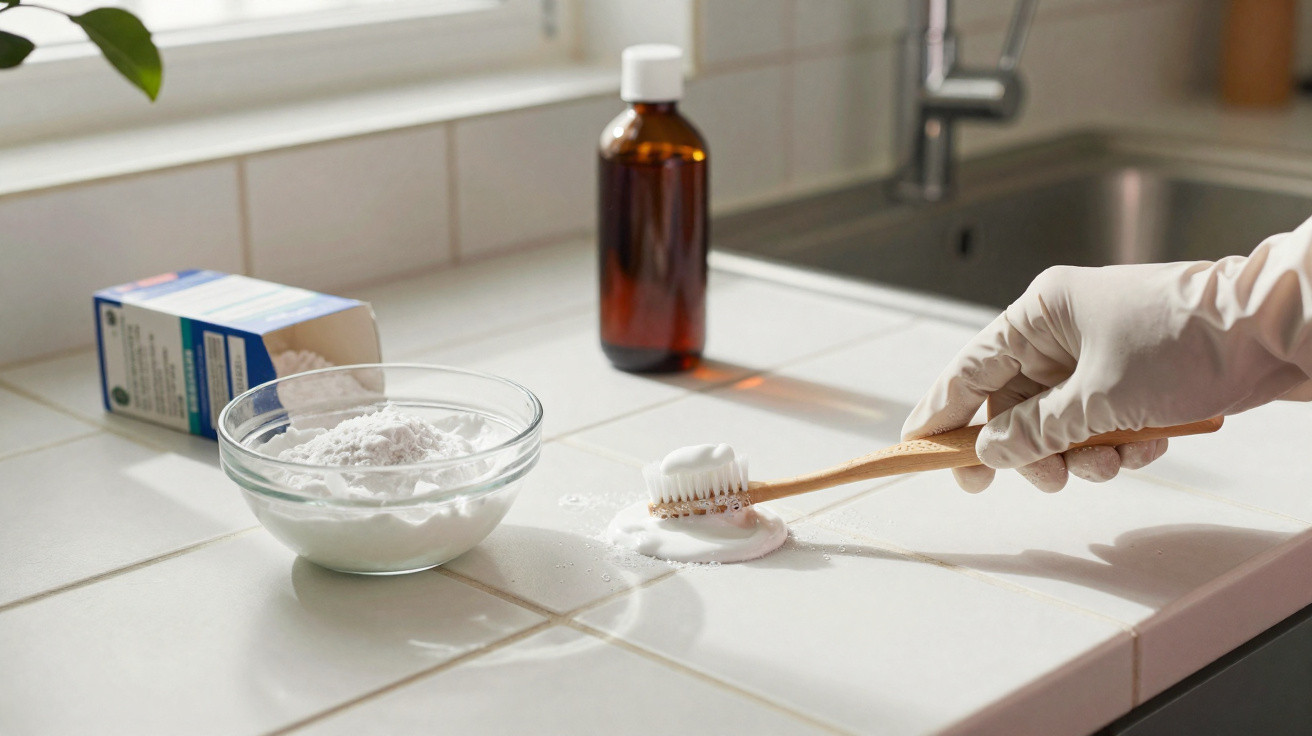
The mixture of bicarbonate of soda and hydrogen peroxide is commonly used in household cleaning to lift yellowish stains, shift built-up grime, and tackle stubborn marks on hard-wearing surfaces. It tends to work best when made into a paste and left on briefly, always using 10-volume hydrogen peroxide and testing first on an inconspicuous spot.
What is the mixture of bicarbonate of soda and hydrogen peroxide used for?
This mixture is used to brighten light staining, loosen old grease, and boost cleaning on grout, sinks, tiles, and light-coloured utensils. Bicarbonate of soda provides a gentle abrasive action, while hydrogen peroxide helps by oxidising organic residues.
It is often helpful when ordinary washing-up liquid is not enough on its own. Even so, it should not be treated as a universal cleaner, because some surfaces may stain, lose their shine, or become scratched.
How do you prepare the cleaning paste correctly?
Make only a small amount and use it straight away. The safest approach is to put bicarbonate of soda in an open container and add 10-volume hydrogen peroxide little by little until you get a smooth, creamy paste.
- Use 2 tablespoons of bicarbonate of soda.
- Add 10-volume hydrogen peroxide gradually.
- Stir until it forms a paste that does not run.
- Apply using a cloth, a soft brush, or a non-abrasive sponge.
- Do not store the prepared mixture in a sealed container.
Which surfaces does it work best on?
The paste usually performs well on washable, light-coloured areas, especially where grime has built up over time. Keep the contact time short, then rinse thoroughly and dry with a clean cloth.
- Light-coloured bathroom and kitchen grout.
- Durable tiles and ceramic floors.
- White ceramic or stainless-steel sinks, applied gently.
- Stained plastic chopping boards.
- Inner sections of white trainers, where the material allows wet cleaning.
Which materials need extra care?
The mixture of bicarbonate of soda and hydrogen peroxide can be too harsh for wood, marble, granite, natural stone, coloured fabrics, leather, sensitive aluminium, and painted surfaces. In these situations, it may bleach, scratch, or leave dull patches.
It is also best avoided on dark clothing and delicate textiles. If you want to remove a stain from fabric, testing on a hidden area is essential, because hydrogen peroxide can change the garment’s original colour.
Which combinations should be avoided for safety?
Hydrogen peroxide should not be mixed with vinegar, bleach, ammonia, strong disinfectants, or unknown cleaning products. These combinations can produce irritating fumes, trigger unwanted reactions, and increase the risk of accidents while cleaning.
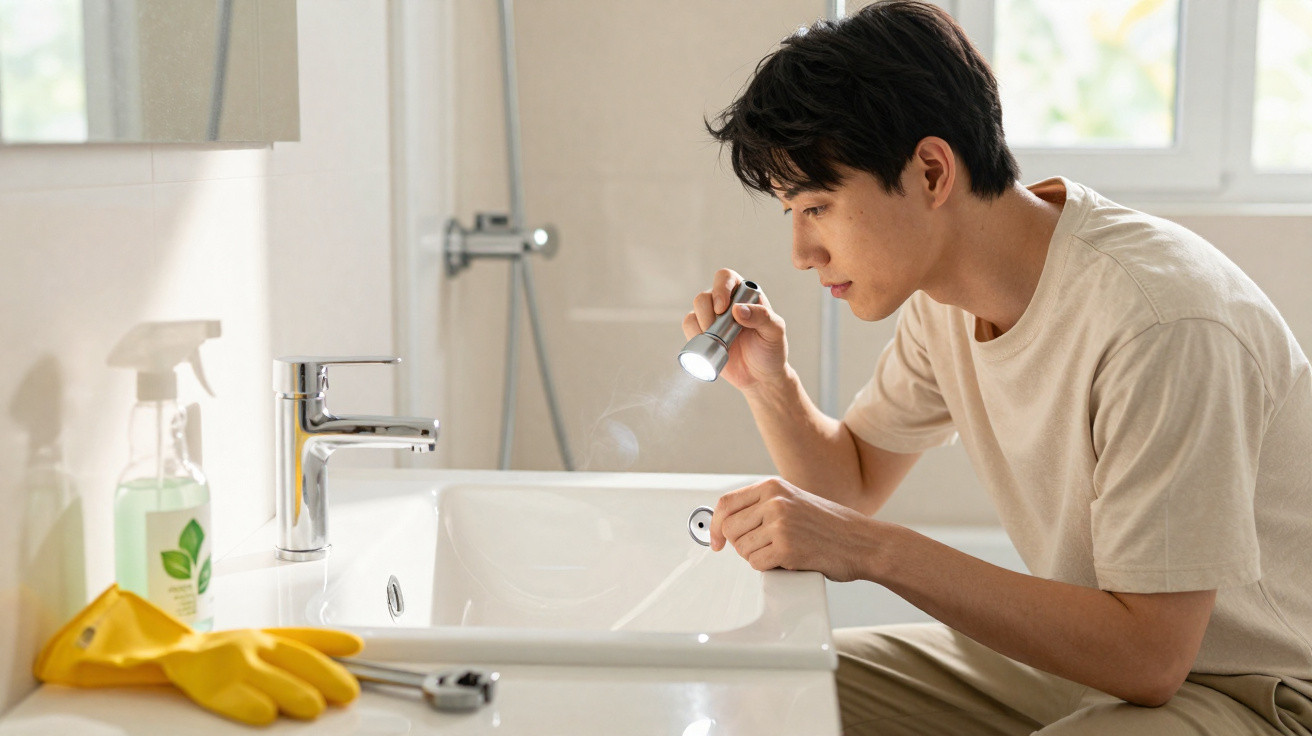
The safest method is to apply the paste to small areas, wear gloves, ensure good ventilation, and rinse thoroughly afterwards. This way, the bicarbonate of soda, the 10-volume hydrogen peroxide, and mechanical scrubbing work together without turning heavy-duty cleaning into a hazard at home.

Comments
No comments yet. Be the first to comment!
Leave a Comment