
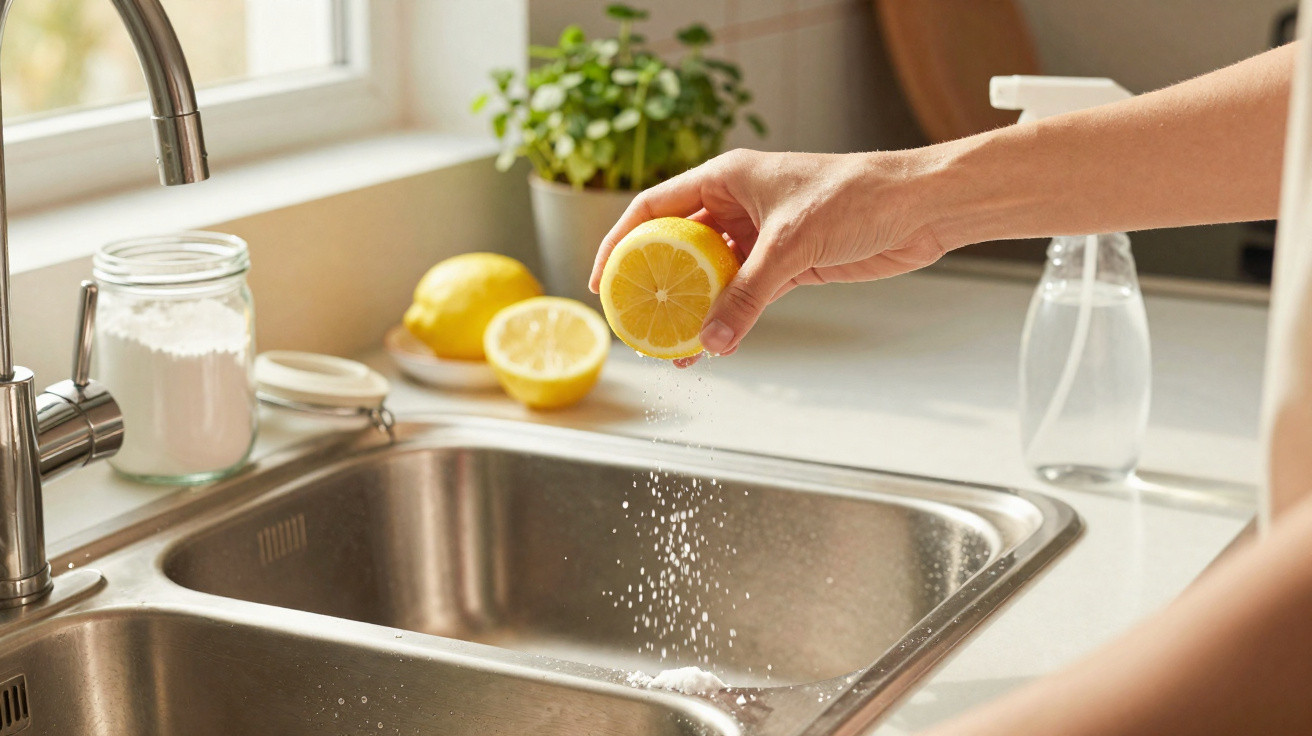
Mixing bicarbonate of soda with lemon juice is a common home tip for tackling light grime, cutting down on odours and adding a bit of shine to certain washable household surfaces. It brings together the mild abrasiveness of bicarbonate of soda and the acidity of lemon, producing a fizzy reaction that can be handy for straightforward everyday jobs.
What is mixing bicarbonate of soda with lemon juice used for?
This mixture is mainly used to help clean slightly greasy areas, fresh marks, sink residue, smells from a washable bin and light scuffs on utensils. It does not replace disinfectant when proper deep sanitising is needed, but it can make routine dirt easier to lift.
When lemon meets bicarbonate of soda, it foams. The fizz helps loosen surface residue, while the gently gritty texture of bicarbonate of soda supports light scrubbing without relying on very harsh products.
What is the ideal ratio for preparing the mixture?
The most practical approach is to start with a small amount of bicarbonate of soda and add lemon juice little by little until it becomes a paste. It is best to make only what you need for immediate use, as the reaction quickly loses strength.
- Use 1 tablespoon of bicarbonate of soda.
- Add lemon juice gradually, without soaking the mixture.
- Stir until you get a smooth, creamy paste.
- Apply with a cloth, a soft brush or a non-abrasive sponge.
- Wipe everything away with a damp cloth, then dry the surface afterwards.
On which surfaces does this combination work best?
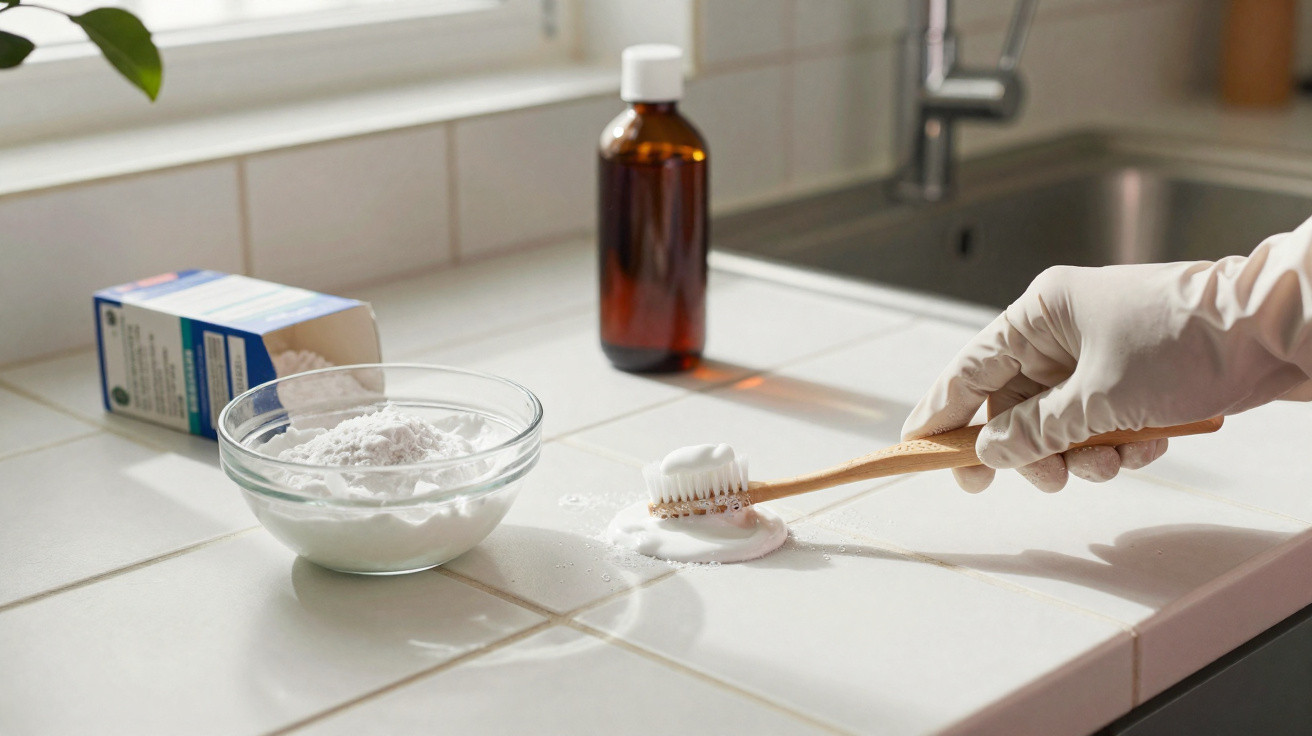
This blend tends to work best on sturdy, washable surfaces that are not sensitive to acidity. Stainless-steel sinks, tiles, pale grout lines, well-sealed worktops and the outside of bins can handle this homemade option when used carefully.
- Kitchen sink with light grease.
- Tiles with recent marks.
- Pale grout with surface-level dirt.
- Washable bins with built-up odour.
- Tough pans and utensils, as long as there is no delicate coating.
What should you avoid to prevent damage at home?
Lemon is acidic, and bicarbonate of soda can leave scratches if you scrub too hard. For that reason, do not use the mixture on marble, unsealed granite, wood, screens, electronics, sensitive aluminium, porous floors or waxed surfaces.
It is also important not to combine this recipe with bleach, ammonia, strong disinfectants or chlorinated products. Even though it is a homemade mixture, it should only be used for external cleaning-never as a drink, medicine, skin treatment or tooth whitener.
How can you get the best results day to day?
For the best outcome, apply bicarbonate of soda with lemon juice to specific spots, leave it for just a few minutes, then remove it completely. Testing a small hidden area first helps prevent staining, dullness or wear on more delicate materials.
Used sensibly, this combination can be a simple helper for cleaning the house, neutralising mild odours and leaving a pleasant citrus scent. The key is to mix up a small amount, stick to suitable surfaces and avoid treating the recipe as a fix for every kind of mess.



Comments
No comments yet. Be the first to comment!
Leave a Comment