
That is exactly where the real problem begins.
Anyone who eats tinned fish now and then knows the routine: pop the lid, lift out the sardines, and tip the oil into the sink. It disappears into the trap, the plate feels “lighter”, and so does your conscience. Yet a habit that seems convenient can, over time, damage pipework, harm the environment - and it also wastes flavour and valuable nutrients.
Why the oil from a sardine tin does not belong down the drain
In a warm kitchen, the oil still looks runny and harmless. Inside your plumbing, it behaves very differently. As it cools in the pipes, it thickens and clings to other fats and leftover food bits.
"Liquid fish oil turns into a solid fatty layer inside the pipe, building up layer by layer and narrowing the flow more and more."
Over time, this is what tends to happen:
- The inner surfaces of the pipes become coated with a greasy, sticky film.
- Food scraps catch on it and make the blockage worse.
- Water starts draining more slowly, and you can hear gurgling from the trap.
- Nasty smells develop and rise up from the drain and sink.
- Eventually the pipe blocks completely - and you end up needing a plumber.
Call-outs like that can easily cost far more than a whole year’s supply of sardines - all because a few spoonfuls of oil are repeatedly “conveniently” poured into the sink.
Fish oil in wastewater: a small kitchen habit with a big environmental impact
The issue does not stop at your kitchen wall. Oils and fats also cause trouble in public sewers. Network operators have been complaining for years about so-called “fatbergs”: huge, rock-hard masses made from cooking fats, wet wipes and other waste that can block entire sections of pipe.
Further along the system, oil adds pressure to wastewater treatment works. There, bacteria are meant to break down organic matter and clean the water. Larger amounts of fat interfere with these microorganisms; they work less effectively or die off in part. As a result, plants have to use more energy and can be pushed towards their limits.
There is another consequence too: if oil reaches open water, it spreads as a thin film across the surface. Just one litre can cover several thousand square metres. That layer reduces oxygen exchange between air and water. Fish, plants and tiny aquatic organisms come under stress, and whole habitats can tip out of balance.
What actually happens to oil poured down the drain
| Stage | Impact of the oil |
|---|---|
| Household pipes | Narrowing, smells, blockages, pipe damage |
| Municipal sewers | “Fatbergs”, labour-intensive cleaning operations, higher costs |
| Wastewater treatment works | Disruption of biological treatment, increased energy demand |
| Rivers and lakes | Oil film, less oxygen, strain on animals and plants |
More than “leftover liquid”: what is in sardine oil
Inside the tin, a small ripening process takes place. The fish is not simply sitting in oil; over time it releases flavour and components into the liquid. The sardines become more tender, the bones soften, and the overall taste becomes rounder.
Some of the fish’s valuable components end up in the oil:
- Omega-3 fatty acids, which can support the heart and blood vessels,
- fat-soluble vitamins such as vitamins D and E,
- flavour compounds that carry the characteristic sardine taste.
So if you pour the oil away, you are not just discarding “waste” - you are throwing out nutrients you have already paid for. For people who rarely eat fresh fish, this can be an easy source of omega-3.
How to put the oil to good use in the kitchen
The good news is that you can work the oil into everyday meals with very little effort. In most cases, it is enough to swap it in for part of the oil you would normally use.
Simple ideas for everyday cooking
- A vinaigrette with personality: Stir a spoonful of sardine oil into regular olive oil, add a little mustard, vinegar or lemon juice, plus salt and pepper. Works well with tomatoes, leafy salads or warm potatoes.
- A spread straight from the tin: Mash sardines with a little of their oil, cream cheese or butter, lemon juice and herbs. Serve on bread or crackers.
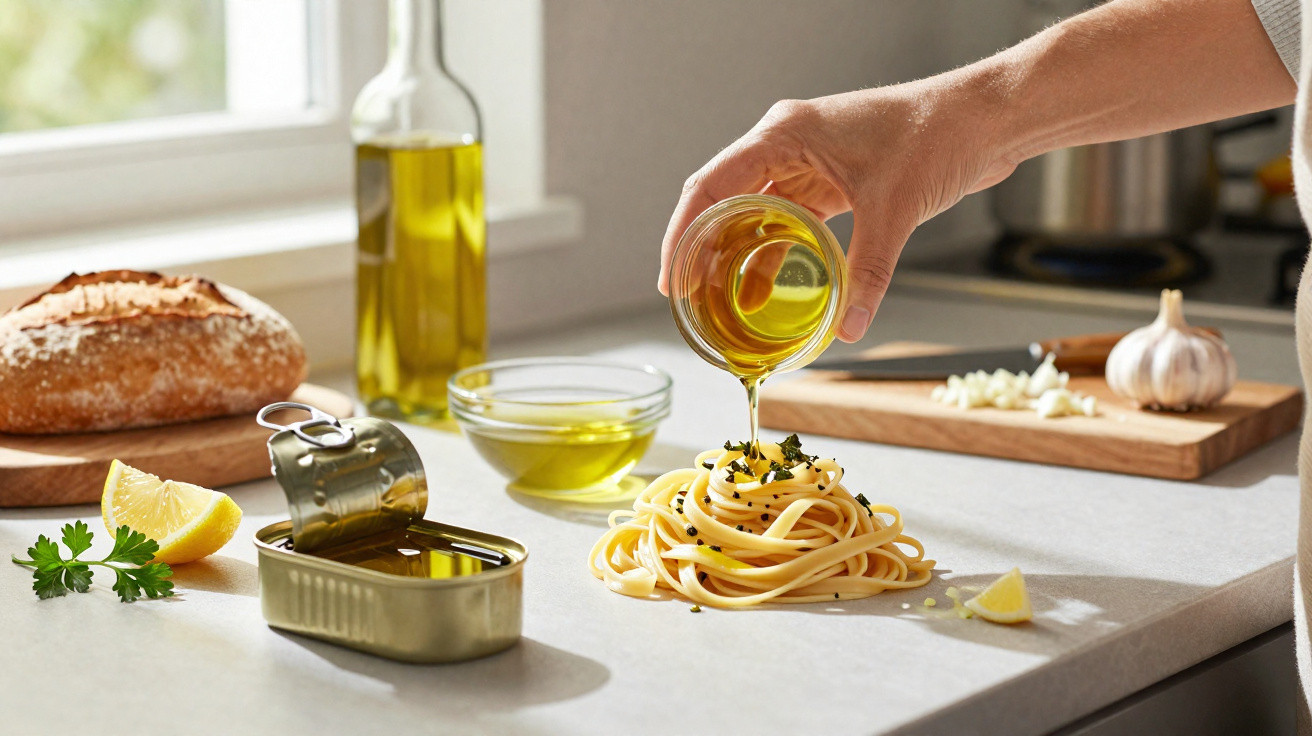
- A quick pasta sauce: Briefly soften garlic and chilli in a pan, add the tin oil, then mix in parsley and a little lemon zest before tossing with the pasta.
- Lift roasted vegetables: After cooking, drizzle a spoonful of sardine oil over oven-roasted veg. It gives the roasted flavours more depth.
"If you use the tinned oil cleverly, you save other cooking oil, avoid waste and get more out of the product you have already paid for."
How much oil can you use without worrying?
The oil from a single tin does not automatically make a meal “unhealthy”. It is still fat - so it is energy-dense - but it can fit into a balanced diet as long as portions stay sensible.
If you need to eat very low-salt or low-fat, you can take a middle path: use some of the oil, then collect and dispose of the rest - just not via the drain.
What if you do not want to eat the oil?
Some people dislike the strong flavour, or simply do not want extra fat on the plate. In that case, there are better options than reaching for the tap.
Clean disposal at home
Practical everyday options:
- Pour the oil into an empty screw-top jar, an old bottle or a leftover carton.
- Seal the container well and keep it cool so the smell stays manageable.
- Once it is full, put it in the general waste - or, better still, take it to a collection point.
Many towns and councils collect cooking oils separately, often at recycling centres or in dedicated containers. The oils handed in can be used for energy or processed further, for example into biofuels.
Why the detour to a collection point is worth it
From a council perspective, separately collected cooking oil is far easier to manage than fat dispersed throughout sewers. The oil is concentrated, can be transported, and can be directed into proper reuse. For households, the effort is modest: keep a collection container in the kitchen and take it along to the collection point now and then - job done.
Tips for making your kitchen more “oil-friendly”
If you want the change to stick, small tweaks are usually enough. Helpful ideas include:
- Keep a dedicated “used oil” container beside or under the sink for all small leftovers.
- Leave a spoon handy so you can lift oil out of the tin in a controlled way rather than pouring it.
- Keep recipe ideas within reach so the oil does not end up in the bin out of convenience.
After a while, handling tinned oil this way becomes just as automatic as tipping it away used to be - only far more sensible.
How to judge the quality and freshness of oil from a tin
Fish oil can spoil. If the contents smell harsh, sharp, or clearly different from what you are used to, take care. A mildly fishy aroma is normal; a rancid, sour note is not.
When buying, look out for:
- the best-before date and storage guidance,
- whether the tin is intact - with no dents or bulges,
- the type of oil used (for example olive oil or sunflower oil).
Better-quality oils are more suitable for reusing in cooking. With very neutral oils, you can vary the taste more easily, for instance with herbs or spices.
What is really behind the “small mistake”
Pouring sardine oil away can feel trivial, but it leads to three concrete outcomes: pipes get coated, wastewater treatment works come under strain, and valuable nutrients vanish into the sewer. Once you understand that, you are less likely to reach for the plug lever on autopilot.
Whether you use the oil as an ingredient or collect it for disposal is up to you. Only one point should become the new routine: tinned oil should never go down the drain. A spoonful more attention in everyday life prevents hassle and expense - and helps protect waterways and the environment at the same time.


Comments
No comments yet. Be the first to comment!
Leave a Comment