
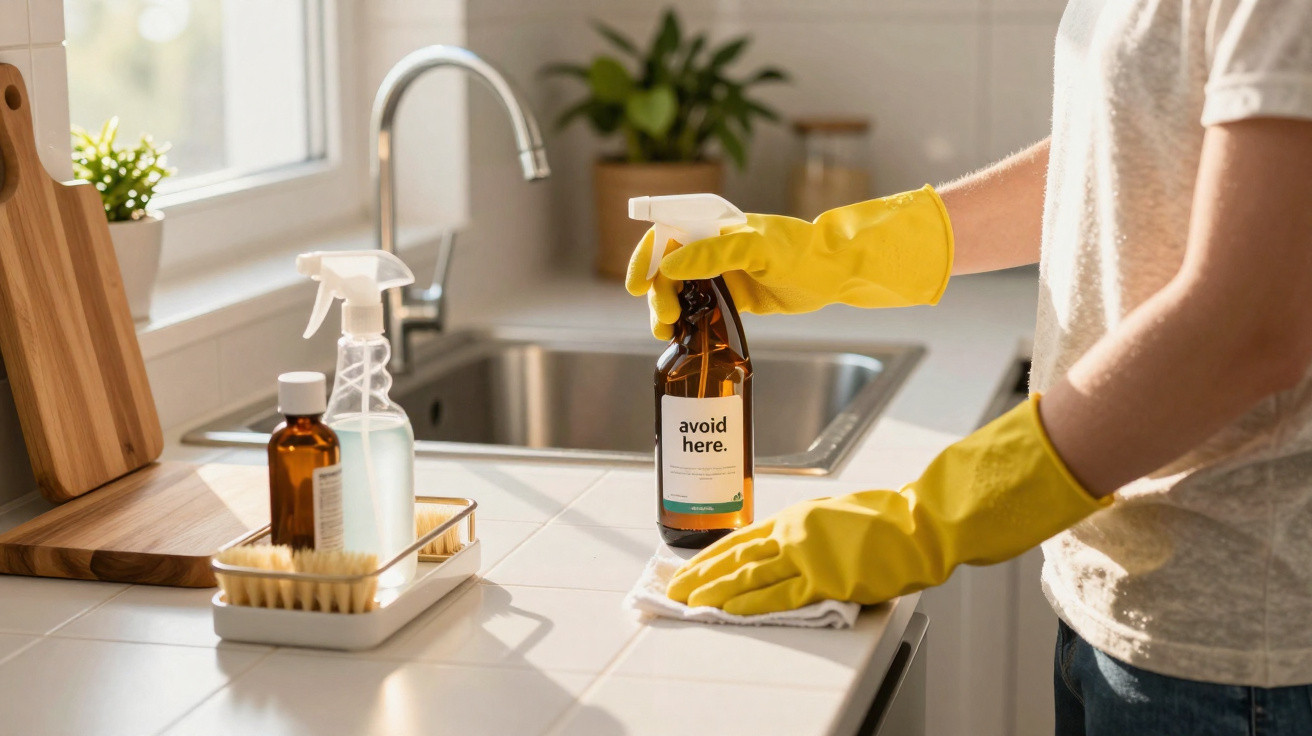
Hydrogen peroxide can be useful for household cleaning because it acts as an oxidiser, can lift organic stains, and may disinfect inanimate surfaces when used properly. Even so, it is not suitable for every job: on coloured fabrics, wood, leather, metals, natural stone and electronics, it can fade, corrode, dry out or damage finishes-and the issue may not be obvious after the first use.
Why shouldn’t hydrogen peroxide be used on every material?
Hydrogen peroxide releases oxygen during the reaction, which helps break down certain stains and reduce microorganisms on compatible surfaces. However, that same oxidising action can also alter pigments, attack protective coatings and leave pale marks on sensitive materials.
The risk is higher when the product is left on for too long, applied undiluted to delicate areas, or repeatedly used on porous finishes. For household cleaning, test it on a hidden spot before treating an entire item.
Where does hydrogen peroxide work best for cleaning?
Hydrogen peroxide tends to perform best on light-coloured, washable, hard-wearing surfaces-particularly when the problem involves organic staining, mild mould, odour, or residue that needs targeted brightening. The most common household version for this kind of use is the 3% solution.
- Light-coloured grout, where staining is superficial and ventilation is good.
- White sinks, sanitary ware and washable areas without a sensitive finish.
- Light plastic chopping boards, after washing with water and washing-up liquid.
- White cloths and light-coloured clothing, as long as the care label allows non-chlorine bleaching.
- Bins and washable plastic surfaces, with rinsing and drying afterwards.
Which surfaces should be kept away from this product?
Coloured fabrics, wood, leather, metals and natural stone require caution. Hydrogen peroxide can break down dyes, dry out fibres, mark aluminium, copper and steel, and damage sealants used on marble, granite and quartzite.
It should also not be used on TV screens, phones, laptops or monitors. Liquid can seep into gaps, harm anti-reflective layers and leave permanent marks on the surface.
Which combinations help, and which mixtures are dangerous?
For straightforward cleaning, hydrogen peroxide can be used on its own on compatible surfaces, or after a preliminary wash with water and mild washing-up liquid. Ideally, remove visible dirt first, apply briefly, and rinse when the material allows.
- Hydrogen peroxide with mild washing-up liquid can help with light stains, provided the mixture is made fresh and removed thoroughly.
- Hydrogen peroxide with bicarbonate of soda forms a paste that can be useful on light grout and other robust areas.
- Never mix hydrogen peroxide with vinegar, as it can form peracetic acid, which irritates the skin, eyes and airways.
- Never mix it with bleach, ammonia or strong disinfectants.
- Do not heat the mixture or store DIY blends in sealed containers for later use.
How to use it safely without damaging your home
The safest approach is to use a small amount, wear gloves, keep the area well ventilated and stick to an appropriate contact time. The CDC recognises 3% hydrogen peroxide as a stable disinfectant for inanimate surfaces, but choosing the right product still depends on material compatibility, safety and cleaning away dirt first.
In everyday home care, hydrogen peroxide is best treated as a targeted option for brightening and sanitising specific surfaces, not as a universal cleaner. If you are unsure about a fabric, stone, metal, wood or electronic item, the safest route is mild washing-up liquid, a soft cloth and a product designed for that particular finish.


Comments
No comments yet. Be the first to comment!
Leave a Comment