
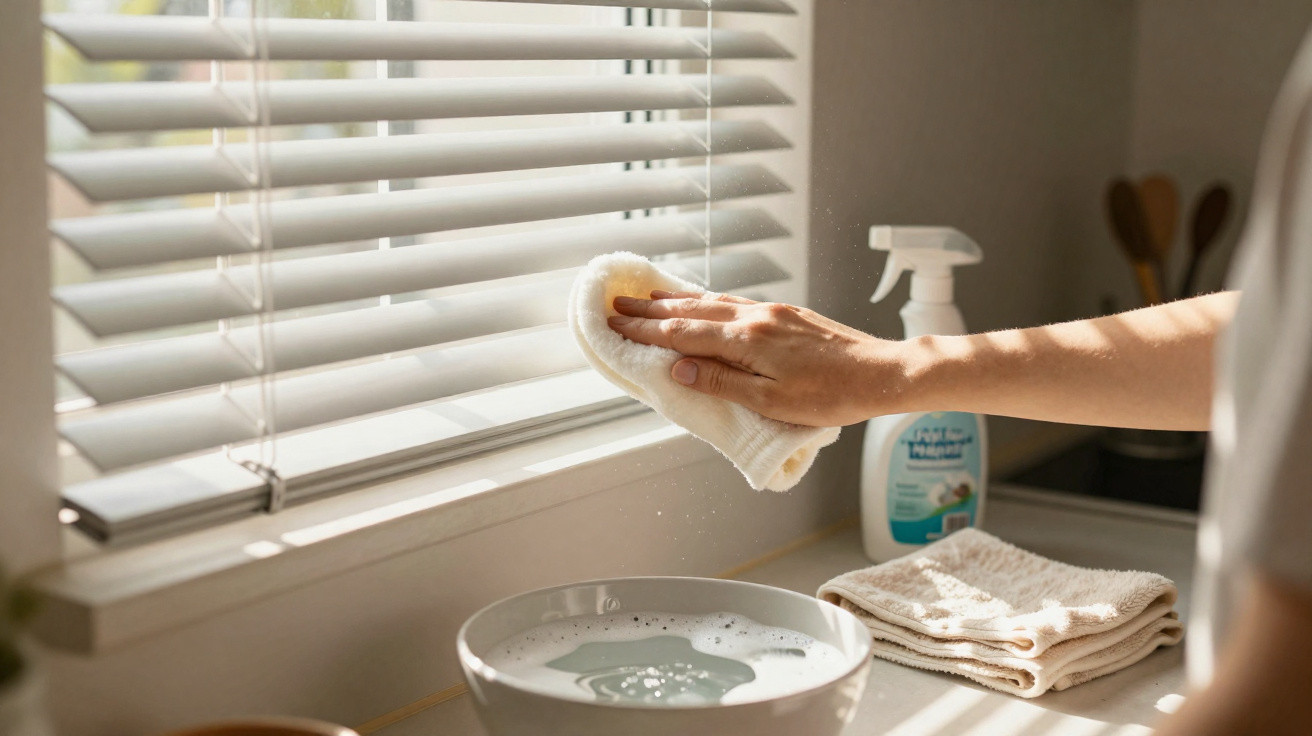
Dust settles, cooking grease clings, and thin slats seem designed to conceal dirt in places most cleaning tools simply can’t reach.
Over the past week, a no-spend cleaning trick has been doing the rounds in online home forums. It tackles slatted blinds quickly, gives you excellent control, and is gentle on delicate finishes.
Why blinds are a cleaning headache
Blinds attract dust at speed thanks to small air movements and static. In kitchens, airborne oil binds with that dust to create a tacky layer. If you go in with a wet sponge, you often end up smearing the film rather than lifting it away.
The material makes it even trickier. Aluminium can mark easily with anything abrasive. Wood can swell or warp if it gets too wet. Pleated fabrics may lose their shape if saturated. On top of that, the fittings and mechanisms sit in awkward, tight spots. Put together, what should be straightforward becomes a fiddly job with real risk of damage.
"Dust, grease, and cramped geometry defeat bulky tools. Precision and light moisture solve the puzzle."
The unexpected tool: one sock
A freshly washed, soft cotton sock worn over your hand outperforms many purpose-made gadgets. It conforms to each slat, wraps around edges, and slips into the tight spaces around brackets. Because your fingertips are doing the work, you can feel any grit and adjust pressure instantly-helping you remove dirt without scuffing the surface.
Compared with a flat sponge, the sock holds on to fine dust more effectively. It’s also free, reusable, and easy to wash. You can skip disposable wipes and strong sprays, which is kinder to both your wallet and sensitive finishes.
"Slip a cotton sock over your hand, pinch the slat, and glide from end to end. Light pressure, steady passes, top to bottom."
Mix a simple solution
For most blinds, warm water with a small amount of mild washing-up liquid is enough. If you want light disinfecting in food-prep areas, add a small splash of white vinegar to your bucket.
- Base mix: 2 litres warm water + 6–8 drops dish soap
- Optional: 1 tablespoon white vinegar for kitchen film
- Rinse bowl: clear warm water, refreshed often
Keep water use to a minimum on finished wood. Avoid ammonia and abrasive powders on metal. If the coating looks delicate or tinted, try the mix on a hidden area first.
Step by step that actually works
Before you start
Tilt the blinds closed so the slats form a flat surface. Remove loose dust first using a feather duster or a vacuum cleaner with a soft brush attachment. Set up two bowls-one with your soapy mix and one with clean warm water for rinsing. Put the sock on your dominant hand, and keep a dry cloth close by for the final wipe.
Clean slat by slat
Moisten only the fingertips of the sock, then wring it out firmly. It should feel barely damp, not wet. Pinch a slat between your thumb and forefinger and slide from left to right in a single smooth pass. Move down one slat at a time, working from top to bottom so drips don’t streak already-clean sections.
Where grease builds up (especially near hobs), dab a single drop of soap onto the sock and repeat the glide. Rinse the sock regularly so you don’t spread dirt back across the blinds, and change the rinse water as soon as it turns cloudy.
Tough corners and hardware
Curl your fingers to follow the shape around brackets and cord ladders. On stubborn marks, hold in place for two or three seconds to let the solution soften the residue. Add extra passes rather than pressing harder-too much force can leave marks on hard materials or stretch fabrics.
Dry and reset
Go over each slat with a dry sock or a soft cloth. Then open the slats slightly to encourage airflow. Drying properly prevents streaks and helps protect the mechanisms from moisture.
What changes by material
| Material | Safe cleaners | Avoid | Notes |
|---|---|---|---|
| PVC or aluminium | Mild soapy water; a touch of vinegar | Abrasive pads; scouring powders | Dry-buff afterwards to minimise water marks on metal. |
| Finished wood | Very lightly damp sock | Soaking; ammonia; steam | Dry immediately; apply wood wax once or twice a year. |
| Pleated fabric | Dry dusting; spot dabs with soapy damp sock | Heavy wetting; rubbing back and forth | Lift marks with gentle blotting rather than swiping. |
| Vertical blinds | Damp sock pinch along each vane edge | Twisting vanes while wet | Support the vane near the clip to prevent tearing. |
| Roller shades (vinyl) | Soapy wipe with sock; rinse wipe | Solvents; abrasive sponges | Leave rolled down to dry so the edges stay straight. |
Mistakes to skip
- Too much water: leads to drips, tide marks, and swelling on wood.
- Scrubbing hard: forces grit into the surface and scratches aluminium and PVC.
- Dirty sock: re-deposits grime; rinse frequently and switch to a clean side.
- Direct sun: rapid drying locks in streaks; clean at a cooler time of day.
- Yanking cords: strains the gears; steady the rail while you work.
"Low moisture, repeated passes, and frequent rinsing beat force every time."
Routine that saves time
A quick dry dust every two weeks prevents grime from bonding to the slats. A damp-sock clean every month or two keeps them looking fresh without needing heavy scrubbing. Kitchens usually need shorter intervals because oily mist settles daily, while bedrooms and calm living rooms can go longer.
If allergies are a concern, consistent dust removal helps. Pair the sock method with a HEPA vacuum pass around window sills and vents to reduce pollen and fine particles that can irritate the airways.
Extra tips that lift results
Once the blinds are dry, reduce static by lightly running a clean microfibre cloth over the slats. A barely damp finishing wipe can also limit dust build-up for a few days. If the tilt mechanism squeaks, use a silicone-safe spray on the headrail sparingly, keeping it away from any fabric.
Time and cost are hard to beat: a typical window with 30 slats takes about 8–12 minutes once you get into the rhythm. The only expense is a little soap and an old sock. Professional cleaning can still be worthwhile for smoke damage, heavy grease, or stained fabrics, but most households won’t reach that stage with regular upkeep.
For renters, this sock approach helps avoid issues at end-of-tenancy checks-no scratched coatings, no warped slats, and no strong chemical odour. For parents and pet owners, the low-drip technique also reduces the chance of curious hands or paws smearing detergent lines onto nearby walls and floors.
Want a tiny upgrade? Keep two socks: one darker for the first pass in kitchens, and one light for the final wipe. The change in colour makes it obvious when you’re actually lifting dirt. Label a spray bottle with your mild mix ratio and you’ll have a ready-to-go kit for monthly touch-ups without rummaging through cupboards.



Comments
No comments yet. Be the first to comment!
Leave a Comment