
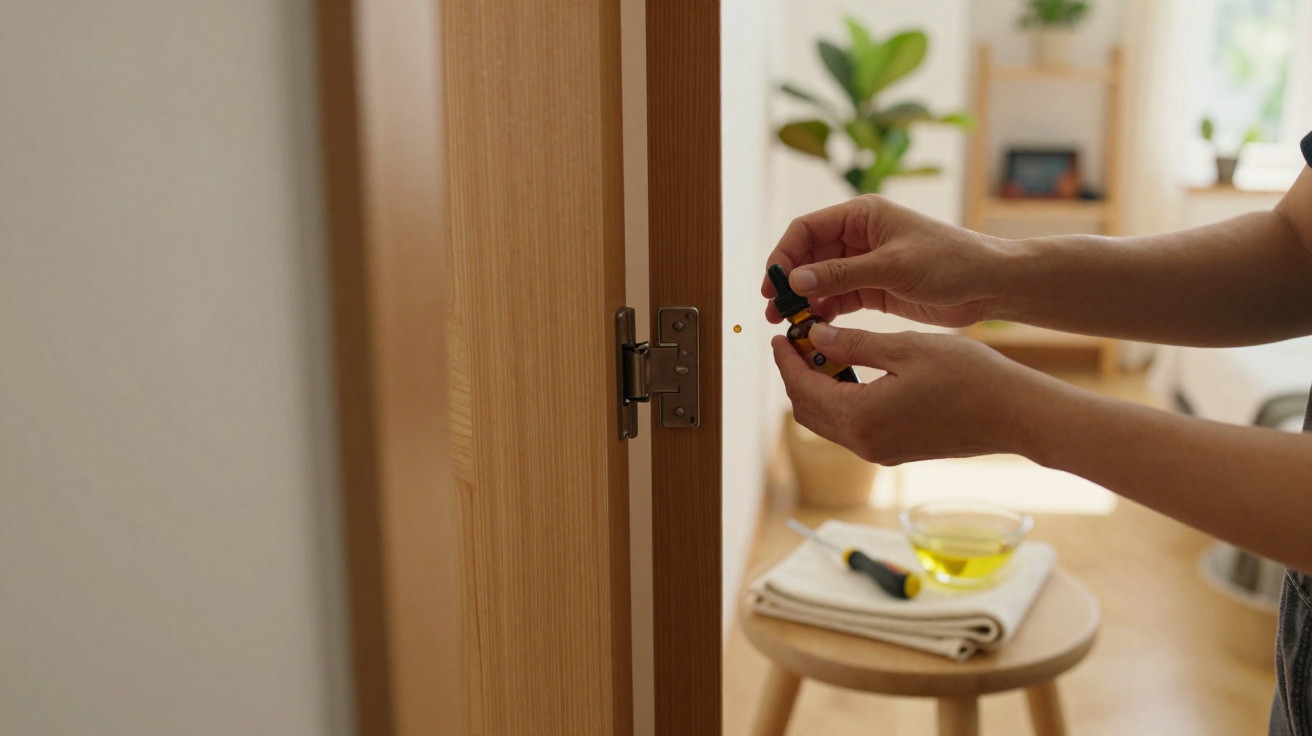
A squeaky door usually points to friction at the hinge, lack of lubrication, or dust build-up around the metal pin. The noise shows up when you open and close the door because the movement stops being smooth, but you can sort it out without taking the door off its frame and without scratching the timber.
Why does a door start squeaking over time?
A squeaky door most often has hinges that have dried out, become dirty, or shifted slightly out of line. With everyday use, the metal loses its lubrication and starts rubbing as the door swings.
Timber can also react to moisture, heat, and small amounts of expansion and contraction. When the door leaf changes position or puts extra pressure on the hinge, friction increases and the squeak becomes more noticeable.
What should you check before applying any product?
Before you try to quieten the door, work out whether the noise is coming from the hinge, the frame, or the bottom edge scraping the floor. This quick check stops you applying product in the wrong place and helps protect the timber finish.
- Open and close the door slowly to pinpoint where the sound is coming from.
- Check for dust, rust, or grime built up on the hinge.
- Make sure the door is not catching on the floor or rubbing on the frame.
- Look to see whether any screws have worked loose in the timber.
How can you stop the squeak without removing the door?
The easiest approach is to wipe the hinge clean with a dry cloth and apply a small amount of lubricant to the metal pin. Then open and close the door a few times to draw the product into the hinge.
- Shield the surrounding timber with a cloth or kitchen roll.
- Use only a small amount, placing it on the moving part of the hinge.
- Move the door gently to spread the lubrication through the joint.
- Wipe away any excess so it does not stain the frame or run down the finish.
Which household products can help with the repair?
Mineral oil, solid petroleum jelly, and powdered graphite can all reduce hinge friction when applied sparingly. Petroleum jelly is often handy because it clings better to metal and is less likely to drip onto timber.
Cooking oil can quieten the noise briefly, but it tends to attract dust and turn into grime on the hinge. If the door squeaks often, a purpose-made lubricant for hinges usually lasts longer and needs fewer reapplications.
How can you prevent the squeak from coming back?
A squeaky door often starts making noise again when the hinge collects dust or when the screws loosen over time. Keeping the hinge clean, carefully tightening the screws, and lubricating the pin every few months helps the door swing more freely.
If the timber has swollen, the frame is out of alignment, or the door is scraping the floor, lubrication will only mask the issue. In those situations, you need to correct the rubbing point so the hinge is not forced to work under strain and the squeak does not return whenever you open and close the door.




Comments
No comments yet. Be the first to comment!
Leave a Comment