
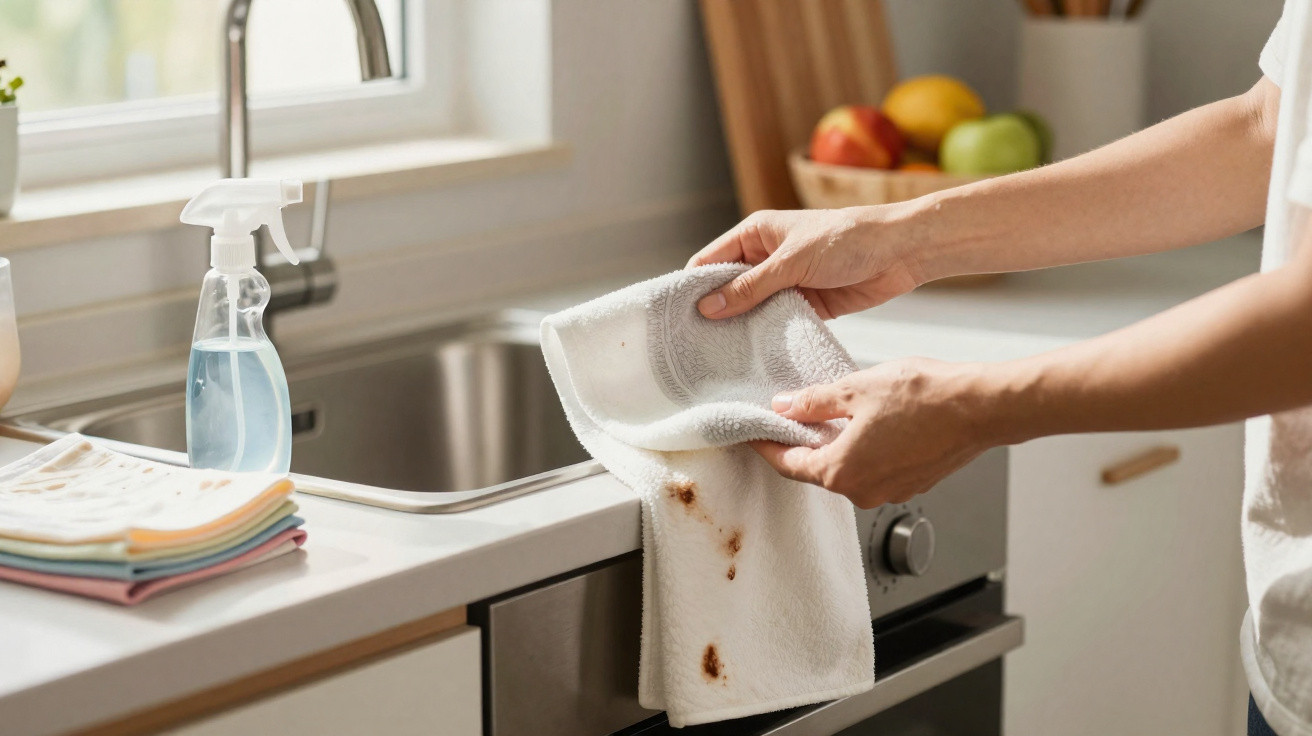
Worktop wiped down, sink gleaming, floor mopped: at a glance it all looks “spotlessly hygienic”. Yet right by the sink there’s often one item you handle dozens of times a day - and researchers say it can be teeming with germs. That’s where a problem many people underestimate really starts.
The real germ magnet in the kitchen
It’s as simple as kitchen towels - the fabric cloths used to dry up, wipe hands, or quickly dab away a splash of grease. This handy all-rounder usually ends up with just one job: doing everything. And that’s exactly what turns it into a risk.
“According to experts, kitchen towels are among the most important carriers of germs and foodborne infections in the home.”
In day-to-day life it often goes like this: dry hands in the morning, wipe a pan after washing up at lunchtime, clear a streak of sauce off the table in between, then polish glasses again in the evening. Hardly anyone thinks to swap the towel out as long as it doesn’t look dirty. For bacteria, it’s ideal.
Why kitchen towels so quickly become a bacterial breeding ground
A typical kitchen towel offers exactly what micro-organisms thrive on: it’s frequently damp, gently warmed by room temperature, and repeatedly comes into contact with tiny traces of food. It’s hard to imagine a better breeding ground.
A study by the University of Mauritius examined household kitchen towels. The results were:
- 49% of the towels tested were contaminated with germs,
- 37% contained faecal coliforms,
- 36.7% were contaminated with Enterococcus faecium,
- 14% showed Staphylococcus aureus.
These bacteria repeatedly appear in cases of food poisoning - particularly when raw foods such as meat or eggs are involved, and residues are then spread further via the towel.
It becomes even more problematic when one towel is expected to do it all:
- drying hands after marinating chicken,
- then polishing clean crockery,
- then picking up crumbs from the worktop.
In that scenario, germs can move easily from raw meat on to plates, glasses and cutlery - and straight to the dining table. Dermatologists and hygiene specialists warn that towels like these can trigger diarrhoeal illness, especially in children, pregnant women, older people, or anyone with a weakened immune system.
“A single wipe with a contaminated kitchen towel can be enough to heavily re-contaminate a surface that seemed clean.”
How often a kitchen towel really needs washing
Most households change kitchen towels by instinct - when they start to smell musty or when stains show up. Specialists advise a far stricter routine.
Hygiene experts recommend:
- Replace a damp, multi-purpose kitchen towel after two to three days at the latest.
- If you do a lot of washing up by hand, it’s better to change it every two days.
- In households with children, pregnant women, or older adults: change them more often rather than less.
- After contact with raw meat, raw eggs, or any food that has fallen on the floor: replace the towel immediately.
If you use a dishwasher and the towel is mainly for hands, the gap can, in some cases, be stretched to up to a week. That only makes sense if the towel can dry quickly and isn’t left hanging around dripping wet.
How to get kitchen towels genuinely hygienically clean
A quick rinse under the tap, wring it out, and pop it on the radiator - that’s the routine for many people. It may feel reassuring, but it won’t tackle germs.
Hygiene professionals suggest these washing rules:
- Temperature: at least 60°C, ideally using a hot cotton programme.
- Regular “high-temperature check”: run a 90°C wash now and then to significantly reduce the germ load.
- Detergent: standard biological or colour detergent is usually sufficient.
- Optional: a small splash of household vinegar in the fabric-softener drawer can reduce odours.
Just as important as water temperature is how the towel dries afterwards.
“A towel that stays damp, no matter how hot it was washed, becomes a bacterial hotspot again within a short time.”
Pay attention to the following:
- Take towels out of the machine well spun.
- Hang them fully spread out, rather than scrunched up on a hook.
- Don’t store them damp in a closed cupboard or drawer.
- If possible, let them dry somewhere well ventilated or outdoors.
Organise smartly: one towel per task
One straightforward change cuts the risk dramatically: separate kitchen towels by what they’re used for. It doesn’t require an elaborate system - just a bit of structure.
Many hygiene specialists recommend:
- One towel only for hands - always on the same hook near the cooker.
- A second only for dishes - kept near the dishwasher or sink.
- A third for surfaces - worktops, tables, cupboard fronts.
Colours or patterns make mix-ups less likely - for example: blue for dishes, white for hands, and a patterned one for surfaces. This keeps the “dirtiest” towel - the one for spills and wiping down - away from hands and crockery.
Warning signs you should take seriously
If you notice any of the following, replace the towel straight away and wash it hot:
- a musty or sour smell, even if it looks clean,
- visible stains from meat juices, egg, dairy products or sauces,
- a damp, clammy feel despite having been hanging for a while,
- a grey, “streaky” base colour despite frequent use.
Smell, in particular, is a strong sign of a high germ count. A freshly washed towel should smell neutral. Anything else belongs in the laundry basket.
Why kitchen towels are so critical for vulnerable people
In everyday life, healthy adults usually cope with many germs without difficulty. The issue arises when the immune system is weakened or the body reacts more sensitively. Then even small amounts of germs can be enough to cause symptoms.
Groups at higher risk include:
- toddlers and babies,
- pregnant women,
- older people,
- people with chronic illnesses or a severely weakened immune system.
For them, a stomach bug can quickly become exhausting - or even dangerous. In that context, clean kitchen towels aren’t a “nice-to-have”, but a simple layer of everyday protection.
Dishcloths, sponges and more: what people often forget
Once you start paying attention to kitchen towels, it makes sense to look at other fabric and foam helpers too. Dishcloths, microfibre cloths and kitchen sponges sit just as high on the germ list.
A few practical rules of thumb:
- Replace dishcloths after one to two days, or wash them hot.
- Boil sponges regularly or wash them with your laundry - or replace them more often.
- Keep microfibre cloths for surfaces separate from cloths used for dishes.
If you set up a clear system and keep enough spares, you don’t have to remember it constantly. Changing them becomes routine - much like brushing your teeth.
Practical tips for sticking to a higher hygiene standard
Many people plan to wash kitchen towels more often, then slip back into old habits after a few days. A handful of simple routines can help you keep it up long term:
- Build up a запас/stock: it’s better to have a few too many towels in the cupboard than to run short.
- A fixed wash day: for example, wash them every two to three days along with household towels.
- Clear locations: each hook has a defined purpose (hands, dishes, surfaces).
- Get the family involved: children quickly learn which towel is meant for what.
Once these points become second nature, you can significantly reduce the risk of foodborne infections at home - without harsh chemicals, simply through hot washes, a bit of organisation, and consistent changing.




Comments
No comments yet. Be the first to comment!
Leave a Comment