
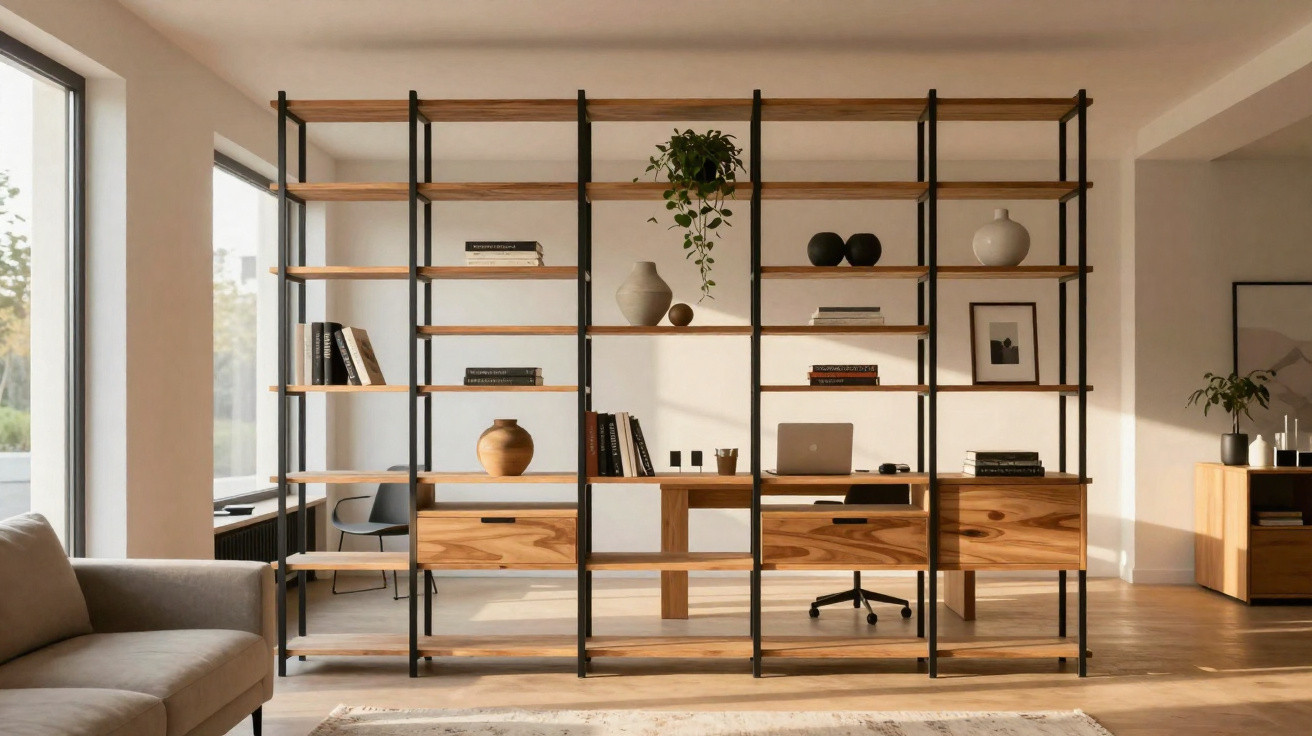
The traditional bookcase pushed up against the wall is steadily losing ground in today’s interior projects. In many homes and workplaces, this piece is no longer the sole star for arranging books, objects and decorative items, making room for lighter, more flexible and better-integrated solutions that can completely change how a space is used.
What trend is replacing the bookcase against the wall?
The standout trend taking over from the classic bookcase is the use of open, modular shelving, often placed in the middle of the room to act as a light-touch divider. These structures can be fixed to the ceiling, anchored to the floor, or tensioned between the two, creating a “floating panel” effect that keeps things organised without sealing the room off.
In this updated approach, the modern bookcase becomes a multi-purpose feature: it stores books, supports plants, displays collections, and can also accommodate lamps and electronic equipment. In open-plan living areas and open offices, it helps define zones without building solid walls, keeping movement easy and maintaining visual openness.
Watch a video from the YouTube channel Decorating My Flat about ideas for niches and suspended shelves that replace heavy furniture and give walls a more modern look:
https://www.youtube.com/watch?v=Xn72Xq6qL90
How does the modern bookcase add personality and functionality?
Unlike a wall-hugging bookcase with a predictable shape, an open, modular modern bookcase is designed to suit the way you live. Niches in different sizes, adjustable shelves and add-on modules that can be expanded over time make it possible to create distinctive, personalised layouts.
The balance of practicality and style becomes more prominent, because the shelving starts to play a central role in the décor. To get the most from this feature, a few straightforward tactics can help you keep things tidy without making the room feel visually heavy:
- Smart organisation: combine books with art objects, photographs and plants to create visual rhythm.
- Colours and materials: mix metal, light wood or neutral tones with small pops of colour.
- Light flow: choose open structures to preserve the movement of natural light.
- Practical use: keep easy-to-reach niches for everyday items and use higher shelves for decorative pieces.
How can you adapt the new bookcase for small spaces?
Compact rooms can benefit greatly when a bookcase against the wall is swapped for a lighter version. In small living rooms, a suspended bookcase or a unit tensioned between floor and ceiling can act as a divider between lounge and dining areas, creating defined zones without brickwork partitions while keeping the space visually connected.
Another option is to pair overhead shelves with low modules, forming a horizontal arrangement that can support a TV, devices and decorative items. When planning, it helps to follow a few precautions that make the most of the space without overcrowding the room:
- Identify available walls and walkways to prevent blocking circulation.
- Decide whether the bookcase will function as a divider, the main storage solution, or decorative support.
- Pick shallower modules so they do not intrude too far into the usable floor area.
- Allow space for plants, lamps and personal objects, strengthening the feeling of warmth.
How do you use a room-divider bookcase in larger living rooms and offices?
In bigger spaces, a modern bookcase makes it easier to create clearly defined “zones”, such as a reading area, a work corner or a library integrated into the living room. Two or more open structures can serve as organisational anchors, guiding where sofas, tables and armchairs sit without fully closing off sightlines.
In offices, a room-divider bookcase separates teams and functions in a light, unobtrusive way, while holding technical books, product samples and storage boxes. By incorporating integrated lighting, closed niches for documents and a few touches of greenery, the design feels contemporary, improves day-to-day comfort and refreshes the space without requiring major building work.





Comments
No comments yet. Be the first to comment!
Leave a Comment