
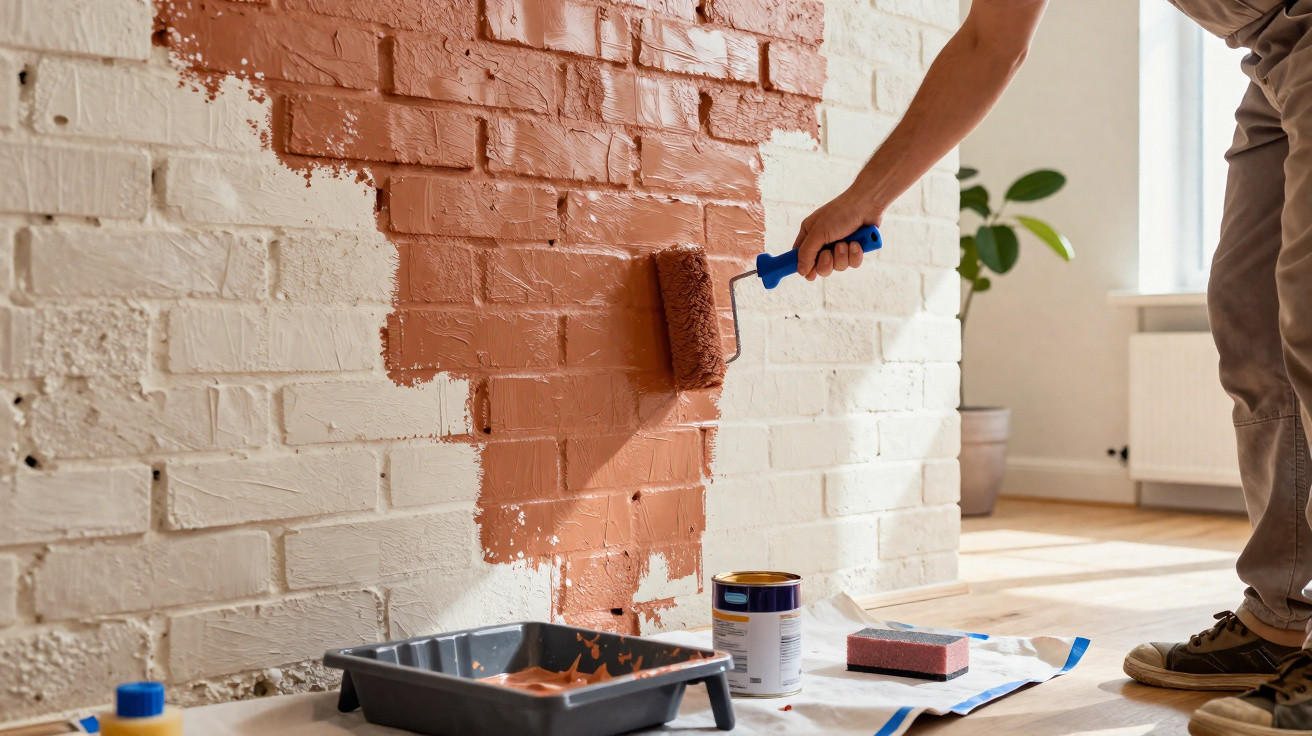
Painting exposed brick has become a popular option for anyone wanting to refresh a space without plastering over the wall or taking on major building work. Done properly, it modernises interior and exterior brickwork while keeping the bricks’ relief and texture-provided the surface is prepared correctly, the right paint is chosen, and a few basic application rules are followed.
How do you prepare exposed brick for painting?
Preparation starts with a thorough clean to remove dust, soot and leftover mortar. The brickwork must be dry, sound and free from loose material to prevent the finish from peeling too soon. If there is grease, wash with a mild (pH-neutral) detergent diluted in water, rinse well and allow it to dry naturally.
You should also check the mortar joints between the bricks and repair any that are hollow or crumbling, allowing the mortar to cure fully. Once the wall is clean, it is common to apply an acrylic sealer or a stabilising primer on very porous brick. This helps reduce paint absorption and makes the final finish more even.
What type of paint is best for exposed brick?
The best choice depends on whether the wall is indoors or outdoors and how damp the area is. For interior spaces, a matt or satin acrylic paint is widely used because it covers well, dries quickly and is easy to wipe down. For exteriors, an exterior-grade acrylic masonry paint (or acrylic latex for façades) is usually recommended, as it stands up better to sun, rain and temperature changes.
There are also products made specifically for masonry and exposed brick that keep the texture visible and may simply tint the surface lightly, allowing some of the original colour to show through. If the aim is protection with minimal visual change, clear varnishes and colourless water-repellent treatments help maintain the rustic look while reducing moisture penetration.
How many coats of paint should you apply to exposed brick?
Typically, two to three coats are applied, depending on the colour, the paint type and how porous the brick is. The first coat is often absorbed heavily, acting as a base and leaving the wall looking patchy. The following coats even out the colour and strengthen protection, while always following the drying time stated by the manufacturer.
If the wall has dark staining or uneven colouring, applying a white base coat before the final shade can be helpful. This improves coverage, reduces the amount of tinted paint needed, and makes the result more consistent-particularly when renovating older walls or brickwork that has been heavily weathered.
- 1st coat: sealing base coat, soaks into the brick and reduces absorption;
- 2nd coat: evens out the colour and improves overall coverage;
- 3rd coat (if needed): corrects missed spots and boosts durability.
What precautions help paint last well on brick?
While painting, protect floors and window/door frames with dust sheets and masking tape, and avoid working in strong sun, rain or high winds. A medium- or long-pile roller reaches the brick’s uneven surface more effectively, while brushes are useful for corners and gaps. Stirring the paint from time to time also helps keep the colour consistent across the entire wall.
After the paint has cured, applying a water-based sealer, acrylic varnish or resin can help extend the life of the finish. Ongoing cleaning should be gentle-water and mild detergent are enough-while abrasive products should be avoided. Regular checks make it easier to spot cracks, damp ingress and small areas of flaking early, so they can be repaired without major remedial work.





Comments
No comments yet. Be the first to comment!
Leave a Comment