
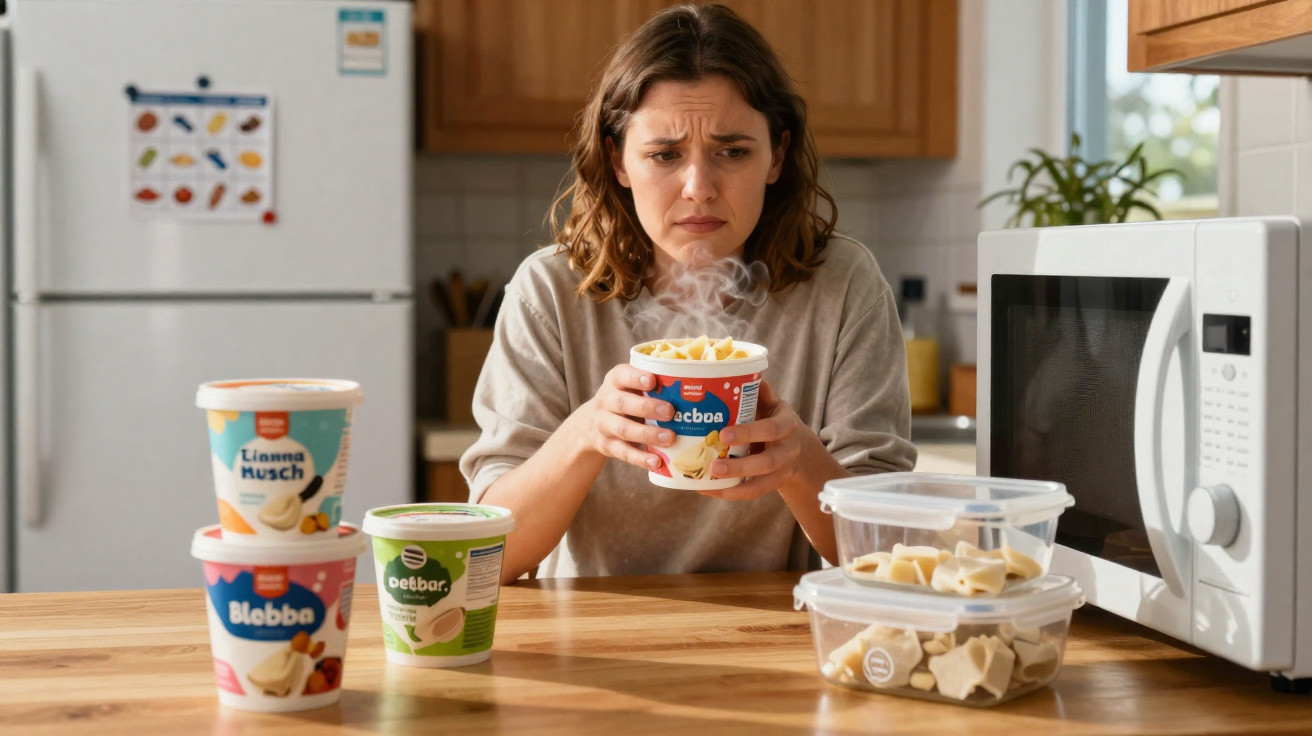
What’s really going on with them is less straightforward than it looks.
A lot of homes hang on to plastic tubs because they feel robust and cost nothing. However, food scientists caution that repeated heating, everyday wear, and using them for the wrong purpose can turn a convenient container into a low-level source of contamination.
Why reusing ice cream tubs can backfire
Ice cream tubs are made for a single, limited job: keeping cold food for a short period. They are not built for microwaves, ovens, or high-heat dishwasher cycles. When plastic is exposed to heat or significant wear, tiny amounts of its constituents can move into food. This tends to increase with higher temperature, longer exposure, and contact with fatty or acidic meals.
In Latin America, the Grido chain has recently advised customers not to microwave its tubs. Consumer organisations, including Spain’s OCU, have issued comparable warnings. These aren’t official recalls; they’re prompts to remember that plastics can behave very differently when used outside their intended purpose.
"Plastic that’s safe for frozen desserts may not be safe for hot leftovers. Heat changes the rules, and chemistry follows."
What chemicals are most discussed, and how migration happens
Many plastics depend on additives to deliver flexibility, clarity, or toughness. When a container is stressed, some of those substances can shift from the packaging into food. Studies often focus on three broad groups:
- Phthalates: plasticisers that, in laboratory studies, can interfere with hormone signalling.
- Bisphenols (such as BPA): associated with endocrine disruption and closely tracked by regulators.
- Other additives: antioxidants, processing aids, inks, and varnishes, which may migrate more quickly once surfaces are scratched.
Chemical transfer tends to rise in predictable situations:
- Higher temperatures (microwaving, very hot dishwasher water, hot cars).
- Longer contact time (slow cooling, keeping soups overnight).
- Fatty or acidic foods (curry, tomato sauce) that interact more readily with plastic.
- More damaged surface area (scratches, cracks, warped lids).
"Time, heat, fat, and wear form a simple rule of thumb: the more you stack them, the more you risk chemical transfer."
Wear and heat multiply the risks you can’t see
Even if you never heat them, repeated bending and surface scratches gradually degrade the plastic. Tiny fragments and micro-residues can come loose during washing or while stirring. Scraping the inside with a hard spoon against frozen ice cream can score the lining. A hot dishwasher programme adds both heat stress and detergent exposure, which together speed up deterioration.
If a tub looks cloudy, has an unusual odour, or feels coarse, it has already altered. That rougher texture increases the surface area touching your food. More contact area can mean more potential migration, even when the container is used at room temperature.
Microwave symbols matter more than brand logos
Some plastics are formulated to tolerate heat, but that depends on testing and certification. If there’s no clear “microwave-safe” mark, assume it isn’t suitable. The same principle applies to dishwashers: rely on an explicit symbol rather than guessing based on how thick the plastic feels.
| Resin code | Common name | Typical uses | Microwave suitability |
|---|---|---|---|
| #1 PET | Polyethylene terephthalate | Drinks bottles, salad domes | Generally not for microwaves |
| #2 HDPE | High-density polyethylene | Milk jugs, detergent bottles | Only if labelled microwave-safe |
| #4 LDPE | Low-density polyethylene | Film wrap, squeeze bottles | Usually not microwave-safe |
| #5 PP | Polypropylene | Takeaway boxes, yoghurt tubs | Sometimes microwave-safe when marked |
| #6 PS | Polystyrene | Foam cups, clamshells | Not for microwaves |
Ice cream tubs are frequently made from polypropylene (#5), but the code by itself doesn’t prove it’s safe for heating. Only containers that have been specifically tested and labelled for microwave use should be used in the microwave.
Safer swaps that keep the convenience
You don’t have to abandon easy storage-just choose materials intended for heat and repeated use.
- Tempered glass with vented lids for microwaving soups, sauces, and batch-cooked meals.
- Stainless steel for hot lunches and roasting from oven to table (not for microwaves).
- Food-grade silicone for freezer, oven, and microwave jobs with minimal wear.
- Certified, BPA-free polypropylene containers that are clearly marked for microwave and dishwasher use.
"Choose containers for the job you’re doing, not the job they once did. Labels are worth reading twice."
Smart habits that cut exposure without fuss
A few small changes can quickly lower risk.
- Warm food up in glass or properly microwave-safe containers; if you’re unsure, use plastic only for cold storage.
- Avoid keeping oily, tomato-based, or very salty foods in older or unlabelled plastics.
- Replace any container that is scratched, cloudy, warped, or has lingering smells.
- When the label permits dishwashing, use cooler cycles or wash by hand to reduce heat stress.
- Allow food to cool a little before putting it into plastic tubs to limit heat-driven migration.
What to do with tubs you already have
If you prefer to keep them, reserve them for non-food uses. They can hold craft items, screws, or toys. They also work well for organising cables or spare batteries. Mark them clearly so they don’t end up back in the kitchen by mistake. If a tub is brittle or heavily worn, recycle it where local facilities accept that resin code.
Allergens and hygiene add another layer
Plastic can retain odours and residues, which isn’t just a flavour issue. It can also hold traces of allergens from earlier foods. For people with nut or dairy allergies, clean, dedicated containers are important. Old ice cream tubs can make that difficult because fat-soluble residues can linger in scratches and along seams.
Why the debate keeps returning
Regulators set limits on chemical migration and reassess the evidence over time. Manufacturers also adjust formulations, and many items are safer than they once were. The uncertainty largely comes from off-label use: a tub designed for frozen storage may meet every test for that exact role, yet still react unpredictably when microwaved, dishwashed on high heat, or scraped with metal cutlery.
"The safest rule is straightforward: match the material to the temperature and the task, then retire it at the first sign of wear."
Extra context to help you decide
If you don’t know whether a container is suitable for the microwave, do a quick visual check: look for a microwave icon, wavy lines, or wording such as “microwave-safe”. If there’s no symbol, treat it as unsuitable. If the lid is rated safe but the base isn’t (or the other way round), keep them apart while heating.
For households watching the budget, a small starter set of tempered-glass containers often pays for itself over time. They can last for years, are less prone to staining from tomato and spices, and reduce reliance on disposable plastics. Used with silicone lids, they handle freezer-to-microwave steps with ease. That change removes the main drivers-heat and wear-that can turn an ordinary ice cream tub into a risk you didn’t plan on.




Comments
No comments yet. Be the first to comment!
Leave a Comment