
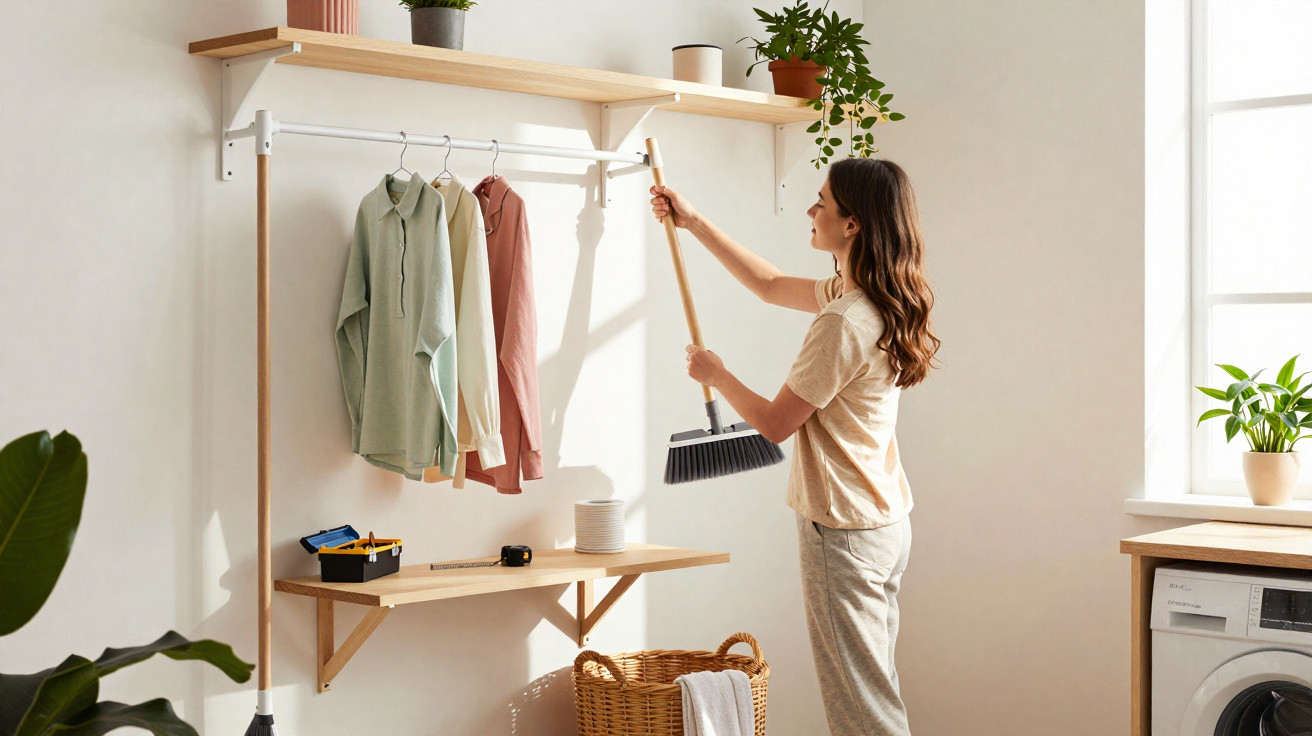
How to reuse old broom handles?
Try a few simple tricks to turn old wooden handles into clever holders that organise your entire utility room using only… Read more
Making a compact utility room work well calls for a bit of ingenuity, so you can use every centimetre without spending a fortune. Reusing items you already have sitting around helps you build a more practical routine, bringing a Swedish-style approach into your home in a completely functional way.
How do you start organising a compact utility room?
A strong first step is making holders from leftover PVC pipe. This kind of upcycling lets you use offcuts saved from building work, clear out stored clutter, and create new organisers-without major financial outlay or overly complex tools.
The lagom mindset is all about that balance between usefulness and minimalism in everyday home life. Cutting the pipes to the right lengths makes it easier to assemble frames for hanging clothes, which is ideal for tight, flat utility rooms and makes daily tasks far cheaper and more convenient.
The key advantages of this smart organising approach include:
- Efficient reuse of materials that would otherwise sit unused
- Guaranteed savings by making your own organisers
- A perfect fit for smaller spaces
Why is PVC pipe ideal for DIY projects?
Plastic pipe is hard-wearing and very easy to handle for everyday DIY. You can cut it with a dedicated pipe cutter or an ordinary saw, then tidy the edges before creating snug joins using elbow-style fittings.
Another benefit is that the original fittings can be assembled without glue, because the pressure fit holds firmly. If you want a permanent structure in your utility area, simply apply plastic adhesive and finish the final frame in your preferred colour.
Below is a video from the Hometalk channel on YouTube that explores the points covered in this topic in more depth:
What materials make up the essential kit for this project?
To build a solid frame, gather ½-inch pipes-around 13 mm-cut to different lengths according to what your space needs. Adding T-joints and angled connectors helps you assemble a sturdy multi-purpose rack for storing shoes or coat hangers.
If you’d rather make a wall-mounted cupboard with a built-in table, include resin-coated wood panels and long piano hinges. A strong magnetic catch will hold the worktop against the wall, while installation relies on plastic wall plugs and heavy-duty screws.
Essential Kit
Materials Needed
Set aside the following materials for a complete build:
- 1 PVC pipe (½-inch / about 13 mm) cut to size
- 2 Compatible plastic T-connectors and elbow fittings
- 3 Optional spray paint for a custom finish
How does Swedish style transform small spaces through upcycling?
Turning leftover, older materials into functional furniture perfectly reflects the aim of a more balanced day-to-day life with fewer visual distractions. Converting discarded pipes into an indoor clothes airer helps keep the floor clear in a compact utility room, with both elegance and simplicity.
You can also line the underside of a fold-down table with colourful adhesive coverings or blackboard paint to give the piece two uses. This practical carpentry creates a spot for quick notes while improving the look of the room-without expensive décor or lengthy renovations.
The best reuse ideas for keeping a home organised include:
- Fitting an overhead holder to store brooms and squeegees
- Installing a fold-down worktop using a piano hinge
- Assembling a lightweight airer from reused plastic pipe
What are the practical benefits of a fold-down table and an indoor clothes airer?
The biggest advantage of these homemade builds is how effectively they make use of limited space in very narrow utility rooms. Folding away the ironing surface or lifting the overhead airer frees up movement, making chores more comfortable and giving you far more freedom.
The satisfaction of making your own functional organisers also brings a sense of pride and encourages more habits of reusing materials. Your home ends up with made-to-measure solutions that align with modern sustainability ideas, combining real savings with high efficiency in an inspiring way.



Comments
No comments yet. Be the first to comment!
Leave a Comment