
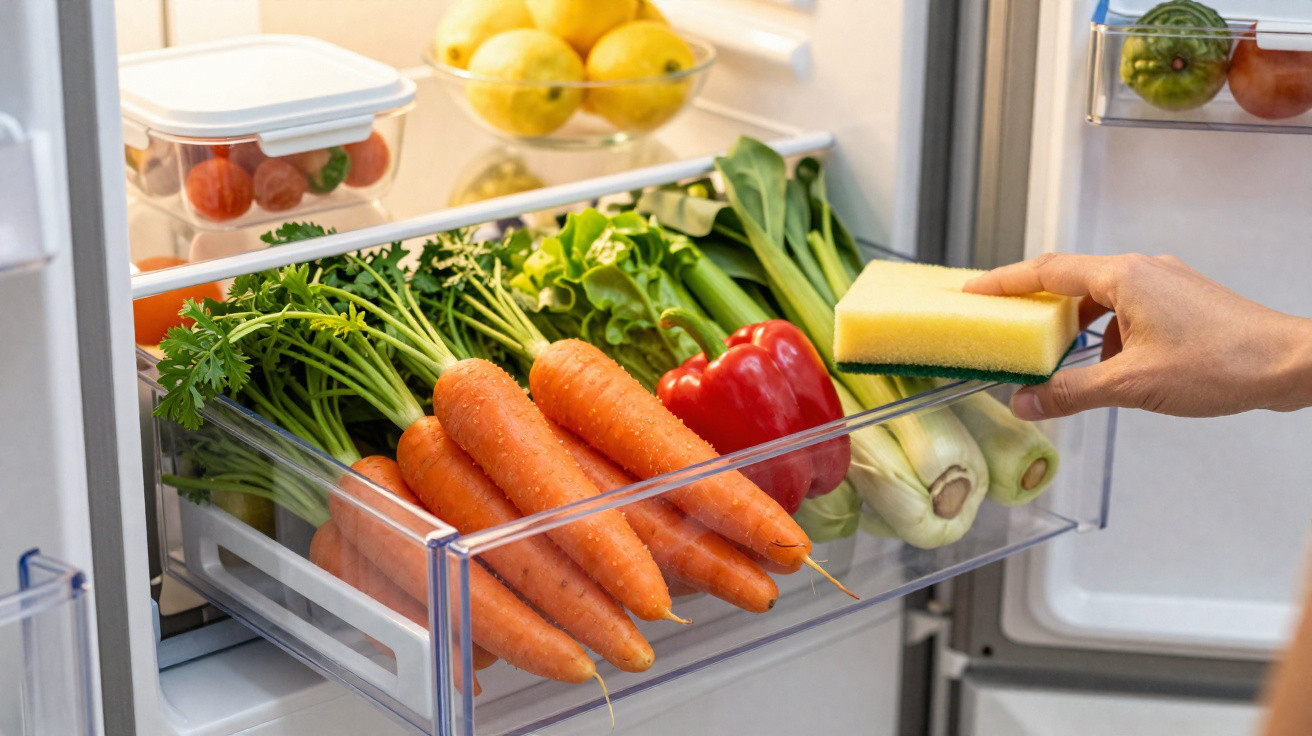
A fridge can start smelling like a damp sock well before any food has properly turned. The cause isn’t always yesterday’s leftovers-it’s often the hidden mini-swamp brewing inside the crisper drawer. There’s a strangely satisfying remedy many people never think to try: put a clean, completely dry kitchen sponge in the drawer and leave it there to do… nothing. Nothing obvious, at least. Even so, salad leaves keep their crunch, berries leak and stain less, and that lingering “old fridge” whiff fades for weeks.
I’d watched lettuce slump at the back, strawberries mist up, and the drawer’s plastic sides sweat like a steamed-up bathroom mirror. A neighbour mentioned a tip so unglamorous I nearly laughed: drop a new sponge into the crisper and walk away. It feels daft-until the results show up.
The solution really is just a sponge. By midweek, the glass shelf under the drawer was no longer wet. The spinach still looked lively. And at breakfast, that faint stale-fridge smell wasn’t the first thing I noticed. The sponge didn’t look like it was doing anything heroic; it simply sat there and quietly shifted the conditions.
The science of a soggy drawer, and why a sponge helps
A crisper drawer creates its own little ecosystem. Fruit and veg respire, the temperature nudges up when you open the door, moisture condenses, then the pattern repeats. Plastic sides hold humidity in place, which is useful-until it becomes too much. When moisture runs high, leaves go limp and slimy; when it’s too low, herbs dry out and go crisp at the edges. The ideal balance is a fairly tight range that most kitchens don’t hit by accident.
Think about a punnet of strawberries after a food shop. They look flawless at first, then a couple soften, one develops speckles, and suddenly the rest follow. A single spoiled berry gives off extra moisture and gases that push the others along. In a drawer where damp has nowhere to escape, decay wins in ways you don’t always see. A dry sponge interrupts that cycle by soaking up the tiny pools and films of moisture you can’t easily spot.
The idea is straightforward: sponges are made to absorb water vapour and pinprick beads of condensation from both surfaces and air. That nudges the average humidity in the drawer down just enough to slow mould and mush, without drying your produce out. It also reduces surface damp on packaging-prime territory for bacteria and yeasts to get started. Picture it as shifting the drawer’s climate from rainforest to a dewy morning meadow.
Set it up like a pro: the quiet method that works
Use a brand-new, unscented, non-scratch kitchen sponge. Lay it flat in a back corner of the crisper drawer-never on top of your greens. The key is that it starts dry. Replace it weekly, or sooner if it turns heavy and damp. If you’ve got two drawers, put one sponge in each. Aim to keep the drawer roughly two-thirds full so air can circulate, and don’t block vents in packaging.
Everyone knows the moment when rocket starts darkening at the edges and you choose not to look too closely. This trick simply gives you more breathing room. Pick a sponge that’s not perfumed and not treated with antimicrobial chemicals. Between uses, rinse it and let it dry completely, or keep two sponges on rotation so one can air-dry while the other sits in the drawer. Realistically, nobody deep-cleans a crisper drawer every single day-this hack is forgiving.
Common mistakes are easy to avoid. Some people drop in a wet sponge, which increases humidity and undoes the whole point. Others tuck it under produce, where it can soak up juice and spread it around. Keep it dry, placed to the side, and easy to see.
“The goal isn’t zero moisture. It’s steady, gentle humidity with fewer peaks,” says a home economics instructor I called for sanity-checks.
- Put one dry, unscented sponge in each drawer.
- Replace it or dry it out every 5–7 days.
- Combine it with a breathable container for greens rather than sealed plastic.
The bigger picture: small habits that save food and money
It’s a tiny action with surprisingly big knock-on benefits. You waste less time binning slimy salad bags, spend less money replacing lettuce midweek, and you’re more likely to eat what you’ve bought. A sponge can’t turn a week-old peach back into a firm, fresh one, but it does extend the period when food is genuinely enjoyable-not merely still safe. That shift changes how your kitchen feels.
The drawer becomes more reliable. When you stop expecting the crisper to be a damp lottery, you start trusting your fridge again. That trust nudges you towards smarter routines: shop once, cook twice, assemble meals with less faff. A steadier drawer also helps reduce odours across the whole fridge. There’s less mysterious dampness, fewer sticky patches, and the air smells cleaner each time you open the door.
Small improvements add up. Herbs last into Thursday. Carrots stay crisp. Cheese is less likely to pick up a lingering “produce” aroma. The sponge won’t get any praise, and it doesn’t need it-the real win is a crisper that keeps pace with your week instead of undermining it.
Beyond the sponge: tiny adjustments that amplify the effect
If you want your drawer to feel more like a market stall than a swamp, pair the sponge with a few easy tweaks. Slide the humidity control towards low for berries and greens that tend to sweat. Save the higher setting for leafy herbs wrapped in a thin cloth. And keep apples and bananas out of the crisper, because their ethylene speeds ripening (and spoilage) for everything else in that enclosed space.
Give greens a breathable “home”. A salad spinner is a great first stop: spin dry, then store leaves in a vented container with a single sheet of kitchen roll under the lid. Leave mushrooms in their paper bag. Keep cut fruit and veg in sealed tubs so juices don’t drift into the drawer’s air. Put fast-ripening fruit in a separate bin to reduce the chain reaction.
Build a tiny ritual. On shopping day, drop in a fresh sponge. Midweek, squeeze and dry it on the counter while you make coffee. Use a strip of painter’s tape to label the drawer sliders: “Low = berries/greens, High = herbs.” It’s low effort, and it makes everything else simpler.
The quiet satisfaction of a fridge that behaves
Your kitchen is trying to work with you. The more you set up small, sensible defaults, the less it fights back with wilted leaves and strange smells. A sponge in the crisper can sound like the sort of tip you’d scroll past without a second thought-until you test it and the drawer stops acting like a bog and starts behaving like a pantry with a basic weather system. That isn’t magic; it’s a simple design feature meeting a small habit.
And then the nicer bit happens: you open the fridge, see bright greens, and decide to cook rather than put it off. You spend less, waste less, and stop blaming yourself for the rapid spoilage so many kitchens accept as normal. The change is subtle, but the payoff isn’t.
Try it for a week: one clean, dry sponge. A small reset of the microclimate where your food sits. The improvement creeps up on you-and then it stays.
| Key point | Detail | Why it matters for you |
|---|---|---|
| Moisture control | A dry sponge absorbs condensation spikes inside the crisper drawer | Greens stay crisp; berries develop mould less quickly |
| Airflow and placement | Place it in the back corner, keep the drawer about two-thirds full, leave vents open | A stable microclimate without constant checking |
| Routine swap | Replace or dry the sponge every 5–7 days | Weeks of a fresher fridge with a 10-second habit |
FAQ:
- Should the sponge be dry or damp? Dry. Damp increases humidity and defeats the purpose. The sponge’s job is to absorb ambient moisture, not add to it.
- How often should I replace or clean it? Once a week is a good rhythm. Rinse with hot water, squeeze well, let it air-dry fully, and rotate with a second clean sponge.
- Can paper towels do the same thing? They help with surface wetness, but a sponge holds more and releases less moisture back into the air. Many people use both: towel in the container, sponge in the drawer.
- Is it safe to put a sponge near food? Use a brand-new, unscented sponge and keep it separate from dish duty. Don’t rest produce directly on it. Colour-code if that helps.
- What about ethylene from apples and bananas? Keep high-ethylene fruits out of the crisper or in a separate bin. The sponge manages moisture; moving those fruits manages ripening speed.




Comments
No comments yet. Be the first to comment!
Leave a Comment