
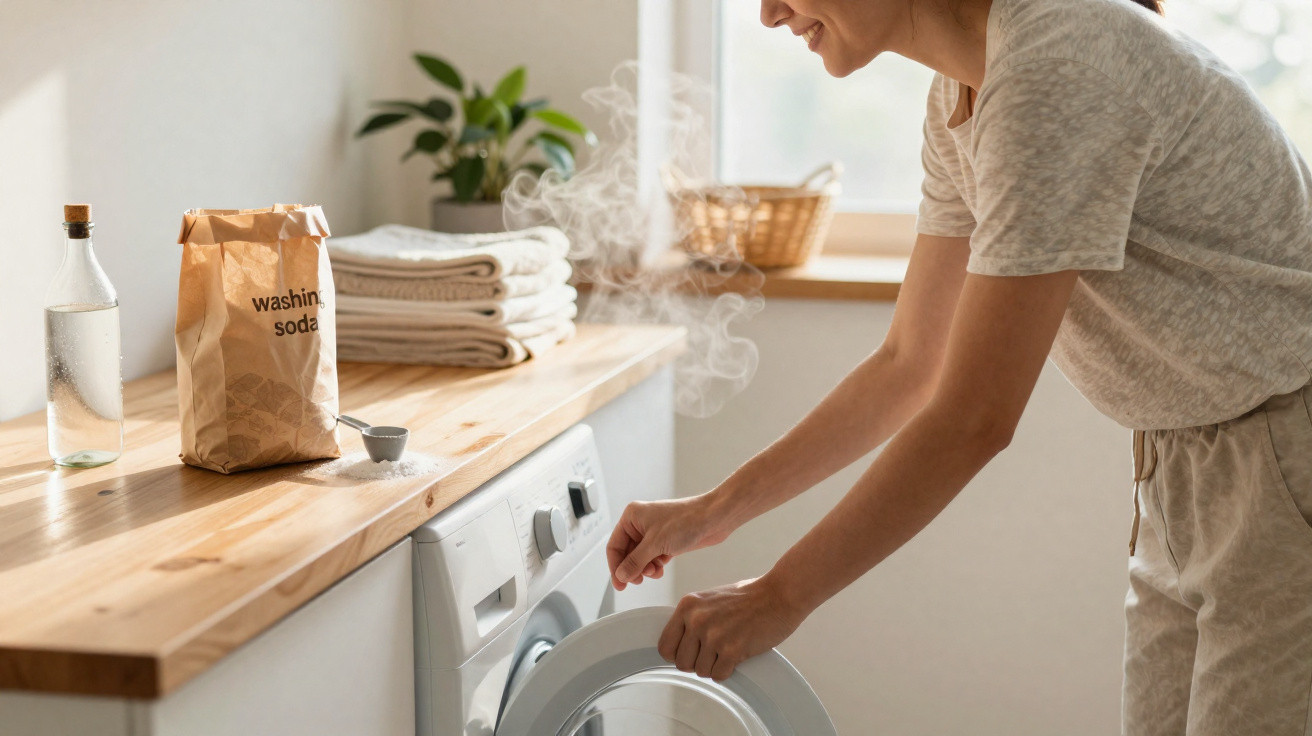
My washing machine had begun to reek like a changing room after a damp Wednesday - that sharp, sour fug that makes you question whether “clean” laundry is even achievable.
At first I pointed the finger at the dog, then the teenagers, then the rogue socks that breed in the dark. The real cause was far less obvious: a grey, tacky film of old product gripping the places you rarely see - the drawer, the door seal, the drum - slowly dulling every wash. Clothes were sort of clean, sort of soft, but never properly fresh. I’d normalised it, the way you stop noticing a sticky lock, until a friend dropped a voice note in the school-run group chat with a tip that sounded borderline magical. She promised the stench would be gone by this afternoon. I didn’t buy it. I also couldn’t wait to test it.
The day the laundry fought back
There’s a familiar cadence to laundry in Britain: kettle on, machine on, rain on. You press start on autopilot, trusting your washer to act like a steady, low-maintenance mate. Then, one day, you open the door and that first hit is a cold, damp pong - a warning that something’s been festering out of sight. You tug back the rubber seal and find it: grey sludge, as if porridge and lip gloss had collided. That’s when it lands - you’ve been “cleaning” clothes in the remnants of yesterday.
We’ve all had the moment when a minor task suddenly feels personal. Mine came with a hinge squeak and a slick patch on my thumb. Nothing cinematic - just a faint squelch, a glance at the drawer stained with weary blue streaks, and a quiet “oh”. Not an emergency, more a murmur from the machine: I’ve been collecting your life in here. Let’s be honest: no one really does this every day.
The quiet villain in the drum
Soap build-up sounds innocent - it’s only soap, right? In reality it’s a blend of unused detergent, fabric conditioner, body oils, and that chalky edge of hard water, all sticking where it shouldn’t, like cling film in the wrong place. Each cool wash leaves a little behind; each “just in case” extra glug adds another layer. If you mainly use liquid detergent and softener, the coating thickens faster, especially around the drawer and the seal where the water flow is less forceful.
That residue holds on to odours and encourages biofilm - the glossy, slippery layer you can feel when you swipe beneath the rubber lip. The drum still turns and the washing looks fine. But fabrics lose that crisp feel, and the “fresh” disappears before you’ve even folded anything. It’s like cooking in a pan that wasn’t quite rinsed: you can’t see the leftovers, but they change the result.
The two-step hack that actually works
The solution isn’t a pricey specialist cleaner or a brutal scrub that steals your Saturday. It’s a simple two-stage routine using everyday cupboard basics that can turn things around in a single afternoon. First you go alkaline to break down greasy soap residue; then you follow with a brief acidic rinse to shift mineral deposits and mop up the lingering smell. No combining chemicals, no fizzy “volcano”, no fuss - just two cycles, a cloth, and about ten minutes of honest rummaging.
The backbone of the method is simple: soda crystals first, white vinegar second. The first run loosens the gunk; the second run neutralises and clears it away. Afterwards, the washer feels like it can breathe again, and the next load smells of nothing at all - which is precisely what “clean” ought to smell like.
What you need
You can skip the specialist aisle. All you need is a bag of soda crystals (sodium carbonate), plain white vinegar, a jug of hot water, an old microfibre cloth, plus a soft brush or spare toothbrush. If your washer has a filter flap at the bottom, grab a shallow tray or an old baking sheet to catch unexpected dribbles (and the occasional coin). Your phone torch helps when you’re peering into the folds of the seal or the drawer housing.
That’s the lot - no floral elixirs, no mystery tablets, no lemony performance. Just practical staples, a little patience, and the satisfying feeling of grime giving up.
The steps
Step one: remove the detergent drawer. It may resist, then pop free with a thumb press on the blue catch. Put it in a bowl or sink of very hot water and add a generous handful of soda crystals. Let it soak while you tackle everything else. The water will cloud quickly - that’s conditioner and detergent residue letting go.
Step two: inspect the drawer cavity - the bit we collectively pretend doesn’t exist. Dampen your cloth with hot water, add a pinch of soda crystals, and wipe the sides and top of the channel. Use a toothbrush for corners; you’ll lift out little blue-grey curls of gel. Rinse, wipe again, and keep going until it feels slick and clean, not sticky.
Step three: open the door and carefully pull back the rubber seal - not the whole thing, just the front lip. This is where hair, pennies, and tiny Lego hands go to retire. Mix soda crystals with warm water into a small paste, spread it onto any dull grey film, and leave it for ten minutes. Wipe it away, rinse, then wipe once more. You’ll notice the cloth finally gliding with that squeak-clean feel.
Step four: tip roughly 250g of soda crystals straight into the empty drum. Add another small handful into the drawer. Choose your hottest cotton programme - 90°C if your machine offers it - and start the cycle. It may grumble, then get on with the job. Heat plus alkaline water will break down the stubborn build-up you can’t physically reach.
Step five: once the cycle ends, open the door and check. Wipe the seal again; you’ll pick up softened residue, like grey eraser crumbs. If you have a filter hatch, set your tray in place, loosen the cap, and let a little water drain before fully removing the filter. It’s usually worse than you expect, and then less horrifying once it’s cleared. Rinse the filter under the tap, clean the housing, then screw it back in tightly.
Step six: pour about 500ml of white vinegar into the detergent drawer - the main-wash compartment, plus a splash into the softener section. Run a shorter warm wash at around 60°C. This isn’t about a glossy “sparkle”. It’s the final pass that shifts mineral film and leaves a neutral finish so the machine smells like… nothing. Which is exactly the goal.
Do not mix vinegar with bleach or chlorine products, and don’t run them back-to-back. If you’ve used anything else recently, give the machine a normal rinse in between. It’s laundry day, not a chemistry lesson.
Why this works, without the lab coat
Soda crystals are highly alkaline, which makes them excellent at cutting through fatty residues - essentially what soap scum becomes when it clings to plastic and rubber. The heat helps the crystals dissolve, while the long hot cotton cycle gives them time to travel through hoses and hidden nooks where grime settles.
White vinegar is mildly acidic. It doesn’t batter the problem; it dissolves it calmly. Used after the soda-crystal cycle, it breaks down the chalky traces left by hard water and neutralises any lingering alkaline film. The payoff is a drum that’s genuinely clean, not merely covered up with fragrance - quiet inside, like a room after everyone’s gone home.
A quick aside about dishwasher tablets
You’ve likely seen the clips: toss one or two dishwasher tablets into an empty drum, run the hottest cycle, enjoy the “show”. I tried it once on a reckless day, and it did shift some slime. But dishwasher tablets are designed for a dishwasher’s deep, steady wash and controlled rinsing - not a washing machine with rubber seals and sensors that don’t appreciate excess suds.
The soda-crystals-and-vinegar approach is kinder, cheaper, and clearer about what it’s achieving. It doesn’t just mask odours. It loosens, dissolves, and rinses away. And you’re not left wondering whether dishwasher-specific residue is sitting in the guts of your washer. Keep it simple and the machine repays you with smoother spins and calmer rinses.
Small details that make a big difference
When you slide the drawer back in, check the softener channel isn’t blocked. On many models that blue siphon piece lifts out. If it’s clogged, conditioner can’t drain correctly - it simply slumps there like exhausted jelly. A rinse under hot water and a quick prod with the toothbrush clears it. You’ll hear the difference when water runs through properly, with that brighter, cleaner sound.
Wipe the door glass as well. It seems purely cosmetic, but it can hold a film you only notice when a dry towel drags across it. When you’ve finished, leave the door ajar and the drawer slightly open. Airflow is the invisible helper here; machines that can breathe stay fresher for longer.
Keep it clean with less effort
The real secret isn’t cleaning more often - it’s using less product. Use less detergent than you think. Most of us overdo it, especially with liquids. Check your water hardness and stick to the lower end of the dosing guide. Powder detergents often rinse away more cleanly than thick gels, and that alone changes how “fresh” feels.
Avoid fabric softener on towels and sports kit. It can coat fibres and lock in odours, particularly on modern technical fabrics that are already made to feel soft. If you love the smell on bed linen, fair enough - just try using half your usual amount. Every reduction means less residue left behind in the machine.
Run an empty hot maintenance wash once a month, or after a run of quick, cool cycles. It’s dull, yes. It also delays the need for a full deep clean. Think of it as flossing for your washing machine: easy to skip, satisfying when you don’t.
If your machine is older, or your water is hard
Older washers, especially those with tired rubber, can hold onto odours in tiny cracks. The two-step routine still helps - it may simply require a little more patience. Do the soda-crystals cycle, wipe down, then run the vinegar cycle and pause it for half an hour mid-wash if your machine allows. That extra soak lifts more from awkward corners and reduces how much the rubber “complains”.
If you live in a hard-water area - the land of kettle limescale - add a scoop of soda crystals to towel loads occasionally. It softens the water so detergent doesn’t have to work as hard, meaning less residue accumulates between deep cleans. Laundry feels less heavy and the spin can sound less strained, as if the whole system can finally relax.
What no one tells you about smell
That odour in your utility room isn’t a mystery or a “vibe”. It’s chemistry plus habit, with a side order of poor airflow. Long cool washes paired with too much liquid detergent create ideal conditions for slime. Leave little gaps between washes with the door shut and the drawer closed, and you’ve basically handed the build-up a quiet afternoon to grow.
After doing the hack, there’s a low-key satisfaction in a machine that smells of nothing. You notice small wins: the soft thump of the drum as it begins, the drawer sliding smoothly, the absence of that sour note when you open the door. T-shirts smell like the cupboard. Towels smell like towels. It’s not glamorous - it’s just better.
What to do if the smell comes back
If the pong returns after a couple of weeks, it’s usually because one small area was missed. Check the filter again - it’s a hoard of hair grips and 20p pieces, and it loves collecting fluff. Ensure the drain hose isn’t kinked, and that the machine tilts slightly backwards so water drains as it should. And leave the door open as if you mean it.
Repeat the two-step clean every two or three months if you run lots of quick washes or live with sporty people. You don’t have to dismantle and scrub the drawer every time. Once the washer is back to neutral, a single vinegar rinse after a spell of heavy loads can be enough to keep things fresh. Gentle maintenance, not emergency heroics.
The relief of clean that doesn’t shout
I didn’t expect to feel anything about it beyond the usual satisfaction of getting a job ticked off. But the quietness afterwards surprised me. Clothes came out with that airy, just-washed stillness - smelling of nothing, and therefore hinting at everything: sunshine on the line, a cupboard that doesn’t pretend, a weekend that stays on track. It’s routine, yes, but it also feels like reclaiming a sliver of control in a house that never stops.
This is the quiet magic: you remove what shouldn’t be there, and the ordinary becomes good again. No glitter, no gadgets - just soda crystals, vinegar, and fifteen minutes spent actually looking at the appliance that does the hard work all week. It works because it’s calm and straightforward. It doesn’t demand more from you, only less: less product, less perfume, less hoping the smell will somehow fix itself.
A final small ritual
When the second cycle ends, I dry the seal with the corner of a tea towel and prop the door open with a peg so it can air out. It’s a tiny habit - ten seconds - and oddly it feels like a grown-up move. No fuss, just the tick of cooling metal and the normal hum of a house carrying on.
The next morning I open the door and there’s… nothing. No locker-room stench, no wet-dog note, no trace of the previous load. Just a drum that smells like air. It’s enough to make you want to wash a load of whites and peg them outside even when the sky looks moody. And that’s the strange reward of a small domestic win: the rest of the day feels easier, almost brighter, because clean finally feels clean again.



Comments
No comments yet. Be the first to comment!
Leave a Comment