
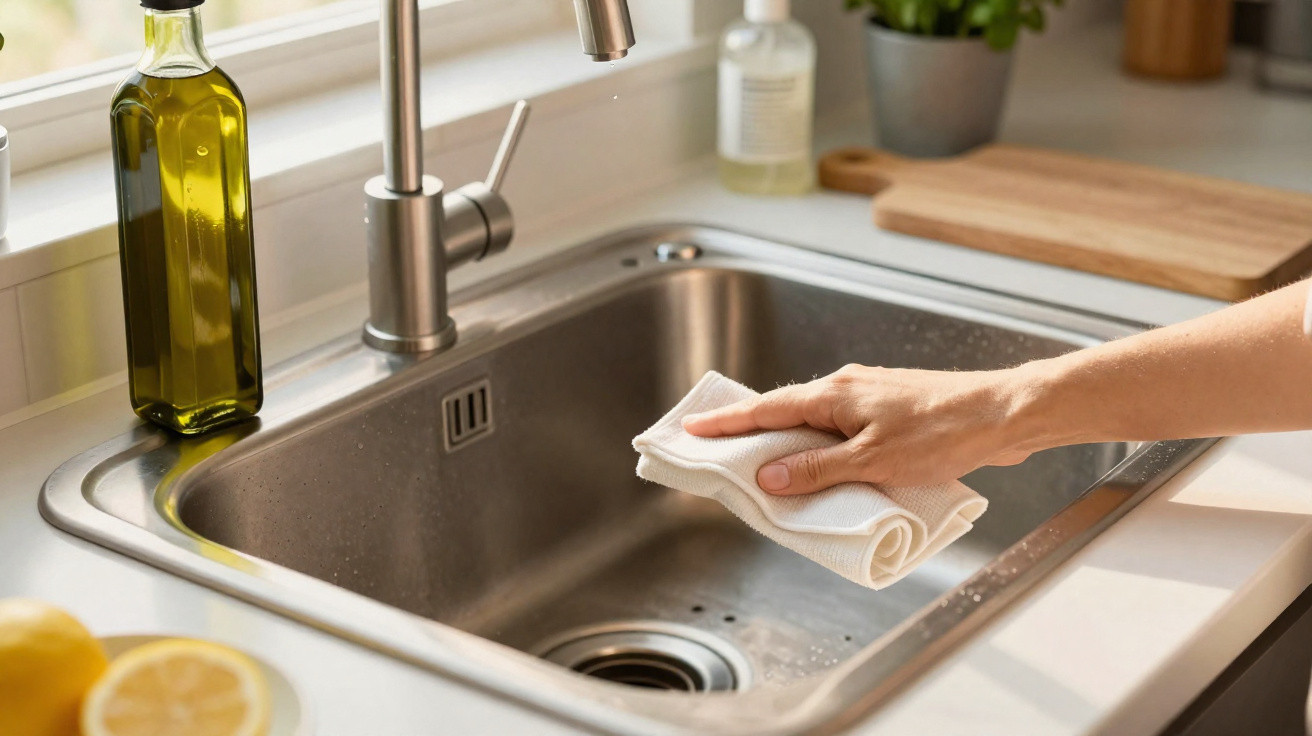
That smug, mirror-like gleam you see in kitchen showrooms always feels out of reach at home. My stainless steel sink had long since lost it to fingerprints, limescale specks and the low-level grey cast that hard water leaves behind. Then I reached for something slightly cheeky from the cupboard.
Every streak seemed to shout, and every watermark looked oddly proud of itself. The sink was technically clean, but it still looked weary - like a shopfront after closing time. I wiped, I buffed, I muttered, and it continued to sulk. Then the olive oil bottle sitting on the worktop practically nudged me. It sounded ridiculous. It also felt impossible to ignore. I dabbed a dot of oil onto a soft cloth, moved it slowly along the grain, and watched the steel lift into a brighter, calmer shine - as if someone had switched on another light. A salad staple had stolen the show.
Why olive oil made my sink look like it belonged in a showroom
It’s a tiny trick with an everyday ingredient. Stainless steel is brushed with a fine texture, and that surface catches grease, smears and water spots in a way that can look random and messy. Olive oil slips into those microscopic scuffs and softens their edges, so the surface reflects light more evenly. The dullness turns glossy without any aggressive scrubbing. It isn’t a harsh glare - it’s a glow. That’s what shifts it from “nice kitchen” to “who cleaned this this morning?” The real effect isn’t the oil itself; it’s how it changes what the steel does with light.
When I first tested it, I only polished the inner bowl. The rim and draining board stayed as they were, so the contrast looked like a split-screen before-and-after. My partner walked in and said, “Did you buy a new sink?” I laughed - and then did the rest, slowly, in neat, satisfying strokes. Britain’s kettles have witnessed far stranger kitchen experiments; this one delivered instantly and, oddly, felt calming. One cloth, one pantry staple, and that soft, expensive-looking sheen appeared. I found myself circling back to admire it, which is smug, yes - but true.
There’s a practical reason it holds up. Oil repels water, so once you’ve worked a whisper-thin layer into the steel, splashes don’t cling as readily and marks take longer to show. The grain matters: following it keeps the reflection even and helps you avoid streaky swirls. You’re not “coating” the sink; you’re smoothing out the tiny, invisible scratches that scatter light. Go heavy-handed and you’ll get smears. Use almost nothing and you’ll get that showroom shine you can spot from across the room. It’s less chemistry lesson and more an optical trick you can see in seconds.
How to do it properly (and avoid the greasy pitfalls)
Always start by cleaning. Wash the sink with warm water and a drop of washing-up liquid, then dry it fully with a microfibre cloth. Put a tiny pea-sized drop of olive oil onto the cloth - never directly onto the steel. Begin in a back corner and work in slow, straight strokes along the grain. Leave the base of the tap and the overflow edge until last, as those areas show smears fastest. Then switch to a clean, dry part of the cloth and buff away any residue until the surface feels dry when you touch it. You want a glow, not a glaze. If you can see oil sitting on the metal, you’ve used too much.
This is perfect for that familiar moment when guests are ten minutes away and the sink looks like the aftermath of a water fight. Let’s be realistic: hardly anyone does this daily. Use it when you want the lift. The usual mistakes are pouring oil straight onto the steel, using kitchen roll that leaves lint, polishing in circles, or skipping the drying step. If the tap ends up streaky, it’s nearly always excess product - give it another quick wipe with a clean cloth. And if your sink has a specialist protective coating, test a small patch underneath the rim first.
Olive oil is food-safe, which makes it feel like a friendly option in a kitchen. Even so, a thick residue can collect dust or leave surfaces feeling slippery, so the “less is more” approach saves you from sticky regret. The smallest amount creates the biggest improvement. If you’re concerned about oil going rancid, remember you’re buffing it down to an almost invisible film - and most of us wash the sink several times a day anyway.
“Think of it like polishing shoes,” a colleague said. “You don’t slather; you buff until there’s nothing left to see, only shine.”
- Follow the grain, not circular motions.
- Choose a microfibre cloth, not paper towel.
- Buff until it feels dry, not slippery.
- One dot of oil can do the whole sink.
- Keep oil away from floors and handles to prevent slips.
What I learned after a week of living with the trick
By the third day, the draining board was still beading water like the bonnet of a freshly waxed car. The bowl, meanwhile, collected normal life - coffee stains, pasta starch - but it rinsed off more easily and looked cleaner sooner. I polished it twice that week, not because it desperately needed it, but because it took about 30 seconds and turned a merely tidy kitchen into a smugly sparkling one. On busy evenings I just did a quick buff on the tap and rim, because that’s the edge your eye lands on first. It’s like a crisp collar on a plain shirt: small detail, big shift in mood.
It also made me think about other options. Mineral oil or baby oil creates a similar finish and doesn’t oxidise as fast. Some people swear by a drop of glycerine. In warmer homes, olive oil can eventually smell a bit off on wood or other porous materials, which is why I stick to using it on steel only. The sink is washed constantly, so nothing hangs around. If hard water marks are your main battle, wiping with white vinegar before drying helps - then the oil finish completes the job. You can combine these without turning the kitchen into a science project.
Another surprise: fingerprints stopped feeling like a personal insult. They still appeared, but they lifted with a light touch of the cloth rather than a full scrub. The finish also softened old scratches I’d stopped noticing, like the ones left by a heavy baking tray. They weren’t erased - just less harsh. A streak-free finish isn’t about chasing perfection; it’s about letting the metal look good despite everyday scuffs. If you like that neat, low-effort look, this trick earns its place in the pantry - and saves you buying yet another bottle to store under the sink.
There’s a quiet satisfaction in realising the solution was right there all along. Olive oil won’t transform your kitchen, but it can change how the room feels in under a minute. The steel looks looked-after, and you feel oddly on top of things. It’s a small, slightly cheeky habit that flatters the eye and lifts the mood. Tell the friend who loves practical magic - or keep it as your own little flourish for when the light hits just right. The sink didn’t need replacing. It just needed a gentler kind of attention.
| Key point | Detail | Why it matters to you |
|---|---|---|
| Clean, dry, then oil | Wash with soap, dry completely, apply a dot of olive oil along the grain | Faster shine with fewer streaks |
| Less is more | Buff until the surface feels dry, not slick | Showroom look without greasy residue |
| Smart add-ons | Vinegar pre-wipe for hard water, baby oil as a low-odour alternative | Adapts the trick to your home and habits |
FAQ:
- Will olive oil damage stainless steel? No. Used sparingly and buffed dry, it won’t harm stainless steel. Avoid soaking seals or rubber parts, and keep oil off floors to prevent slips.
- How much olive oil should I use? A dot the size of a pea is enough for an average sink. Add more only if the cloth runs dry; visible oil means you’ve used too much.
- Can I use other oils instead? Yes. Mineral oil or baby oil gives a similar sheen and resists oxidising. Choose food-safe options if you’re polishing food-contact areas.
- How often should I polish the sink? Whenever it looks dull. For many households, once a week or after a deep clean is plenty. Quick touch-ups on the rim and tap keep it looking fresh.
- What about fingerprints and water spots? The oil helps repel water and makes marks wipe off easier. Dry the sink after use when you can, and re-buff lightly for instant lift.


Comments
No comments yet. Be the first to comment!
Leave a Comment