
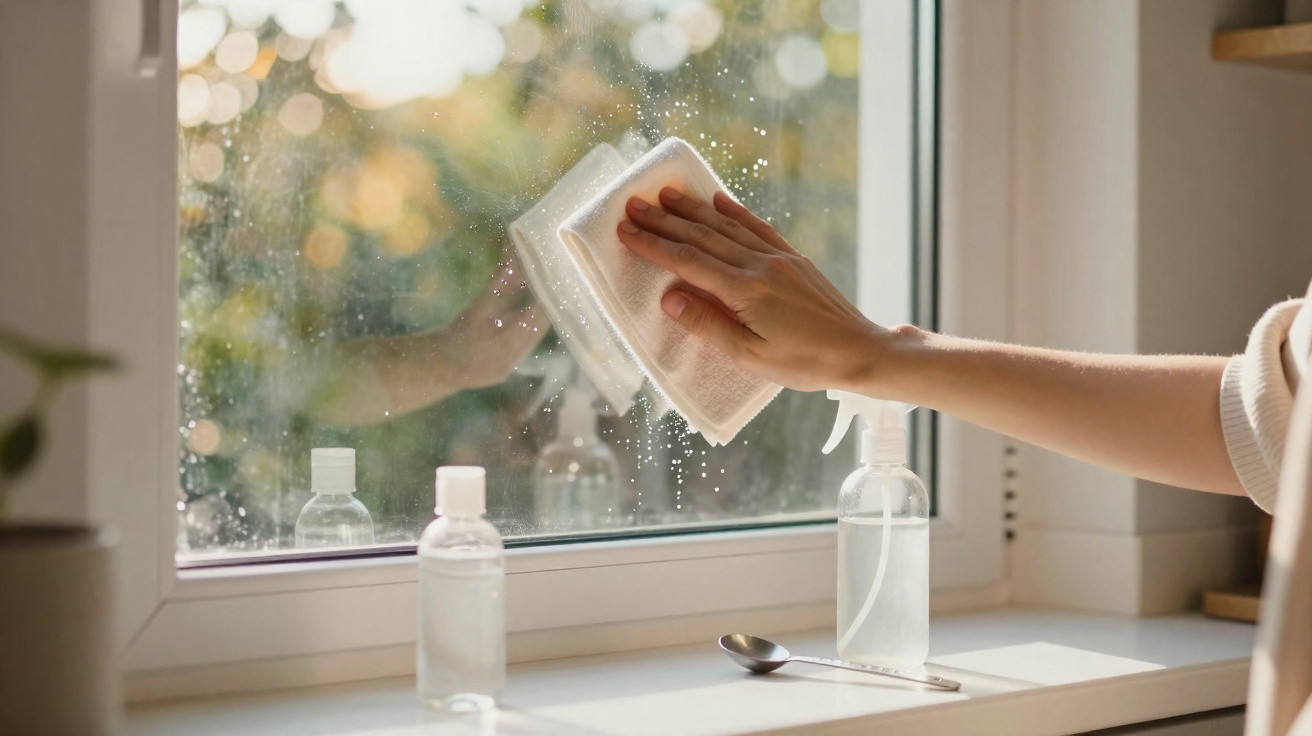
A few inconspicuous drops and a bucket of water are all it takes to keep window panes clean and clear well into winter.
Many homeowners put off cleaning their windows, especially as the colder months approach. The fear of streaks, drip marks and endless polishing is all too familiar. Yet there is a straightforward trick using a pharmacy product that not only makes glass shine but also protects it from dirt for weeks.
Why the glycerin trick keeps windows clean for weeks
Most people know glycerin from hand creams and shower gels, where it helps skin retain moisture more effectively. On glass, the same property offers a quite different benefit: glycerin forms an ultra-thin coating over the pane and changes its surface.
“The fine glycerin film fills microscopic irregularities in the glass, making it far less able to ‘grip’ dirt.”
Dust, soot and pollen do not cling as easily, while raindrops bead away more readily and leave fewer limescale marks behind. Rather than showing unattractive traces straight away, the glass stays smooth and clear for longer.
Unlike many supermarket glass cleaners, this method is not solely about removing existing grime. The glycerin layer acts rather like a protective coating, slowing down the build-up of new dirt. Anyone short on time who does not want to reach for the squeegee constantly can benefit greatly from this longer-lasting effect.
Why standard glass cleaners often disappoint
Conventional sprays may clean the surface, but they leave the micro-scratches and tiny hollows in the glass untouched. Dirt soon settles back into precisely these minute structures. As a result, windows can look dull again after only a few rainy days.
Glycerin works differently. It settles into these indentations and smooths the glass at a microscopic level. Fresh dirt therefore cannot gain such a firm hold in the first place. Depending on the location of the home, the cleaning effect can last for up to two months.
A cost advantage over specialist cleaners
Price is another benefit. A small bottle of vegetable glycerin from a pharmacy or chemist costs only a few pounds. Since just two or three drops are needed for a litre of water, one bottle lasts a very long time.
- Low usage: only a few drops per litre of water
- A noticeably longer-lasting effect than many glass sprays
- Suitable for all glass surfaces around the home
- No harsh smell and no aggressive fumes
Particularly compared with expensive “professional” cleaners, which often lose their effect after just a few days, glycerin stands out for its lasting protection. People living in coastal areas with salty air or beside busy roads may need to repeat the treatment more often, but can still save considerable time and money.
How to mix and use the glycerin solution correctly
The trick works best only when the mixture is right, although preparing it is uncomplicated. You need lukewarm water, vegetable glycerin, a spray bottle and two microfibre cloths. One cloth should be slightly damp, while the other must be completely dry.
The ideal mixture for streak-free windows
“The rule of thumb is two to three drops of glycerin per litre of lukewarm water – no more and no less.”
If the concentration is too high, it creates a greasy, sticky coating that can quickly make the glass look oily. If there is too little glycerin, hardly any protection forms and the effect disappears. Even a teaspoon would be far too much; only a few drops are needed.
Step-by-step guide to the glycerin trick
- Clean the windows roughly first if they are heavily soiled with grease, insect marks or nicotine residue.
- Add the glycerin to lukewarm water and stir briefly until it has dispersed.
- Pour the solution into a spray bottle, or apply it using a soft cloth.
- Spray or wipe the pane evenly, always working from top to bottom.
- Leave the liquid to work for no longer than 30 seconds.
- Polish firmly with the dry microfibre cloth until the surface is completely clear.
- Check the result in daylight, both indoors and outdoors.
The short contact time is especially important. If the solution remains on the glass for too long, the film may become tacky and create streaks. Within those 30 seconds, the glycerin bonds optimally to the surface without turning sticky.
When is the best time to use it?
This method is most effective in autumn. Temperatures are mild, the water evaporates more slowly, and there is less risk of the solution drying too quickly. Strong, direct sunshine often causes streaks because cleaner dries unevenly; on overcast days, this is barely an issue.
“An overcast sky provides the best light for window cleaning: every streak is clearly visible.”
Anyone who treats their windows thoroughly in autumn benefits twice over in winter. First, dirt and moisture are less likely to remain on the surface permanently, which may help prevent long-term damage. Secondly, more daylight enters the rooms – a noticeable advantage during short, grey days.
How long the protection really lasts
In normal conditions, one application in autumn will often last until March. In rural areas with little traffic, the effect usually remains visible for particularly long. In city centres affected by fine particulate pollution or beside heavily used roads, dirt settles more quickly, though the protective film still makes the next clean easier.
Those living by the sea will know the problem of salty air forming a film over windows. In these conditions, it can make sense to reapply the treatment at shorter intervals. The glycerin film then makes cleaning considerably easier, as the salt layer does not bake on as stubbornly.
Common mistakes that ruin the glycerin effect
Many mishaps can be avoided by keeping a few points in mind. The most common pitfalls are:
- Using too much product: More drops do not create more shine; they create streaks.
- Skipping pre-cleaning: Old greasy residue prevents the protective film from lasting.
- Choosing the wrong cloth: Kitchen roll and old cotton rags leave lint and cause streaks.
- Cleaning in direct sunlight: The solution dries too fast before it can be spread evenly.
- Not applying enough pressure when polishing: The film will not distribute uniformly.
Those who stick to the correct mixing ratio and use two decent microfibre cloths will generally achieve a result that can easily rival professional cleaning services.
Other household uses – with care
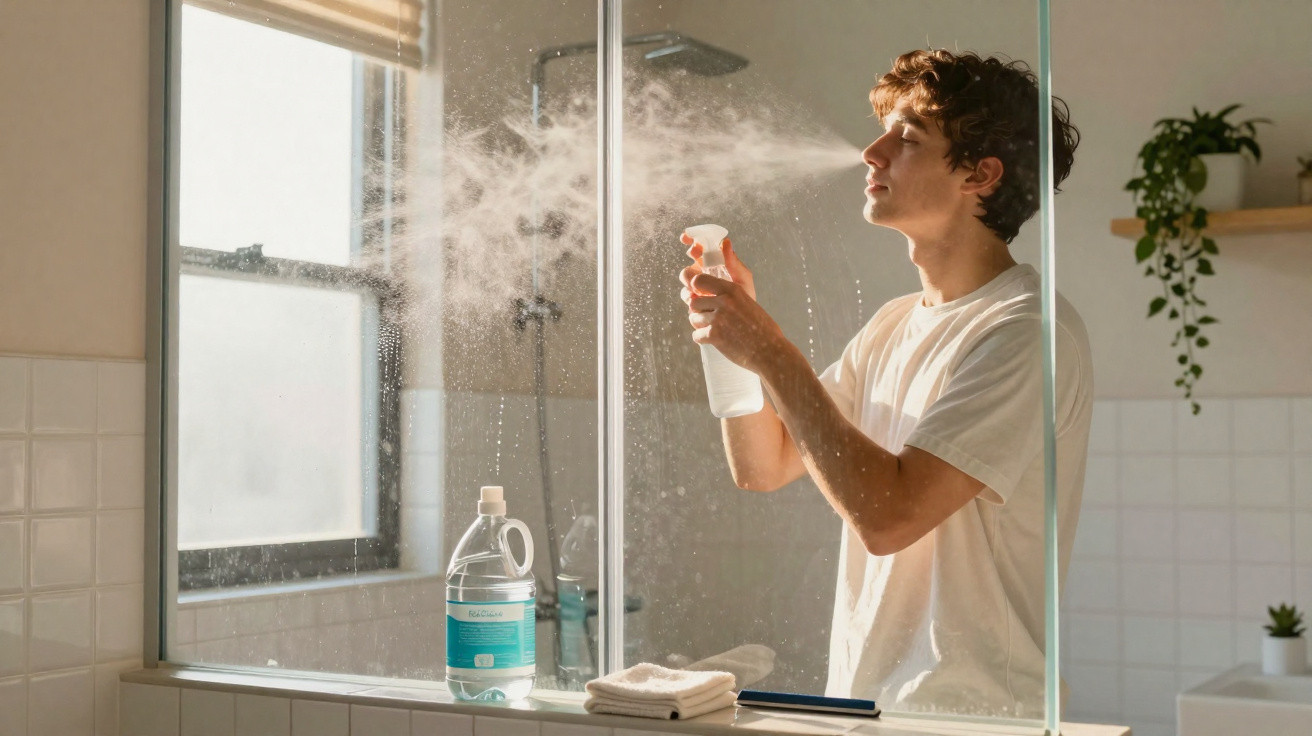
Glycerin is not only suitable for window panes. Many people also use it on bathroom mirrors, glass shower screens and glass tables. The film helps prevent water marks, and fingerprints do not adhere as easily. The same mixing ratio used for windows applies to these surfaces.
However, glycerin should not be used on sensitive plastic surfaces or coated screens. There, the film may look streaky or damage the coating. Caution is also advisable on car windscreens: the effect may interfere with windscreen wipers, which can be problematic in traffic.
How the trick fits into everyday life
It is practical to keep a spray bottle containing the ready-made mixture in the cleaning cupboard. This allows the protective layer to be renewed quickly when needed – for example, on a patio door constantly touched by children and pets. Treating windows this way around twice a year keeps the effort permanently low.
Glycerin may seem unremarkable, but it can make everyday life noticeably easier. Less scrubbing and less frustration over streaks, with more light in the home: this effect is surprisingly easy to achieve with just a few drops in the cleaning water.



Comments
No comments yet. Be the first to comment!
Leave a Comment