
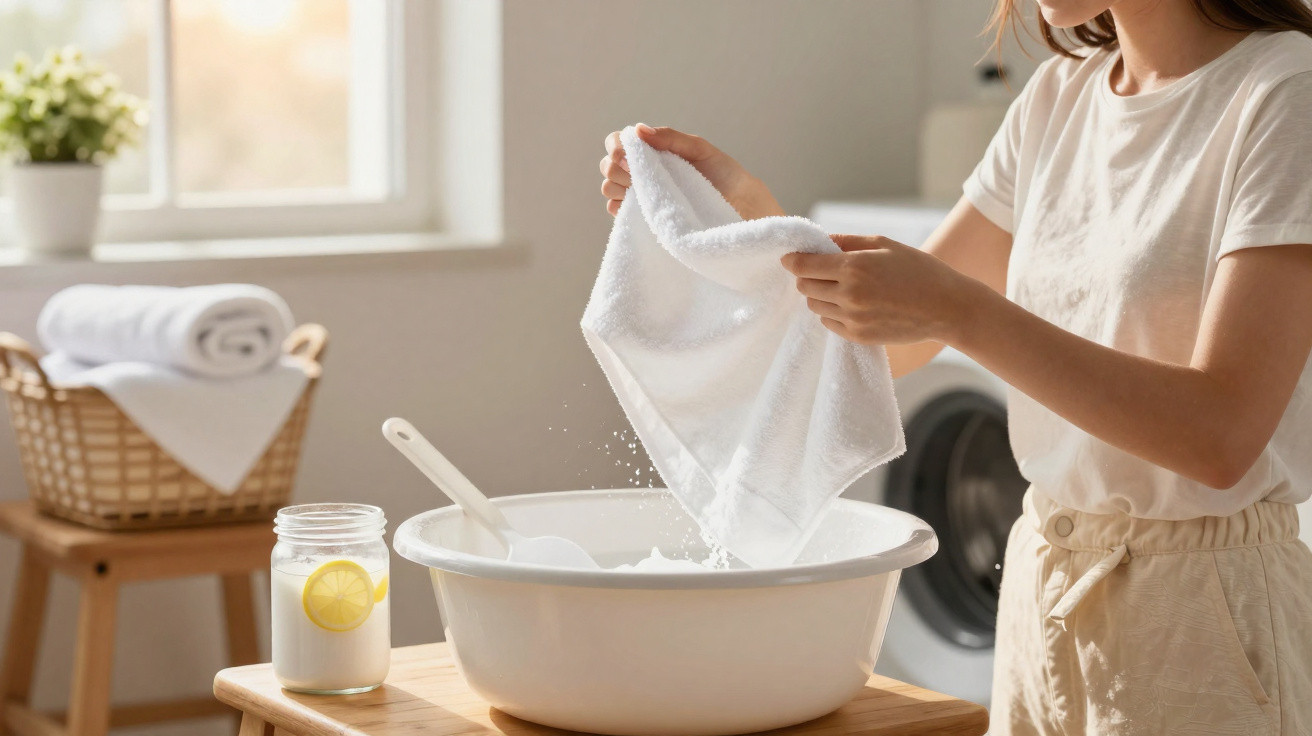
Yellowing and a grey, grimy cast on white towels are common problems in many households. They are often caused by soap build-up, sweat, personal-care products and even the quality of the water. Because of this, many people have started using a straightforward whitening soak made from everyday cleaning staples, helping to restore the towels’ colour in minutes and extend the fabric’s lifespan without relying on harsh bleach all the time.
How does the solution remove grime from white towels?
This at-home method works by combining ingredients that tackle the fibres in different ways. Typically, it uses a good-quality detergent, a cleaning booster and hot or very warm water, which helps loosen embedded dirt and lift the overall tone.
The blend is usually made with powdered or liquid detergent, bicarbonate of soda and, in some cases, a small amount of white vinegar. The bicarbonate helps break down build-up and neutralise odours, the detergent cuts through oils, and the vinegar can support softness and help shift residues-provided it is not used alongside chlorine-based products.
How do you prepare the ideal soak for greyed white towels?
To mix a whitening soak at home, it helps to set the process out in simple steps so every towel is fully covered by the solution. You can adjust the ingredient amounts depending on how many items you are soaking and how greyed they are.
Following a clear step-by-step method also helps keep the mixture consistent and prevents overusing products, which can make towels feel stiff or leave a residue behind:
- Keep white towels separate from coloured ones to prevent colour transfer.
- Fill a bucket or large bowl with hot or very warm water-enough to cover all items.
- Add the same dose of powdered or liquid detergent you would normally use in the washing machine.
- Add 2 to 4 tablespoons of bicarbonate of soda, depending on the water volume.
- Stir until the products are fully dissolved.
- Place the white towels in the solution, making sure they are completely submerged.
Some people add a small amount of white vinegar during the final rinse to help remove detergent residue and leave the fibres feeling looser. The key point is not to mix vinegar directly with chlorine-based products, to avoid unwanted reactions and strong smells.
How long should white towels soak to lift grime?
Soaking time directly affects the balance between brightening and protecting the fabric. For towels with light discolouration, around 30 minutes to 1 hour is usually enough, while more affected items may soak for up to 2 hours, keeping an eye on them.
Leaving towels submerged overnight is generally unnecessary and can speed up fibre wear, particularly in thinner fabrics. After soaking, it is best to rinse thoroughly, run a normal machine cycle and avoid using too much fabric conditioner, as over time it can contribute to a dull, greyed appearance.
How often should you use a whitening soak on white towels?
As with any more concentrated approach, frequent use can wear the fabric, so it is better to treat a whitening soak as an occasional boost rather than something used in every wash. Many households turn to it only when towels start to lose their brightness or when more stubborn marks appear.
In general, if you wash towels weekly, you might reserve this extra step for every third or fourth wash. For other loads, a standard wash with a good detergent is often enough to maintain whiteness, alongside a few day-to-day habits that support longevity-such as avoiding washing with strongly coloured clothes, not overdoing the products and drying in a well-ventilated place (ideally out of direct sun) to reduce yellowing over time.




Comments
No comments yet. Be the first to comment!
Leave a Comment