
Household bleach and chlorine may sound like similar names, but they are not the same product and should never be treated as interchangeable. The real difference is in concentration, intended purpose, and the risk of poisoning when there is incorrect use or dangerous mixtures.
What is the difference between household bleach and chlorine?
Household bleach is a diluted sodium hypochlorite solution, typically containing around 2% to 2.5% available chlorine. It is designed for cleaning and home disinfection, provided you use proper dilution and ensure good ventilation.
Sodium hypochlorite is the chemical used in disinfecting and whitening solutions. By contrast, chlorine sold for swimming pools can be far more concentrated and should not be applied neat to floors, toilets, tiles or kitchen worktops in the home.
Before you use either product, keep these points in mind:
- Household bleach: a more diluted product intended for guided domestic use.
- Pool chlorine: higher concentration and requires technical dilution.
- Cleaning: remove dirt first, then disinfect.
- Mixtures: never combine with vinegar, ammonia, alcohol or other disinfectants.
- Label: the product’s concentration determines how it must be used.
Why shouldn’t pool chlorine be used neat in the home?
Pool chlorine is formulated to treat large volumes of water, not to be spread directly onto household surfaces. Depending on the product type, it may be much more concentrated than household bleach, which increases the risk of irritation, staining and accidents.
If used neat on flooring, metal, grout lines or sanitary ware, it can damage materials, give off a very strong odour and irritate the eyes, skin and airways. For household cleaning, the more suitable option is usually standard household bleach, used according to the manufacturer’s instructions.
How to dilute household bleach for floors and bathrooms
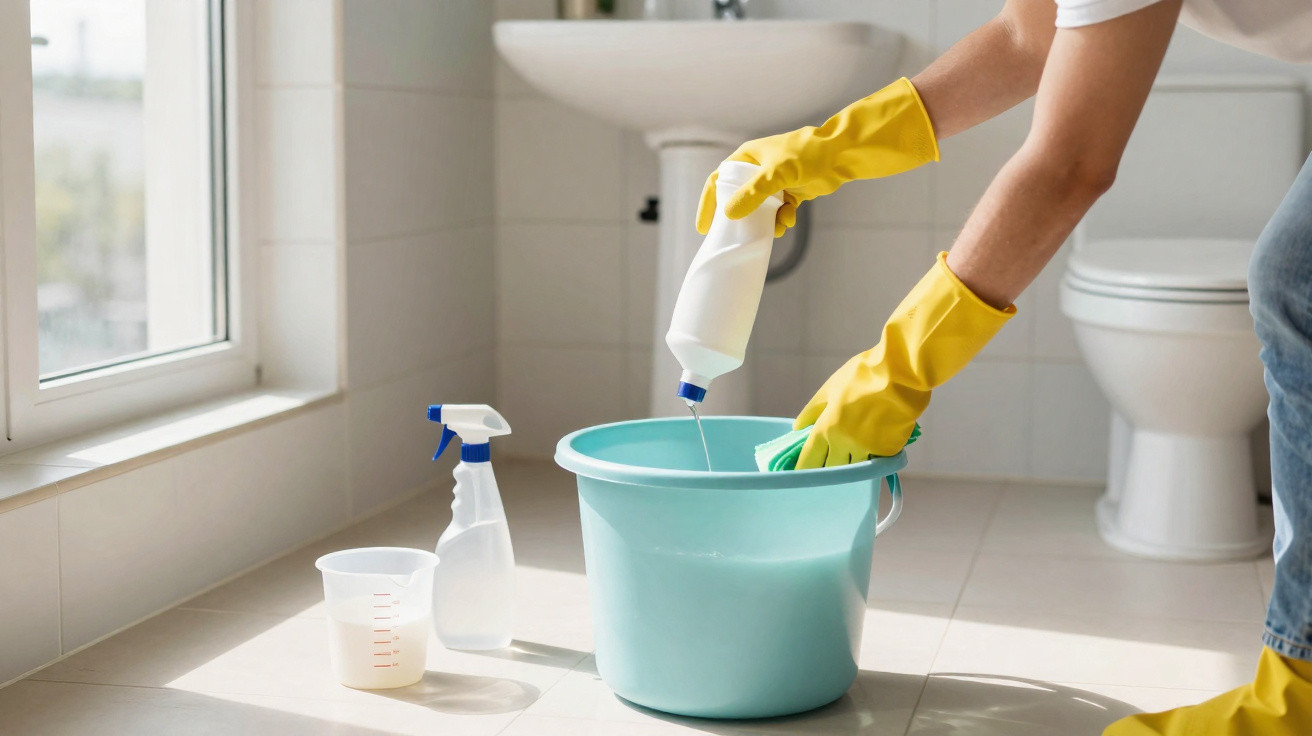
For straightforward home disinfection of washable floors, tiles and bathroom areas, a practical ratio is to mix about 20 ml of standard household bleach into 1 litre of water. The surface needs to be clean first, because dirt and grease reduce the effectiveness of the product.
Diluting is part of staying safe
More product does not mean better cleaning.
Use diluted household bleach, apply it in a well-ventilated area, and leave it to work for a few minutes.
Mix it immediately before use and do not store it in unlabelled bottles.
In bathrooms, apply the solution after washing the area with water and washing-up liquid, leave it for about 10 minutes, and rinse if the surface is frequently touched by skin or used around pets or children. Do not use it on coloured fabrics, delicate metals, wood, natural stone, or surfaces that are sensitive to chlorine.
To use it more safely, follow these precautions:
- Wear gloves and keep doors and windows open.
- Measure a small amount of household bleach-do not overdo it.
- Apply only to washable, compatible surfaces.
- Leave it in place for a few minutes before rinsing or drying.
- Dispose of the diluted solution after use and do not keep leftovers.
Which mixtures with household bleach are dangerous?
The most serious mistake is mixing household bleach or chlorine with other cleaning products. Combinations with vinegar, stain removers, ammonia, glass cleaner, alcohol, fragranced disinfectants or acidic cleaners can release irritating gases and cause respiratory poisoning.
If you notice a strong smell, burning eyes, coughing, shortness of breath or dizziness while cleaning, stop immediately, move people and animals away, open doors and windows, and leave the room. Do not try to “neutralise” it with another product, as that can make the chemical reaction worse.
Never mix with:
- White vinegar or cleaning vinegar.
- Ammonia, glass cleaner or very strong degreasers.
- Alcohol, disinfectants and fragranced cleaners.
- Bathroom acids, stone cleaners or removers.
- Pool chlorine with any household product.
How to choose the right product for each cleaning task
As with using white vinegar in the toilet, every product has a specific role and a safety limit. Household bleach is for diluted home disinfection; pool chlorine should be limited to swimming pool treatment as stated on the label.
For floors and bathrooms, clean first with washing-up liquid, rinse, apply diluted household bleach, and never mix products. This simple order avoids waste, lowers the risk of poisoning, and delivers more effective cleaning without turning your home into a dangerous environment.


Comments
No comments yet. Be the first to comment!
Leave a Comment