
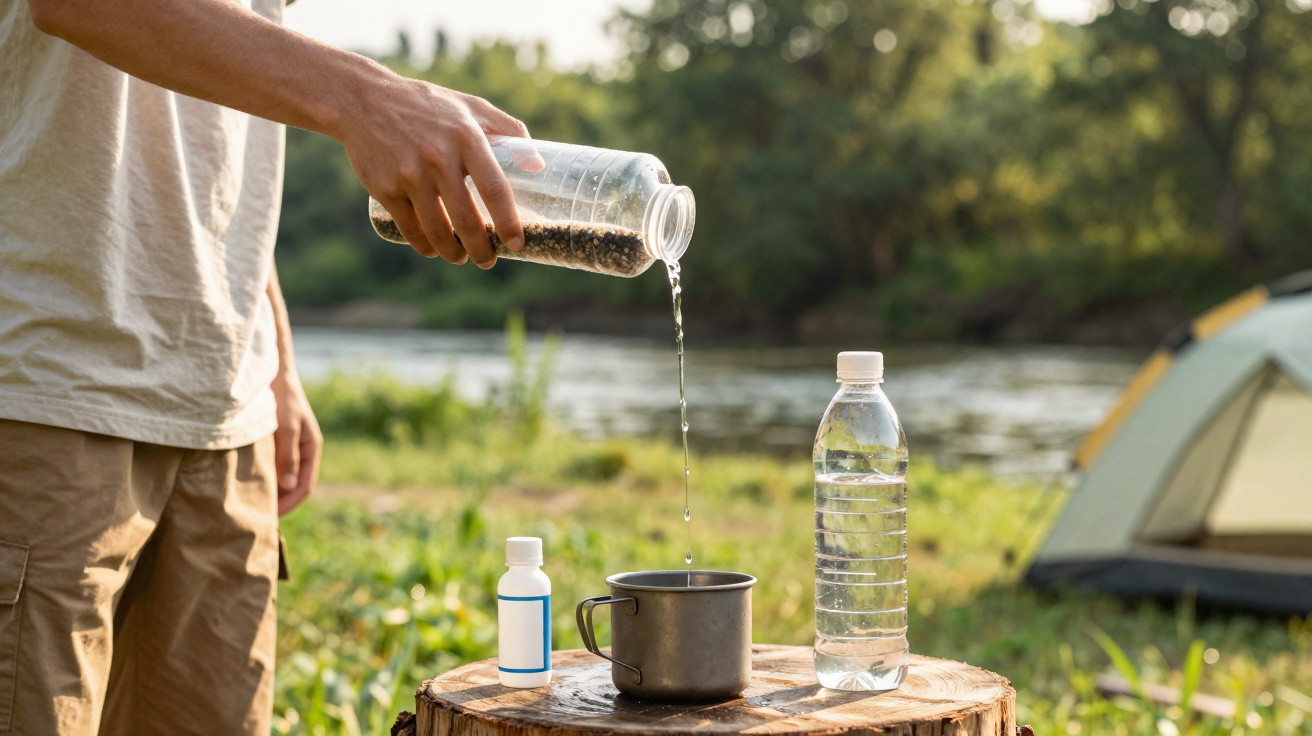
Putting together a water filter using a PET bottle can be useful in an emergency when the immediate aim is to make water look better and catch visible dirt. Even so, it should be treated only as filtration and support, not as full purification.
How does this homemade filter work inside the bottle?
When the bottle is turned upside down, the water passes through layers that trap suspended material and cut down turbidity, following the same basic idea as simple water-filtration set-ups. The water usually comes out with better clarity and appearance, but this on its own does not remove every invisible hazard.
The layers work through physical trapping and, depending on what you use, adsorption. That is why cloth, charcoal, sands and gravel each play different roles in reducing residues and impurities you can notice as the water moves through.
You can stack the layers like this:
- Cloth or filter: catches fine particles and helps stop the other materials from slipping out through the bottle neck.
- Activated charcoal: adsorbs impurities and can lessen odours, odd tastes, and some discolouration.
- Fine sand: holds back smaller sediment that gets past the coarser layers.
- Coarse sand: traps larger particles and helps spread the water more evenly before it exits.
- Gravel: acts as the first barrier for bigger debris and supports the layers above.
How to assemble the emergency filter step by step?
Cut the PET bottle in half and place the top section upside down like a funnel over the base (or over another clean container). At the neck, fit a piece of cloth or a coffee filter to form the first outflow barrier and provide support.
Next, add layers of activated charcoal, fine sand, coarse sand and gravel, making sure each material has been thoroughly washed before use. When you pour the water in slowly, the filter improves the amount of visible sediment and turbidity.
What can each layer actually trap?
The cloth or coffee filter captures some fine particles, while the sand and gravel separate suspended solids in stages. Activated charcoal is the part that stands out for adsorbing compounds linked to unpleasant odour and colour.
Filtering is not the same as disinfecting
Appearance improves before microbiological safety
Homemade layers can remove visible dirt and some substances that affect smell and taste. That can help in emergencies, but it does not replace a disinfection step.
In more complete household systems, filtration, sterilisation and adsorption are treated as separate stages. For that reason, water that looks cleaner is not automatically safe to drink.
This is the key limitation of the method: water may come out looking better and still be unsafe for drinking. Microorganisms and dissolved contaminants require steps beyond filtration, because clarity and safety are not the same thing.
Before using filtered water, keep in mind:
- homemade filtration reduces sediment, but does not guarantee the water is potable;
- activated charcoal helps with odours and adsorbable impurities;
- disinfection is still needed even if the water appears clean;
- filter materials must be clean before assembly.
Why doesn’t the filter alone make water potable?
Water purification means treating water to remove contaminants and make it suitable for human consumption, and this may require several techniques used together. In more complete household filters, filtration does not replace sterilisation or microbiological disinfection.
So, a bottle filter should not be presented as a complete answer to viruses, microscopic bacteria, or dissolved chemical contaminants. It is most useful as an initial stage of cleaning and preparation before a safer treatment.
In emergency situations, good practice should include:
- boiling the water after filtering whenever possible;
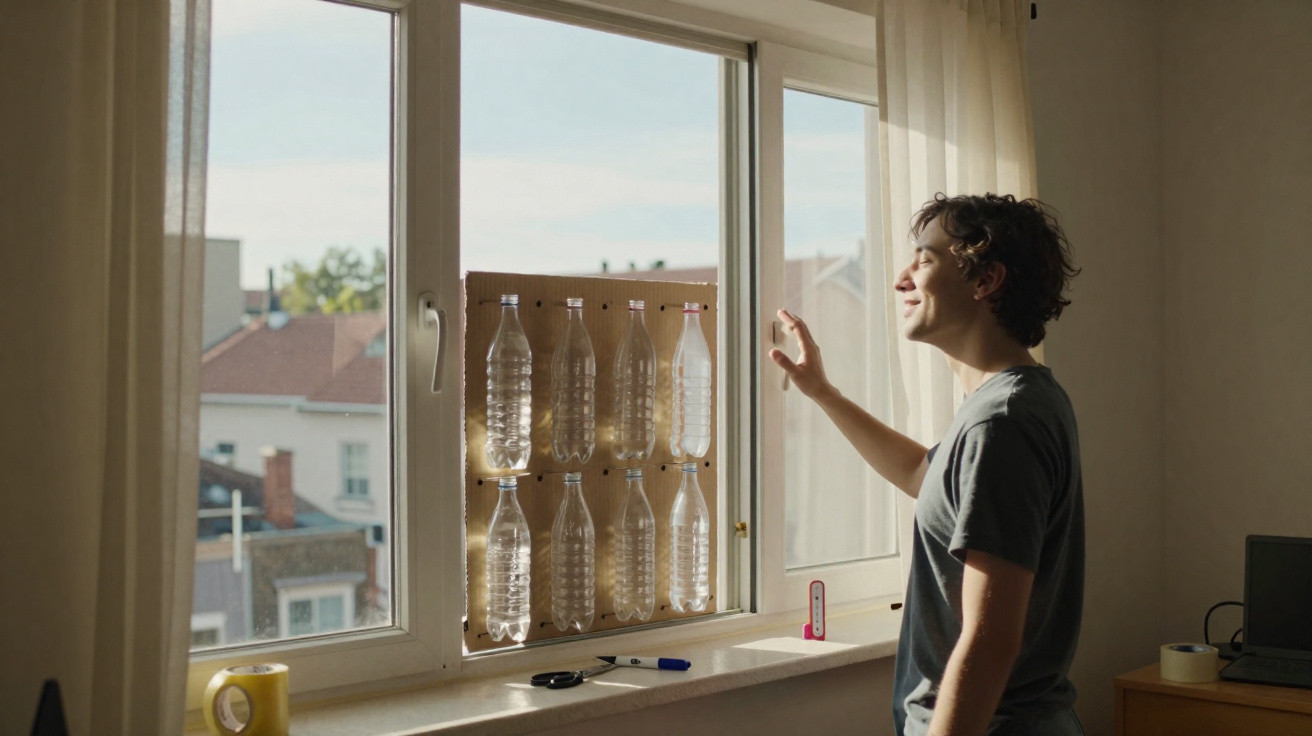
- using solar disinfection when there is strong sunlight and a transparent PET bottle;
- recognising that visual transparency does not remove invisible risk;
- discarding water if there is a serious suspicion of chemical contamination.
How to use this solution more responsibly in emergencies?
Where water supplies fail or access is poor, a PET bottle layered filter can serve as an early screening step, especially before moving on to other measures. This fits with emergency water approaches, but always with caution and judgement.
Ultimately, this DIY filter is meant to improve how the water looks and reduce visible impurities, but it must be paired with disinfection. In an emergency, combining filtration with boiling or SODIS is the safest approach.

Comments
No comments yet. Be the first to comment!
Leave a Comment