
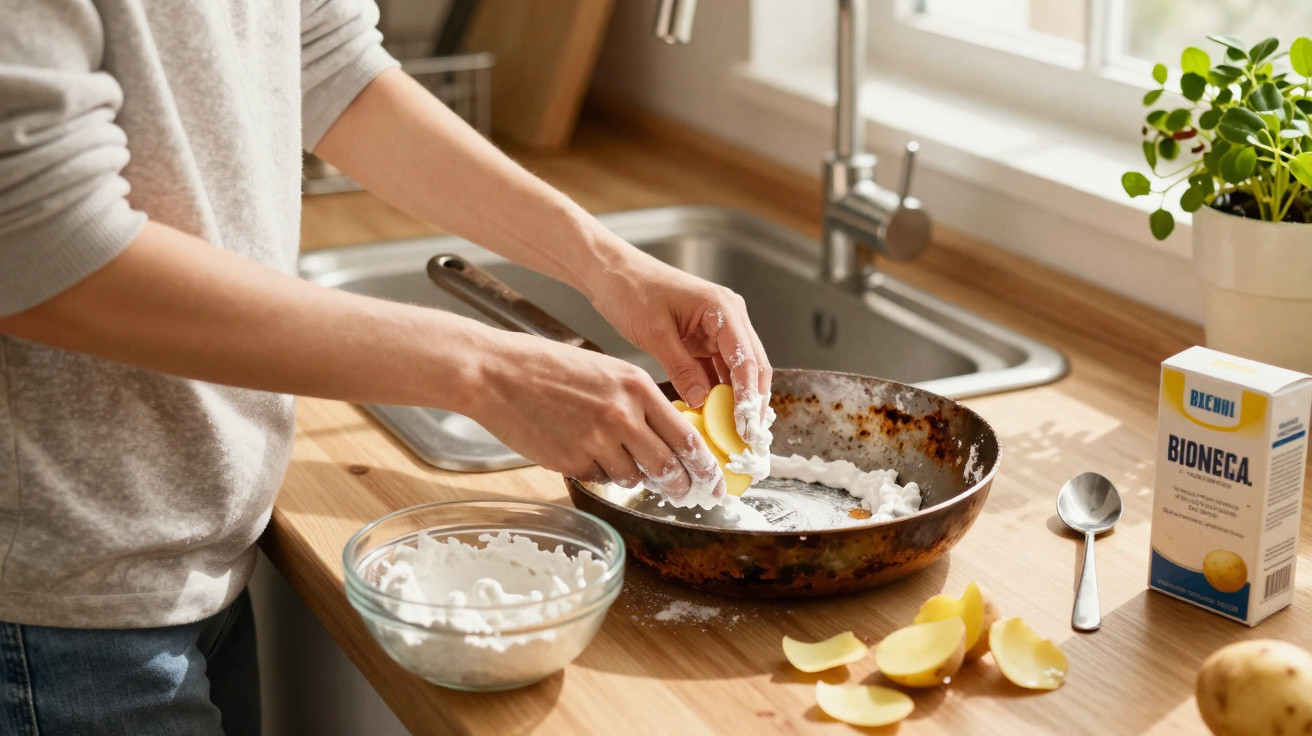
Using potato peel together with bicarbonate of soda has been finding its way into more household cleaning routines as a straightforward, budget-friendly way to tackle rust. Instead of relying on harsh chemical products, this homemade option can be used on saucepans, baking trays, metal utensils and even small tools-often with less impact on both your wallet and the environment.
What is the potato peel and bicarbonate of soda mixture used for?
When people talk about combining potato peel with bicarbonate of soda, they are usually referring to rust removal on metal surfaces affected by damp. It is commonly tried on cast-iron saucepans, steel frying pans and other kitchen items that need reviving without harming the underlying material.
Potato peel releases mildly acidic compounds that react with iron oxide, while bicarbonate of soda works as a gently abrasive, alkaline cleaner. Used together, they can soften and loosen rust, making mechanical removal with a sponge or brush much easier and more controlled.
Watch the video on the YouTube channel Vida de Pobre Nalva about lightening skin with potato and bicarbonate of soda. The content discusses the popular use of this homemade mixture using potato peels, along with its purposes and tips within personal care routines.
Why is it beneficial to mix potato peel with bicarbonate of soda?
This mixture is valued because it combines low cost, ease of use and reduced reliance on strong chemical cleaners. Potato peel, which would normally be thrown away, is repurposed in a practical way, and bicarbonate of soda is inexpensive, widely available and already part of many households’ cleaning cupboard.
As well as being economical, the combination is often less aggressive than many industrial rust removers, which can help keep the original metal surface in better condition. Even so, it is sensible to test it on a small spot first-particularly on items with more delicate finishes or sentimental value.
How to use potato peel with bicarbonate of soda to remove rust
The method is straightforward and can be adjusted depending on how severe the rust is and what type of item you are cleaning. The principle is to use bicarbonate of soda as a “cleaning powder” and the potato peel as a kind of natural scrubber, taking advantage of its organic compounds to boost the effect.
- Wash the potato peel thoroughly to remove any soil or grime.
- Lightly dry the rusty area to remove excess water or grease.
- Cover the rust with a generous layer of bicarbonate of soda.
- Rub the surface using the inside of the potato peel, working in circular motions.
- Leave the peel in contact with the metal for a few minutes, depending on the level of rust.
- Rinse under running water and scrub with a sponge that is not overly abrasive.
- Dry the item completely with a clean cloth and, if possible, place it over a low heat for a few minutes.
For heavier rust, you can repeat the process, always keeping an eye on whether the metal is being worn down too much. With cast-iron cookware, it is common to finish by applying a thin layer of vegetable oil, creating a protective barrier to help prevent fresh oxidation.
What precautions should you take when using this mixture for cleaning?
Even though it is a homemade solution, it still needs to be used carefully so you do not damage the item-or create mess in the process. Some materials, especially non-stick coatings, paints and varnishes, can be sensitive to friction and to the combined action of the peel and bicarbonate of soda.
It is also worth following a few simple precautions to improve safety, hygiene and the lifespan of items cleaned using this technique:
- Avoid prolonged contact on painted or varnished metals.
- Test on a small area before treating the entire item.
- Never store the item while wet after cleaning, as this encourages rust to return.
- Apply oil to cast-iron cookware after drying thoroughly to add extra protection.
Finally, dispose of the used peels in the food waste rather than leaving them sitting in the sink or down the plughole, where they can smell and attract insects. That way, the approach remains practical, hygienic and in keeping with a more sustainable cleaning routine that makes better use of what is already in the kitchen.






Comments
No comments yet. Be the first to comment!
Leave a Comment