
Getting vegetables golden and crisp at home starts with understanding how heat behaves on the food’s surface. Many people end up with limp vegetables because they overlook the ideal temperature of the frying pan before they begin to grill.
How does the Leidenfrost effect change your vegetables?
Once the metal surface reaches the right heat, a thin layer of vapour forms and stops the food from making excessive direct contact. This physical effect helps courgette or aubergine avoid sticking to the base of a properly heated cooking utensil.
With that protective gas barrier in place, the pieces glide over the hot surface while keeping their inner moisture. The result is a firm texture inside-exactly what you want if you’re aiming for restaurant-quality results in your everyday routine.
Why use ice on the frying pan before grilling vegetables?
Running an ice cube over the hot surface helps you check the exact temperature and steady the heat needed to… Read more
Why do the water-drop test on the pan?
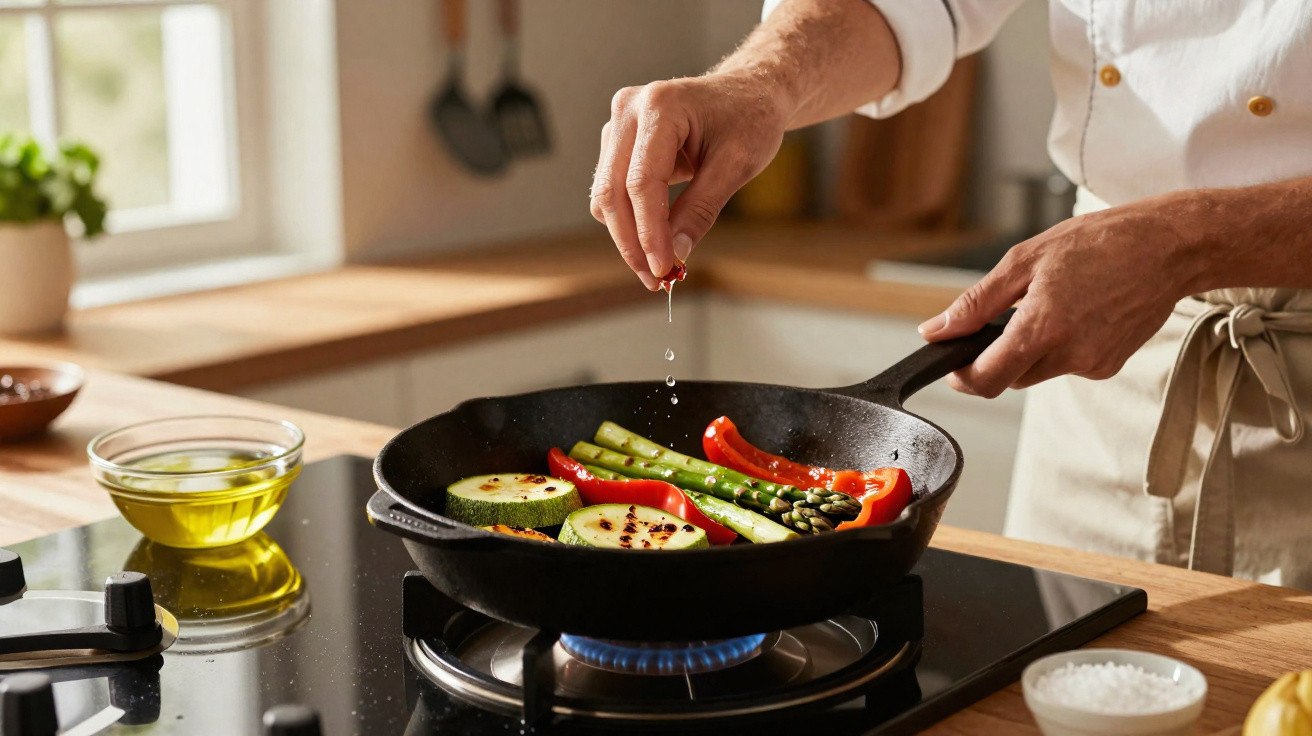
Flicking a few small drops of water onto a stainless-steel surface works as a simple visual thermometer for the home cook. If the water vanishes instantly, it’s a sign the pan still hasn’t reached the ideal temperature to grill your vegetables.
If the droplets form little beads that skate around and “dance” instead of disappearing straight away, the heat is right for adding oil and the ingredients. This quick trick prevents water building up inside the vegetable fibres, so you don’t end up with that boiled look and an unpleasant flavour.
Below, there’s a video from the MinuteFood channel on YouTube that explores the points discussed in this topic in more depth:
What is the importance of the Maillard reaction in gastronomy?
Browning the natural sugars and amino acids in food creates an intensely tasty golden crust on the outside of vegetables. This chemical change needs high, dry heat to happen efficiently during day-to-day preparation of food.
Making sure surface moisture evaporates immediately is the key to triggering the reaction without fully cooking the centre of the ingredient. In this way, broccoli and carrots develop brighter colours and an irresistible smoky aroma that lifts the standard of home cooking.
Perfect Preparation
Essential Steps - Key factors for success in the kitchen:
- 1 Preheating the metal
- 2 Managing the protective vapour
- 3 Keeping the juices inside
How do you stop vegetables going soft and losing colour?
The most common mistake when cooking vegetables in a frying pan is adding too many pieces at once. That quickly drags down the metal’s temperature and encourages unwanted water build-up, leaving you with steamed food rather than crisp pieces.
Leaving gaps between the pieces lets steam escape freely and allows heat to reach the entire surface evenly. Cutting ingredients into consistent sizes also helps everything finish cooking at the same time for every piece going into the meal.
A few simple habits can transform the final texture and deliver reliably great results:
- Use pans with a thick base, as they spread heat more evenly across the contact area.
- Pat the vegetables very dry with kitchen paper before they go on the heat.
- Avoid stirring constantly so the flavourful golden crust has time to form.
When is the right moment to add fat?
Adding oil or olive oil only after the pan has reached the correct temperature helps stop the fat from burning too soon. This straightforward step preserves the oil’s qualities and avoids excessive smoke that can spoil the final taste of your delicious vegetables.
Putting the ingredients in right after the fat goes in creates an immediate sear, helping to lock in essential nutrients and a crunchy texture. Mastering this heat control changes how people approach everyday lunch, making healthy eating far more appealing and enjoyable for the whole family.

Comments
No comments yet. Be the first to comment!
Leave a Comment