
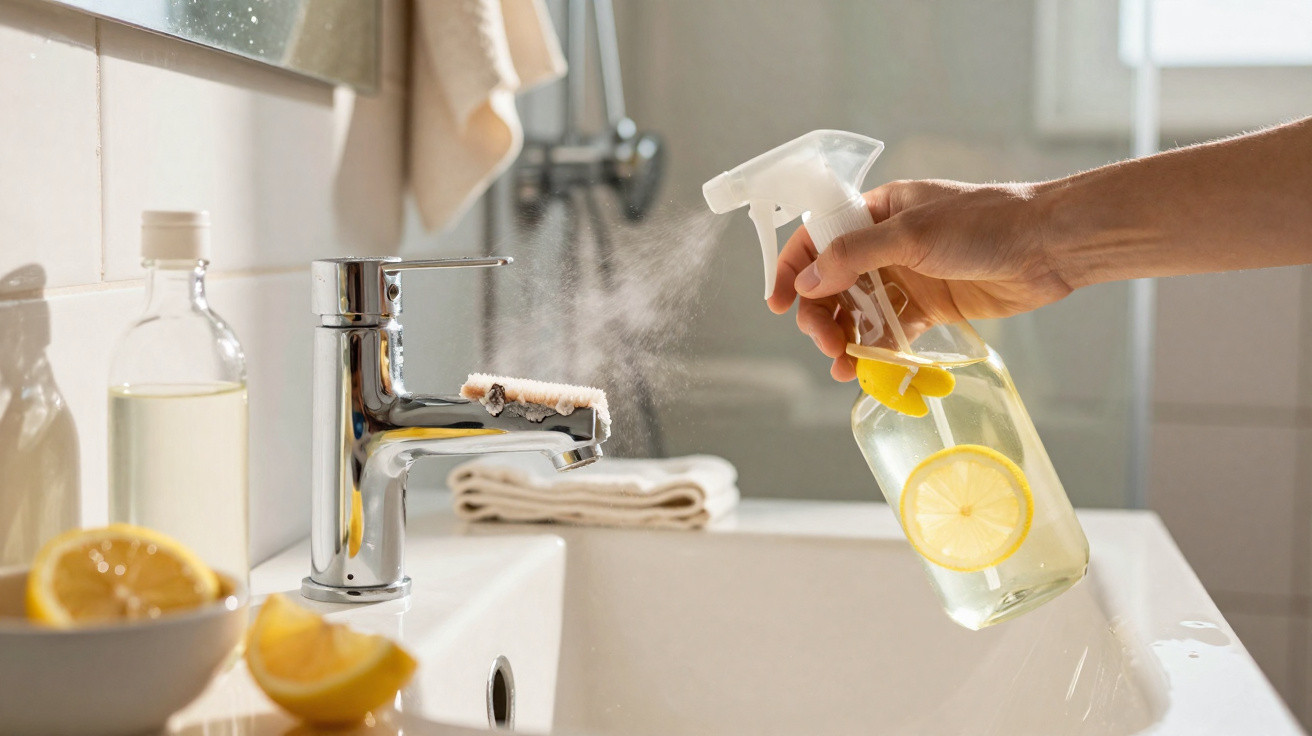
It first jumped out at me on a dreary Tuesday. I was in the shower, staring at the tap I’d polished only two days earlier, and wondering why it already looked wrong. The chrome wasn’t gleaming at all; it sat under a chalky white film that seemed to get heavier with every passing week. I’d cycled through the usual lineup of bathroom sprays and gels, each one reeking of a different headachey fragrance and covered in warnings that made you hesitate to breathe. And yet the limescale returned, as if it had a tenancy agreement.
That morning, with the extractor fan buzzing and my patience gone, I changed tack. I stepped out, went straight into the kitchen, opened the cupboard, and picked up something nearly everyone owns-just not for cleaning the bathroom.
That was the moment an everyday kitchen staple quietly did what the harsh chemical cleaners had failed to do.
The unglamorous enemy hiding in your bathroom
Limescale rarely arrives with drama. It begins as a light misting on taps, a slightly gritty feel on the shower screen, a pale ring around the base of the toilet that refuses to shift. You tell yourself you’ll sort it “at the weekend”, then the days stack up-one week, then another-until you notice your once-bright bathroom has picked up that weary, dull hotel finish.
That’s hard water in real life: mineral deposits accumulating day after day, gradually cementing themselves to anything that regularly meets hot water.
One reader I spoke to hit a breaking point on a Saturday. She spent 45 minutes scrubbing her shower doors with a well-known branded cleaner that promised “zero limescale in seconds”. In practice, the glass improved-but the chalky streaks still hugged the edges, hanging on like stubborn ghosts.
She’d already done the full carousel: gels, sprays, foams. Different colours, the same sharp chemical smell. Each attempt brought a bit of progress, followed by the same let-down when the deposits crept back again. After a while, the whole routine felt draining-and weirdly personal, as though the house itself was quietly keeping score.
The frustration makes sense, because limescale isn’t dirt in the usual sense. It’s mostly calcium carbonate: minerals left behind when water evaporates. You’re not simply wiping away grime; you’re trying to break down a hardened deposit that has latched onto metal, glass, and ceramic. Many traditional cleaners rely on stronger acids, then mask the bite with heavy perfume.
What the bathroom actually needs is something that dissolves those minerals steadily and repeatedly-without leaving you spluttering through a cloud of artificial citrus. That’s where a plain kitchen ingredient earns its place, cutting through the chalk in a way that feels surprisingly simple and reassuring.
The kitchen staple: white vinegar that quietly beats limescale
The thing that changes everything is plain white vinegar. Not a pricey eco-spray with a stylish label-just the inexpensive, sharp-smelling bottle you might put on chips or use in a dressing. It tackles limescale effectively because its mild acidity gradually breaks down mineral deposits.
The process is almost too straightforward. For taps and showerheads, tip vinegar into a small plastic bag, pull it over the fixture so the metal is sitting in the liquid, then secure it with a rubber band. Leave it for at least an hour, then wipe clean. For glass and tiles, combine equal parts warm water and vinegar in a spray bottle, mist the surface generously, let it sit, and then work it gently with a non-scratch sponge. The dull white crust starts to loosen and lift.
If you tried it once and thought, “meh, that didn’t do much,” you’re in good company. Vinegar often gets dismissed because people expect instant results. One man admitted he gave up after a single rushed go: he sprayed, waited five minutes, wiped, saw no immediate transformation, and went straight back to his green gel with the skull-and-crossbones warning icon.
What changed his mind was a particularly grim bathroom day: a shower door clouded with limescale and a chrome mixer tap that had turned almost grey. This time, he soaked paper towels in vinegar, pressed them over the tap and along the door frame, and left them there for two hours while working from home. When he returned and peeled them away, he said the limescale “literally slid off like wet chalk”. Was it flawless after one attempt? No. But for the first time in ages, the metal underneath actually caught the light again.
There’s a clear bit of chemistry behind it. Vinegar contains acetic acid, which reacts with the calcium carbonate in limescale and turns it into material you can rinse or wipe away. Because it isn’t as aggressive as some commercial descalers, it benefits from longer contact time-especially with older, thicker build-up. If limescale has taken years to form, it won’t vanish in 30 seconds just because a label claims it will.
That gentler approach is also why many people stick with it. Vinegar doesn’t blanket the bathroom in harsh fumes, and you’re not tipping unknown compounds down the drain. Used regularly, it shifts from an occasional “emergency rescue” into calm, ongoing prevention. The bathroom stops feeling like a fight and starts feeling like something you can keep on top of.
How to use vinegar like a quiet cleaning pro
The most effective routine is simple, if you can resist overcomplicating it. Begin with the worst limescale hotspots: taps, showerheads, the join where glass meets metal, the base of the toilet, around the sink waste. Soak cotton pads, reusable cloths, or paper towels in white vinegar and press them firmly onto those areas. On vertical surfaces, smooth them down so they cling.
Leave them in place for at least 30–60 minutes-this is the bit most people try to rush. Go and do something else and let the acid work slowly. Then return with a soft brush or sponge, scrub lightly, and rinse with warm water. For kettles and taps with internal build-up, fill them with a half-water, half-vinegar mix, leave it for an hour, then flush thoroughly.
A few common mistakes make people abandon vinegar before it has a chance. One is using too little product or not waiting long enough. A quick spritz and a 3‑minute pause won’t undo years of hard water residue. Another is reaching for an abrasive scouring pad to “speed things up”, which can scratch chrome or glass and leave permanent damage.
And then there’s the smell. Yes, for a short while your bathroom may smell like a chip shop. Open a window, put the fan on, and don’t judge the method by the first five minutes. Once you rinse and everything dries, the scent disappears much faster than the synthetic lemon fog many cleaners leave behind. And realistically, nobody does this every single day. A patient deep clean every week or two is already a meaningful win.
“Switching to vinegar felt almost silly at first,” one homeowner told me. “I thought, there’s no way this cheap bottle can beat the powerful stuff. But I was tired of the burning smell. The first time I wiped my tap after a long vinegar soak and saw proper shine under the crust, I actually laughed. It felt like I’d been tricked by marketing for years.”
- Best spots for vinegar
Taps, showerheads, glass panels, tile grout, kettles, and around drains respond especially well to slow vinegar soaks. - When to avoid it
Don’t use straight vinegar on natural stone like marble or travertine, and be cautious with delicate finishes that react to acid. - Simple upgrades
Warm the vinegar slightly for extra power, add a drop of washing-up liquid to cut soap scum, or repeat shorter soaks over a week for very old build-up. - Why it feels good to use
You get visible results without choking fumes, and you’re using something familiar that you already keep at home. - Long-term payoff
Regular, gentle vinegar sessions can slow future limescale, so each clean becomes quicker and easier over time.
From dreading the scrub to quietly owning it
Once you watch vinegar work on limescale, a small but real shift happens in your head. You stop assuming only the harshest, scariest product can save your bathroom. The balance of power changes: instead of wrestling with aggressive chemicals and hoping nothing splashes your skin, you’re using something ordinary and controllable, on your own terms.
That doesn’t mean the job becomes “effortless”. There will still be days when the shower door looks rough or the tap catches the light in the worst possible way. But it’s less daunting when you know a bottle in the kitchen can steadily undo the damage. You don’t need a perfect system-or a colour-coded cleaning caddy-to begin.
Most people recognise that moment of glancing around the bathroom and feeling a bit embarrassed, even if nobody else will see it. Limescale can feel oddly emotional: it mutters that you’re behind, that you’ve let things slide. The quiet appeal of vinegar isn’t only the chemistry; it’s how it lowers the stakes. You’re no longer choosing between suffocating fumes and giving up.
The next time you spot that white crust creeping around the base of the tap, you might think of the bottle next to the cooking oil. Perhaps you’ll soak a cloth, press it on, and walk away. Perhaps you’ll mention it to a friend, or share a before-and-after photo-quietly pleased that the shine is back without a hazmat-level cleaner. They’re small domestic victories, but they count.
| Key point | Detail | Value for the reader |
|---|---|---|
| White vinegar dissolves limescale | Mild acetic acid breaks down mineral deposits on taps, glass, and ceramics | Offers a low-cost, low-tox alternative to harsh chemical descalers |
| Contact time beats brute force | Soaking cloths or bags of vinegar on problem areas for 30–120 minutes | Reduces scrubbing effort and protects surfaces from scratches |
| Regular light use slows future build-up | Weekly or fortnightly vinegar routines on high-contact zones | Keeps bathrooms looking cleaner for longer with less overall effort |
FAQ:
- Can I use any vinegar, or does it have to be white vinegar? White distilled vinegar works best for cleaning because it’s clear, cheap, and has a consistent acidity. Apple cider or darker vinegars can stain or leave residue, so they’re less ideal on light surfaces.
- Is vinegar safe on all bathroom surfaces? It’s generally safe on chrome, ceramic, glass, and most tiles. Avoid using it on natural stone (marble, limestone, travertine) and always test a hidden spot if you’re unsure about a special finish.
- How do I deal with the strong vinegar smell? Open a window, switch on the fan, and let the room air out after rinsing. You can also dilute it with water or add a few drops of essential oil, though the smell usually fades quickly once it dries.
- How often should I use vinegar on limescale? In hard water areas, a light vinegar clean once a week or every two weeks on taps and shower glass can prevent heavy build-up. For kettles or showerheads, a deeper descale every 1–3 months is usually enough.
- What if the limescale is really old and thick? Use repeated soaks: apply vinegar-soaked cloths or bags several times over a few days, gently scrubbing in between. For extremely stubborn spots, you might combine vinegar with a paste of baking soda, always testing a small area first.



Comments
No comments yet. Be the first to comment!
Leave a Comment