
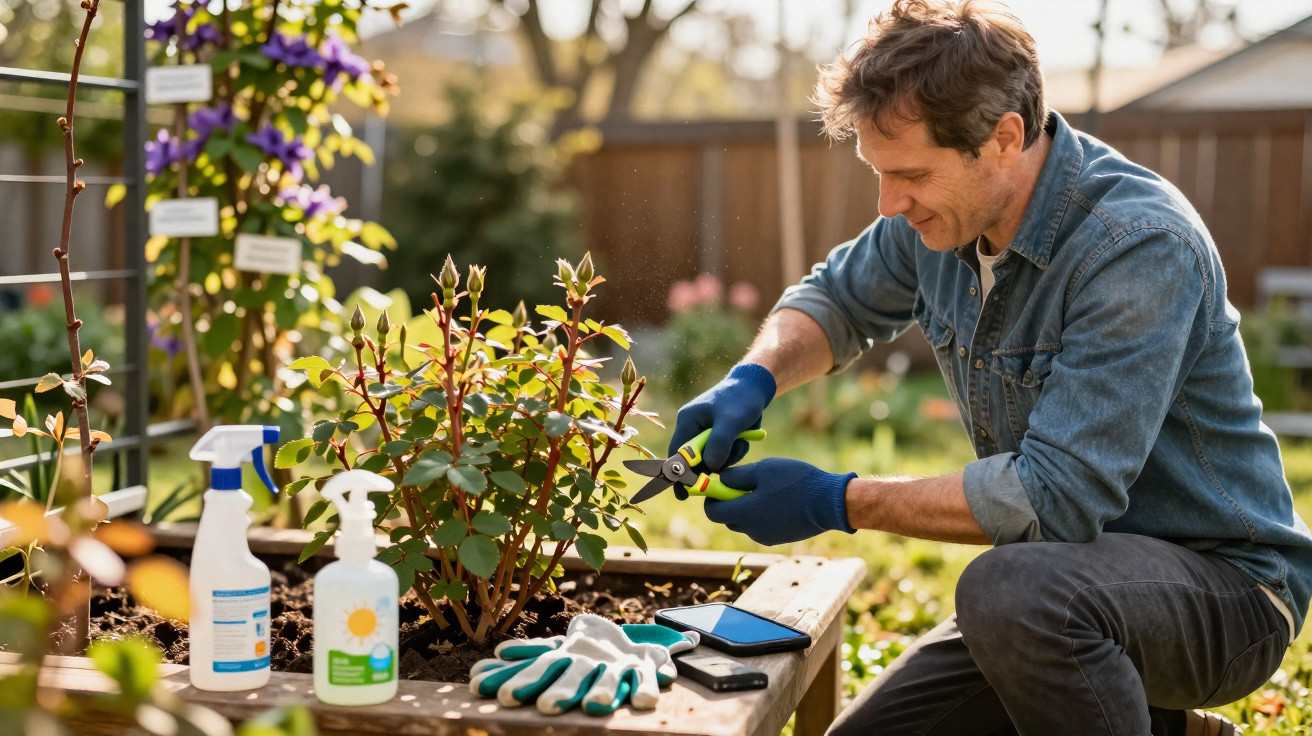
The right cut at the right moment is what makes many ornamental plants truly flourish in spring.
Between grey, wet days and the first mild spells, countless gardeners ask the same thing: should I prune now, or wait? British gardening expert Monty Don is clear on this point: five very common ornamental plants need a deliberate prune in March-otherwise their display in spring and summer can fall well short of what you hoped for.
Why March is so important in the ornamental garden
As the days lengthen and temperatures start to rise, most shrubs and perennials begin their new season. In this in-between period, plant tissue tends to respond especially well to being cut back.
Pruning at this point delivers several benefits at once:
- old, diseased or frost-damaged stems are removed and no longer drain the plant’s energy
- more light and air reach the centre of the shrub, making fungal problems less likely
- growth is channelled into a smaller number of strong new shoots rather than a tangle of weak twigs
- flowers form at a more viewable height instead of appearing only as a “pompom” at the very top
Monty Don’s advice focuses on woody plants that flower on the current year’s growth-meaning they bloom on shoots produced in spring. This includes many roses, butterfly bush (Buddleja), late-flowering clematis, Lavatera and certain types of hydrangea.
"A short, clear cut in March can decide weeks of extra flowering-or a rather tired-looking garden."
Monty Don’s one rule when pruning
The TV gardener sums up his approach to pruning with surprising simplicity: essentially, there is only one rule-“always cut to something”.
In practice, that means every cut should finish just above a visible bud or a side shoot, and never end halfway along dead wood. Done this way, the plant directs its energy into that point, pushes out strongly and produces plenty of flowers.
If blunt “stubs” are left behind, they often die back, begin to rot and can attract disease. As well as looking messy, that can weaken the entire shrub.
Monty Don also advises patience. In areas prone to late frosts, gardeners shouldn’t rush in during February. If a mild spell encourages soft new growth, just a few degrees below zero can turn those tender shoots black overnight. March is usually the better window, because severe cold snaps are less common.
The five most important plants to prune in March
1. Roses – the classic for a strong cut-back
Roses top almost every late-winter pruning list. Specialists suggest cutting back bedding and shrub roses in March by roughly a third to a half. Key points are:
- cut to an outward-facing bud so the plant develops an open, airy shape
- remove any dead, thin or crossing stems completely
- climbing roses: shorten side shoots to a few buds, while keeping the main stems as the framework
This creates a well-ventilated structure that helps prevent fungal disease and encourages flowers to form on the outside, rather than being hidden in dense inner growth.
2. Late-flowering clematis – cut back to about eye level
Clematis in pruning group 3-including many summer-flowering and viticella varieties-reward a hard March prune with flowers along the full length of new growth. As a rule of thumb:
- shorten all stems back to strong, clearly visible buds low down
- remove old, brown tendrils so light can reach the base
- roughly sort and space the stems so the plant doesn’t tangle into itself
If you hesitate and only trim the tips, you risk a plant that flowers in summer only at the very top of a trellis or in the crown of a tree-well out of view.
3. Butterfly bush (Buddleja) – cut hard for clouds of flowers
Butterfly bush is one of the shrubs that blooms on new wood, so you can be bold with the secateurs. A low, sturdy frame of a few strong main stems is enough; everything above that is cut back significantly in March.
The result is the opposite of a few tall, bare canes with flowers only at the top. Instead, you get a densely branched shrub covered in flower panicles-highly attractive to butterflies, bees and other insects.
4. Lavatera and fuchsias – keep the shape, remove frost damage
Lavatera (tree mallow) can quickly become woody and lose its form. A firm cut back to a stable framework, just above young buds, keeps plants compact and free-flowering.
With fuchsias, experts recommend waiting a little longer first-until it’s obvious where fresh shoots are appearing. Then:
- take out old, grey-brown stems that look lifeless
- cut back to healthy, green buds
- for hardy fuchsias, cutting down to about 10 centimetres above the ground is often enough
Handled this way, fuchsias rebuild into a dense structure and look noticeably fresher and more floriferous in summer.
5. Panicle and snowball hydrangeas – a bigger cut for bigger blooms
Hydrangea paniculata (panicle hydrangea) and Hydrangea arborescens (such as the well-known snowball hydrangea ‘Annabelle’) flower on the current year’s wood. Because of that, they cope well with a clear corrective prune in March.
| Type | March pruning | Expected effect |
|---|---|---|
| Panicle hydrangea | remove old flowerheads; shorten stems to a pair of buds | an even shape; lots of sturdy new shoots with large panicles |
| Snowball hydrangea | cut back hard, often fairly close to the ground | strong fresh shoots; abundant “ball” blooms |
If you prune too cautiously here, you may still get plenty of stems, but the flowerheads are often smaller and less impressive.
Tools, hygiene and a glance at the forecast
For March pruning to genuinely benefit your plants, it’s not only about where you cut, but how you do it. Sharp, clean bypass secateurs-which slice like scissors-avoid crushing the wood and leave smooth wounds that heal more quickly.
Many professionals wipe blades in between with alcohol or hot water, particularly when moving from a diseased plant to a healthy one. That reduces the risk of spreading fungi and bacteria from shrub to shrub.
It’s also worth checking the weather forecast. Ideally, do the main pruning during a frost-free spell when daytime temperatures are clearly above zero. Cuts dry out faster, and newly swelling buds are less likely to be hit by immediate freeze damage.
How to use the effect in your own garden
If you’re unsure how far you can go, take it in stages: start by removing dead and diseased wood, then work gradually towards your target height. Taking a photo before and after pruning can also help you decide next year whether to be braver-or more restrained.
Afterwards, it’s useful to spread a thin layer of compost around the base of the plant. This provides a quick nutrient boost that supports new shoots. Shrubs that have been cut back hard often respond to this extra care with especially vigorous growth.
If you stick to Monty Don’s simple rule-“cut to a bud”-mark these five plants in your calendar and set aside an hour or two in March, you’ll often notice the difference the very next season: fewer bare frameworks, fewer weak shoots, and far more flowers that actually catch the eye.





Comments
No comments yet. Be the first to comment!
Leave a Comment