
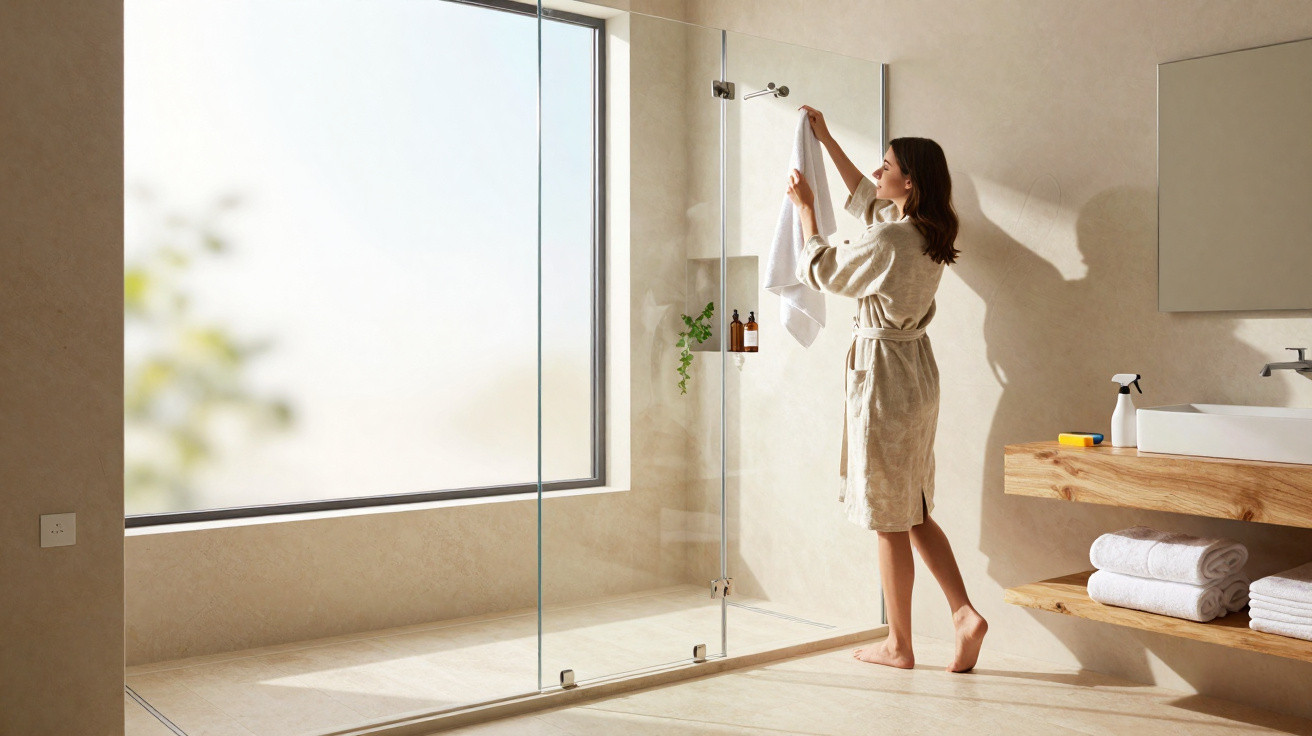
A tempered glass shower screen still features in countless schemes, yet the bathroom of 2026 is increasingly looking towards a different answer: an open shower area, with a half partition or no full enclosure at all. This shift is being driven by a mix of everyday practicality, potentially lower costs in certain layouts, fewer silicone corners, and a cleaning routine that helps keep mould from taking hold around the edges.
Why has the open bathroom approach appeared on the radar in 2026?
The 2026 trend is showing up strongly in compact refurbishments and flats where every centimetre matters. Rather than a fully enclosed cubicle that visually blocks the room, the focus moves to an integrated shower zone: a linear waste, non-slip flooring, a properly resolved fall, and-often-just a smaller fixed panel to limit splash.
In a bathroom, this choice can make the room feel larger, make movement easier, and remove classic dirt traps. A tempered glass shower screen setup typically involves a track, rollers, seals, and corners where soap residue builds up. A more open arrangement cuts down on these junctions, which can significantly change how the wet area is maintained.
What does this change for cleaning and mould?
Mould thrives when moisture lingers, ventilation is poor, and residue gets caught in narrow gaps. When a bathroom relies on multiple profiles, ageing silicone, and awkward-to-reach corners, drying takes longer and cleaning becomes less effective-especially along the lower edge of a tempered glass shower screen.
In day-to-day use, a more open design usually helps in four ways:
- fewer edges to scrub after showering
- fewer tracks that hold water and slime
- easier access to the floor, grout, and the waste
- better air movement, when the bathroom’s ventilation is adequate
Is it genuinely a low-cost option?
It depends on the design, but on many projects the numbers do work out better. Costs often drop when you remove the full tempered glass shower screen assembly with a door, fittings, profiles, and the more involved installation. A smaller fixed panel-or, in well-planned bathrooms, even none at all-can reduce the budget.
That said, it is not a shortcut. For the concept to perform properly, the bathroom needs correct waterproofing, the right fall to the waste, finishes suitable for a wet area, and effective extraction. If these basics are missed, any early saving quickly disappears through leaks, a permanently wet floor, and mould returning on walls, the ceiling, and grout lines.
What precautions prevent design mistakes in the shower area?
An open approach works best when the bathroom is treated as a system, not just a look. The waste, ventilation, floor layout, slope, and shower position determine whether water stays where it should or ends up spreading across the entire room.
Before committing to the 2026 trend, it is worth checking the following:
- the shower should be positioned away from dry zones wherever possible
- the linear waste needs to match the floor fall
- non-slip finishes reduce the risk on a wet floor
- an extractor fan or window speeds up drying of steam
- a half partition can stop splashes without recreating a closed enclosure
Is it worth swapping a traditional enclosure for a more open layout?
For many people, yes-provided the bathroom’s size, ventilation, and technical execution are up to the job. A tempered glass shower screen still makes sense in homes with heavy use, very young children, or a high-pressure shower positioned close to the basin area and toilet. Outside those scenarios, a more open solution can deliver a stronger sense of space and remove long-standing maintenance hotspots.
The 2026 trend is not purely about appearance. It answers an old frustration for anyone dealing with mould, darkened silicone, grimy tracks, and slow cleaning after every shower. In a properly waterproofed bathroom with efficient drainage and good air circulation, fewer physical barriers also mean fewer problem surfaces that need scrubbing and drying.





Comments
No comments yet. Be the first to comment!
Leave a Comment