
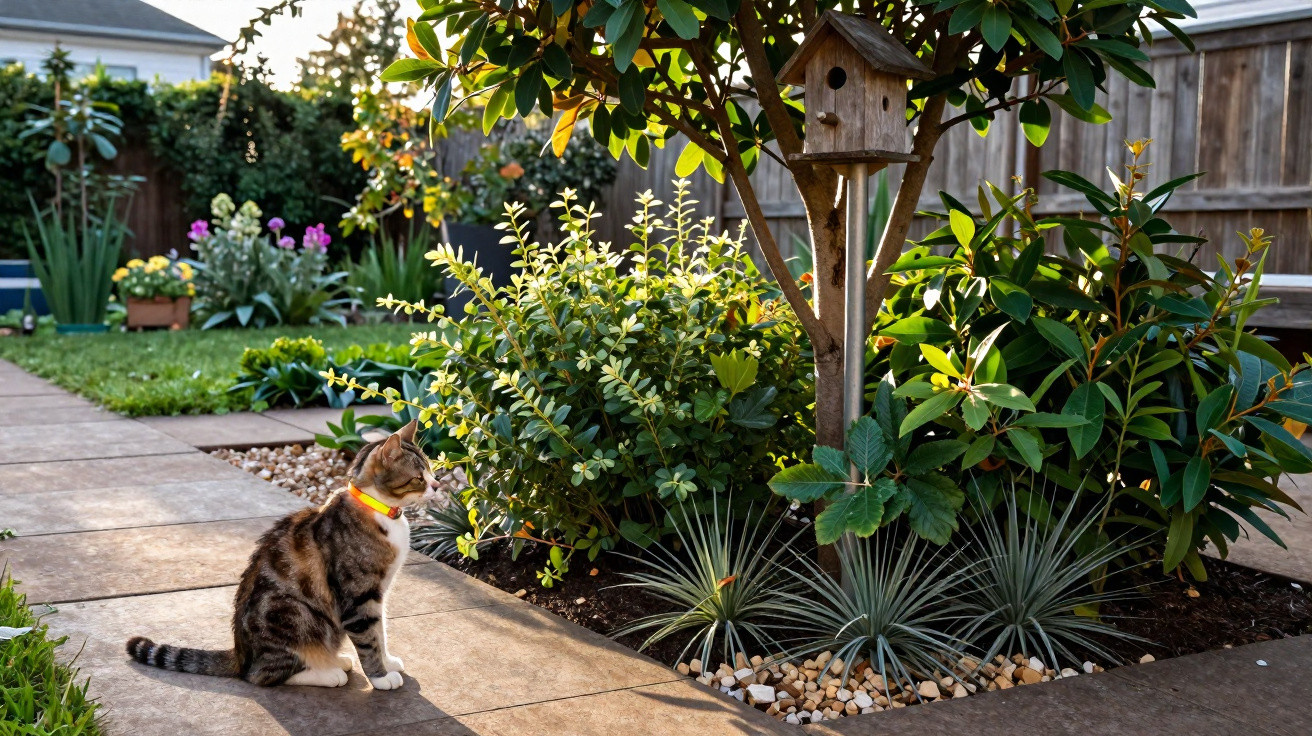
In spring in particular, two worlds collide in the garden: the free-roaming “house tiger” with a hunting instinct, and delicate fledglings that can barely fly. With a few thoughtful tweaks, you can plan your garden so cats can still enjoy the outdoors, without the bird population in the borders taking the hit on a large scale.
Why your garden becomes a hunting ground for cats
House cats may look well-fed, pampered and a touch lazy. Even so, they still carry a fully working predator inside them. A full food bowl doesn’t switch that instinct off; it simply shifts what they focus on. Instead of mice, birds often end up in the crosshairs.
European studies indicate big differences between individual cats: some bring home hardly any prey in a year, while others roam and hunt almost daily. The most sensitive period is from March to July. At that time, many young birds are on the ground or tucked into low hedges, still unsteady on their wings - easy targets for any cat.
A garden that’s been tidied too thoroughly makes things worse. What looks neat to people can be seriously dangerous for birds:
- clearing away leaf piles removes hiding places and nesting material,
- closely mown lawns offer no cover,
- cutting back old perennials makes nests far easier to spot,
- isolated shrubs make it simple for cats to reach clutches.
“The ‘cleaner’ the garden, the better it works as a hunting ground - and the worse it is as a safe haven for young birds.”
Refuge in the border: the 3-2-1 rule for better bird protection
Rather than trimming every corner to perfection, it pays to take a different approach: a layered refuge that slows cats down and gives birds somewhere to disappear into. A straightforward rule of thumb makes this easy to put into practice.
What the 3-2-1 principle actually means
The concept is to create a small plant “fortress” in one area of the garden. Three layers work together:
- Ground cover: dense, low-growing plants such as sedges, cushion-forming perennials or vigorous hardy geranium,
- Shrub layer: ideally thorny species such as hawthorn, blackthorn, wild roses or barberry, with hazel as an additional option,
- Small trees: one or two small trees whose branches break up clear sightlines for cats.
Beneath thick foliage and among thorns, small birds can rest, retreat and approach safely. For cats, the space becomes cluttered, hard to read and therefore less appealing.
Let one area grow on purpose
If you can, choose one corner of the garden that stays largely undisturbed from mid-March until the end of July. That creates a sheltered setting for nesting and rearing chicks.
A few simple steps can make an immediate difference:
- leave at least 1 square metre of leaves under hedges,
- build a solid pile of logs and branches in a quiet spot,
- keep a strip of grass long before the first mow,
- don’t cut down old, hollow perennial stems until late summer,
- cover beds with a thick layer of organic mulch.
“Even a small area you don’t ‘tidy up’ can serve as a lifeboat for dozens of birds and insects - without making the rest of the garden look unkempt.”
The key-tree trick: start small, get a big impact
Many bird families use the same tree or shrub year after year as their central base. That’s exactly where it makes sense to begin concentrating your protective efforts.
A practical way to go about it:
- Watch for a tree or larger shrub where birds regularly perch or feed.
- Plan thorny shrubs, ground cover and a bit of deadwood underneath and around that area.
- Make any easy “launch points” that let cats jump up effortlessly harder to use by adding obstacles.
Many people notice the change by the first spring: fewer dead fledglings show up on the lawn, while the cat still patrols the garden - just along different routes.
Safe nest boxes: what really makes bird boxes cat-proof
If you want to support birds more actively, putting up nest boxes is an obvious step. But placement determines whether a box becomes a lifeline or a trap.
| Aspect | Recommendation |
|---|---|
| Height | about 3 metres above the ground |
| Surroundings | no direct access via branches, wall edges or roof overhangs |
| Orientation | entrance facing east or south-east, sheltered from wind |
| Internal dimension | 15–20 centimetres between the entrance hole and the floor |
| Decoration | avoid small external perches, as cats can pull themselves up on them |
“A nest box placed directly on a wall or hedge that cats can spring from is an invitation to the predator - even if it looks ‘pretty’.”
Gentle deterrence: what cats actually avoid
No-one wants to harm their own pet. Instead of harsh tactics, many owners rely on mild cues that cats dislike and therefore tend to steer clear of.
Creating unpleasant zones
Around nesting trees, nest boxes or dense hedges, certain measures can help make routes less attractive for cats:
- used coffee grounds scattered in thin lines on the soil,
- citrus peel, replaced regularly,
- planting Coleus canina (often sold as the “scaredy-cat plant”),
- barrier collars/guards fitted to trunks to make climbing much more difficult.
The key point: these methods should discourage, not injure. Spikes, electricity or chemical poisons have no place in an animal-friendly garden.
Signal colour on the collar
Bright collar covers or colourful collars can also give birds earlier warning. Designs with a wide, vivid fabric ruff make the cat stand out clearly against greenery.
Birds react quickly to movement and strong colours and often take off sooner. What matters is a breakaway safety clasp, so the cat can’t snag and hang from branches. If you’re unsure, try it only during the breeding season first.
Managing timing: when it’s better for your cat to stay indoors
Most attacks on birds happen at fairly predictable times of day. If you keep your cat inside during those windows, you can noticeably reduce losses - without shutting them in all the time.
Particularly sensitive periods include:
- early morning, when many birds forage on the ground,
- dusk, when fledglings flutter back to roost and are still clumsy,
- the weeks immediately after leaving the nest, when young birds can’t yet fly confidently.
Bringing the cat indoors then - or letting them use a secured balcony - takes immediate pressure off nesting areas in the garden. For the rest of the day, your four-legged explorer can go out as usual.
Owner responsibility: long-term measures to reduce hunting drive
Two actions, in particular, lower a cat’s long-term hunting success and help stabilise bird numbers around the home:
- Neutering reduces roaming and fighting, and many cats become more home-oriented.
- Indoor enrichment using food puzzles, climbing trees and hunting-style toys helps burn off excess energy.
A cat that’s mentally and physically occupied tends to comb through the neighbourhood less single-mindedly. Owners who make time for active play each day often report fewer “gifts” left in the hallway.
What a cat- and bird-friendly garden looks like in the end
A garden like this doesn’t have to resemble an overgrown nature reserve. Many solutions can look tidy and intentional:
- A neat seating area with crisp edges, alongside a deliberately “rough” corner for wildlife.
- Flowering, thorny shrubs as a hedge instead of sterile rows of thuja.
- Attractive stacks of deadwood combined with ferns and perennials.
Once you’ve grasped the approach, you can build it up in stages: start with one tree, then improve a hedge, later add a second nest box. The cat keeps its outdoor playground, the garden gains structure, and the summer birdsong becomes more plentiful again.
For many families, it reshapes how they see their outdoor space: not just a backdrop for barbecues, but a living habitat where human needs and consideration for wildlife can be balanced surprisingly easily.






Comments
No comments yet. Be the first to comment!
Leave a Comment