
Behind the trend lies more than simple convenience.
In many households, it has become entirely normal for a full day to pass without a shower - sometimes two or three. What used to be viewed as unhygienic now feels, to some, almost like an act of self-care. At the same time, high-tech concepts such as a Japanese “washing machine for humans” are reimagining personal hygiene from the ground up. What is driving this gradual move away from the daily shower?
Why the daily shower is losing its shine
For decades the rule seemed clear: if you take pride in yourself, you shower every day. A quick rinse under the spray in the morning and you’re done. Increasingly, however, dermatologists, environmental researchers and psychologists are challenging the habit - and plenty of people are acting on it.
“Showering less does not automatically mean less hygiene, but often a different understanding of cleanliness.”
There are several reasons behind the shift:
- Skin health: showering too often can weaken the skin’s natural protective barrier.
- Climate crisis and resource scarcity: hot water and shower gel use energy and raw materials.
- Everyday stress: many people want to streamline routines and save time.
- Technological innovation: new cleaning methods are intended to be more efficient than a traditional shower head.
The Japanese “washing machine for humans” at a glance
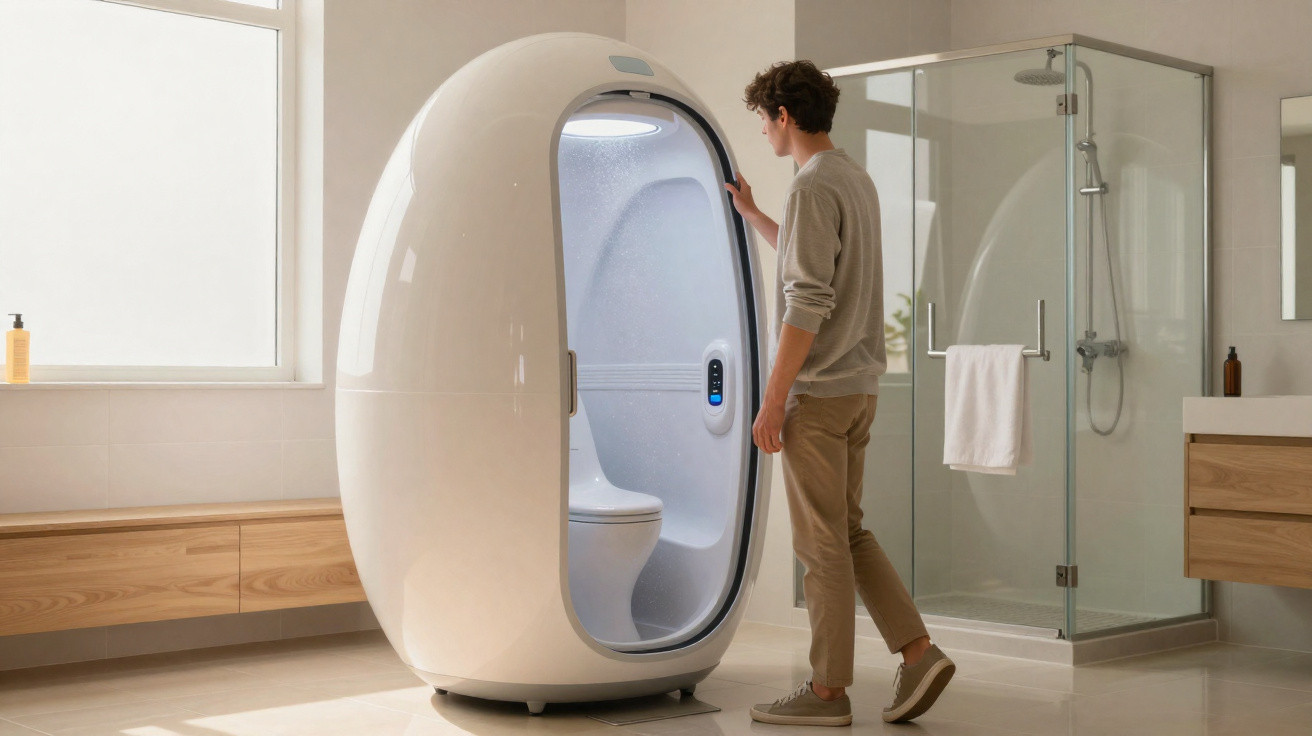
A striking example comes from Osaka. The company Science Co. is developing a body-care capsule called “Mirai Ningen Sentakuki”, which roughly translates as “washing machine for the human of the future”. The device is designed to wash and dry the entire body in around 15 minutes - with almost no effort required from the user.
How the futuristic washing capsule works
Visually, the technology looks more like a wellness pod than a shower. You sit inside a sealed capsule and everything else happens automatically.
- The capsule closes and the interior fills with water.
- A microbubble system lifts dirt and skin oils from the surface.
- Sensors record readings such as heart rate and physical condition.
- An AI adjusts temperature, water jet intensity, lighting and soundscape.
- Finally, an integrated system dries the body completely.
The microbubbles used are extremely fine and are intended to reach into skin folds without the need for vigorous scrubbing. Comparable approaches already exist in spa treatments and medical baths.
“In 15 minutes, the capsule promises cleansing, drying, wellness - and health data as a side benefit.”
Hygiene, wellness and a health check in one device
What makes the concept particularly intriguing is how it links washing with health monitoring. While the full wash cycle runs, biometric sensors continually track physiological data. This includes, for example:
- Heart rate
- Signs of stress and exhaustion
- Changes in circulatory parameters
An integrated AI interprets these data and decides in real time how strong the massage effect of the water jets should be, how warm the water needs to be, and which lighting or sound setting will deliver maximum relaxation. The overall experience is positioned somewhere between a shower, a spa treatment and a mini check-up.
A historical idea, upgraded with modern tech
The underlying notion is not entirely new. As far back as the Osaka Expo in the 1970s, a prototype “human washing machine” was shown. At the time it remained largely a concept. Today, far more capable sensors, computing power and AI are available, and are meant to make the approach practical.
The current Osaka version revives that old trade-fair headline idea, wraps it in modern wellness aesthetics, and aims it at a society already familiar with smart homes, wearables and digital health apps.
Will technology change how we shower in the long term?
It is still uncertain whether capsules like this will ever appear in ordinary bathrooms, or whether they will be confined to selected hotels, care facilities and high-end spas. What is clear is that they align with a broader trend that is reshaping traditional showering.
Three developments are becoming apparent:
| Trend | Description |
|---|---|
| Showering less often | Many people cut back to every two or three days, using “flannel days” in between. |
| Gentler products | Mild syndets, solid soaps, shampoo bars and natural oils are replacing harsh shower gels. |
| Smarter devices | From water-saving shower heads to high-tech capsules - technology is meant to clean more efficiently. |
While some deliberately shower less to conserve resources, others try alternatives such as dry shampoos, antibacterial wipes or zone-based washing: armpits, intimate area and feet daily, full body only every few days.
How little showering still stays hygienic
Dermatologists have emphasised for years that daily, hot, heavily foaming showers often do more harm than good. Skin can dry out, itch and become more reactive. A reduced routine can therefore make sense - provided a few basic rules are followed.
- Clean armpits, intimate area and feet thoroughly every day, if necessary at the sink.
- Shower as soon as possible after sport or heavy sweating.
- Use mild, pH-neutral products, especially if you have sensitive skin.
- Keep the water more lukewarm rather than consistently hot.
- Pat skin dry briefly after showering and apply moisturiser if needed.
“If you know your body and pay attention to smell, sweat and how your skin feels, you usually find the right shower rhythm quickly.”
The psychology of cleanliness: how much is habit?
Many people shower not primarily for hygiene, but because they feel “uncomfortable” otherwise. That sense of being clean is strongly shaped by habits and upbringing. If you have spent years learning that a daily shower is mandatory, anything else can immediately feel “dirty” - even when there is no objective problem.
Over time, that perception can shift. People who experiment with showering less often commonly report that the urge for a daily rinse fades, without anyone around them noticing a difference. At the same time, interest grows in replacement rituals: brief breathing exercises, stretching, or a cup of tea in the morning can partly take over from the “wake-up shock” of water hitting the body.
Risks, limits and sensible add-ons
It still does not work without water and soap. If someone showers far too infrequently over the long term, they risk unpleasant body odour, skin irritation and, in extreme cases, infections - especially in warm and moist areas of the body. People with certain skin conditions should always discuss changes to showering habits with specialist clinicians.
The combination of deliberately reduced showering and smart technology is where things get interesting. A capsule like the one from Osaka could, for instance, help older people or those with limited mobility to wash regularly without physical strain. At the same time, the sensors could flag stress or circulatory issues and potentially ease the burden on care services or doctors.
For most people’s day-to-day lives, simpler steps are likely to come first: one fewer shower per week, a more water-efficient shower head, a gentler product. The key question is no longer how often you “must” shower, but what makes sense for your skin, the environment and your available time.
One thing is clear: the move towards showering less is not about laziness, but about a mix of health awareness, sustainability - and a measure of fascination with technology that rethinks the everyday wash.



Comments
No comments yet. Be the first to comment!
Leave a Comment