
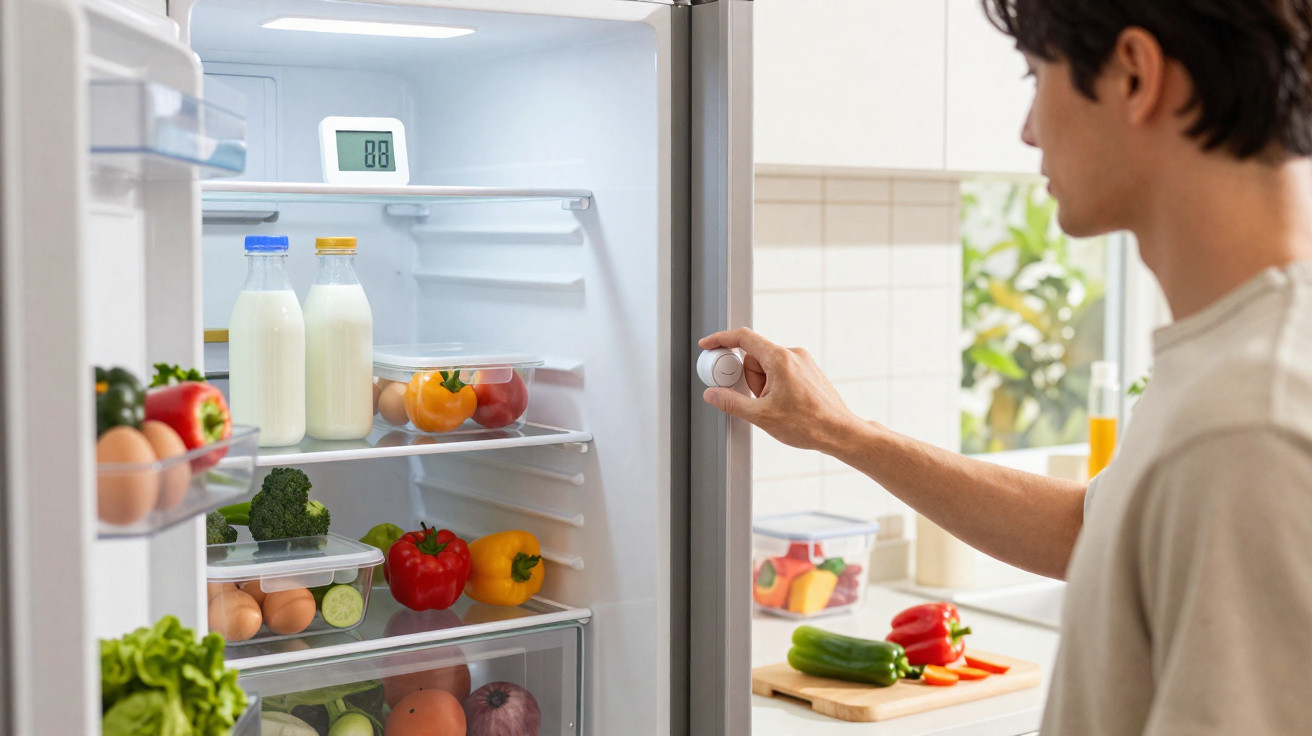
The kitchen is often described as the heart of the home – the space where families come together and meals start. And at the centre of it all sits the fridge.
It’s where we keep a large proportion of our food safely stored, and as technology moves on, fridges are becoming increasingly “smart”: able to monitor what’s inside, recommend recipes and even show the news.
Yet for all the extra features, temperature is still the single most important function. We depend on fridges to slow spoilage and keep food safe – but when the temperature is wrong, they can do the reverse, effectively turning into comfortable incubators for bacteria.
As a microbiologist, that might sound intriguing – but it’s the last thing you want for the sausages you picked up at the farmers’ market.
Why fridge temperature matters for food safety
Across many homes, the typical fridge temperature is 5.3°C – slightly above the recommended safe range of 0–5°C (32–41°F). More worrying than the average is how frequently temperatures rise and fall. In many fridges, the temperature is above the safe limit for more than half the time.
In some cases, fridges have even been recorded at 15°C (59°F) – which, in parts of the UK, feels much like a warm summer’s day. At that point, bacteria can reproduce rapidly, raising the likelihood of food spoiling or causing food-borne illness.
So what’s causing the problem? One issue is that many fridges don’t provide a reliable, easy-to-read way to check the internal temperature. And let’s be honest: most of us couldn’t confidently say what the dial setting really corresponds to.
Another factor is the door. Each time it’s opened, warmer air floods in. The longer it stays open – particularly if you’re hovering while deciding on a snack – the more the internal temperature creeps up towards room temperature, making conditions more favourable for bacteria.
Keep bacteria in check
Here are straightforward steps to help keep food fresher – and safer:
- Minimise door openings. Don’t leave the fridge door open while you put the shopping away.
- Use a rotating organiser. A lazy Susan makes it easier to reach items and stops you rummaging through a crowded shelf for that half-used bottle of sauce.
- Clean the door seals. Every few months, look for mould or grime and check the seals shut firmly.
It’s also worth remembering that the temperature isn’t the same everywhere inside the fridge. The coldest area is usually towards the back, while the warmest is typically in the door. So foods such as milk or raw meat are better kept near the back rather than in the door. The door compartments are more suitable for butter or fizzy drinks.
Even when a modern fridge includes a built-in sensor, it often measures the temperature in only one location. And in practice, 68% of households never change their temperature settings.
How to check and adjust your fridge temperature
One useful approach is to put a few stick-on thermometers in different parts of the fridge. If any of them regularly read above 5°C (41°F), you should adjust the settings. It’s also worth bearing in mind that the built-in indicators in your fridge may not represent the true temperature across the whole compartment.
Try not to overfill the fridge, too. A good target is around 75 percent full, so cold air can move around properly. If you need to free up space, keep foods such as stone fruits, tomatoes, peppers, potatoes and honey in a cool, dry cupboard – they don’t require refrigeration.
But temperature is not the only issue. Even a fridge that’s properly chilled can still contain unseen hazards. Research shows that fridges can harbour pathogens, likely introduced earlier via food or packaging that may have been contaminated.
While low temperatures prevent many bacteria from multiplying, some organisms – including Listeria monocytogenes – can survive and may even grow in the cold. Listeria, which poses particular danger for pregnant people and older adults, can be present in soft cheeses, cured or smoked fish (including sushi), deli meats, pre-packaged fruit, frozen veg and ready-made sandwiches.
Reduce risk
To lower risk for yourself and others, follow food safety authority guidance:
- Keep raw foods – such as meat and fish that require cooking – separate from ready-to-eat items like fruit or sandwiches.
- Put raw meat and fish on the bottom shelf. If juices leak, they’re less likely to drip onto other foods.
- Eat ready-to-eat products within four hours of taking them out of the fridge.
- Wash your hands often with soap and water before, during and after preparing food.
- When relevant, follow the cooking instructions on the packaging.
Better fridge habits may not sound especially exciting, but they help food stay fresh for longer, allow your fridge to run more efficiently and, most importantly, safeguard your health – and your family’s.
And about that leftover chicken from earlier in the week… many of us rely on the sniff test. But food can smell fine and still be unsafe. Bacteria such as Salmonella or Listeria don’t always produce an unpleasant odour.
Oleksii Omelchenko, Doctoral Researcher in listeria and other invasive pathogens, Quadram Institute and Judith Evans, Professor , Mechanical Engineering and Design, London South Bank University
This article is republished from The Conversation under a Creative Commons licence. Read the original article.



Comments
No comments yet. Be the first to comment!
Leave a Comment