
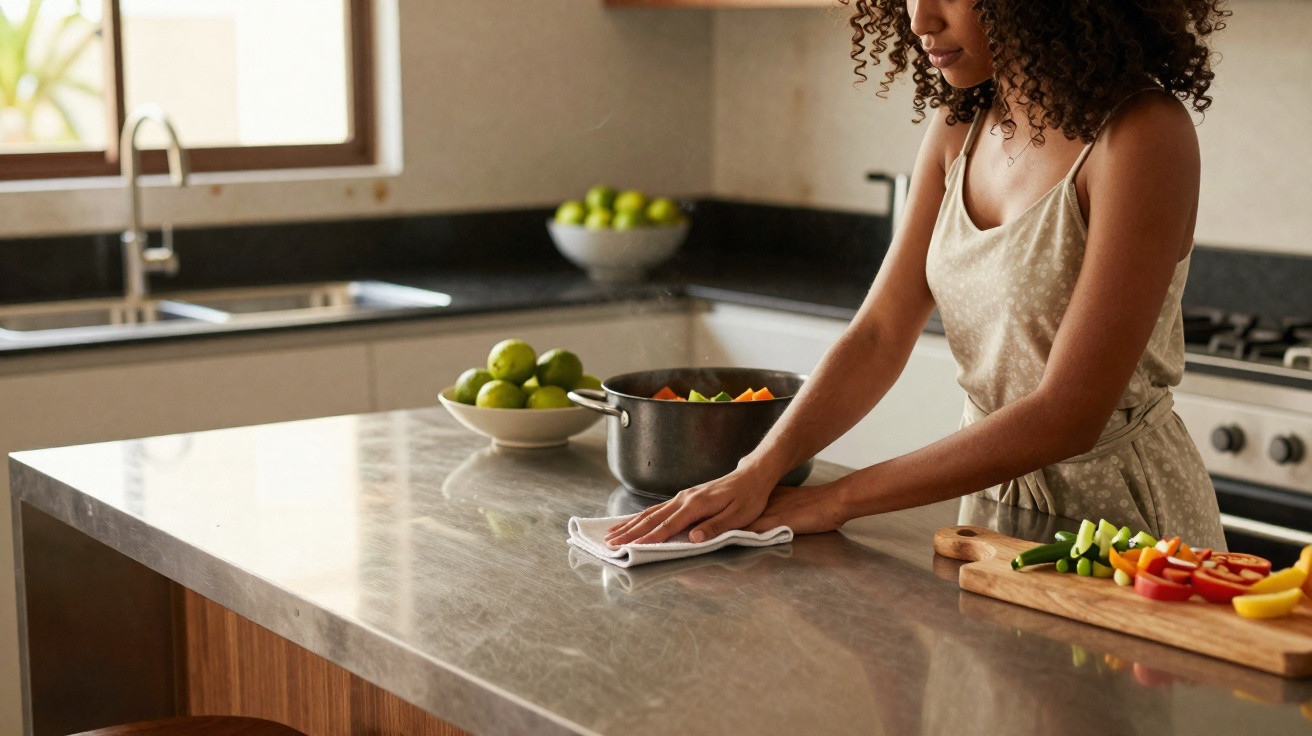
Residential kitchens have changed markedly by 2026, keeping pace with faster day-to-day routines and the trend towards open-plan layouts that merge the kitchen with the living and dining areas. In that context, the choice of worktop material is no longer just an aesthetic finishing touch: it now shapes how the space performs, which is why the stainless steel worktop has become a standout option, competing with traditional granite in both new builds and refurbishments.
Why is the stainless steel worktop gaining ground in the modern kitchen?
Although granite still features in many Brazilian kitchens, stainless steel is appearing more often in compact flats, lofts and fitted kitchens. In a number of designs, the metal surface is selected for heavy-duty food-preparation zones, while natural stone is reserved for secondary work areas or for more social islands.
The stainless steel worktop is closely linked to practicality, hygiene and a contemporary look. Unlike porous surfaces, stainless steel is smooth, absorbs far less liquid and makes it easier to lift away residue-an advantage in everyday kitchens and in open-plan spaces where the prep area is always on show.
Which advantages make a stainless steel worktop stand out in today’s kitchen?
In 2026 interior projects, the stainless steel worktop is turning up in homes with a wide range of lifestyles, not only in professional-style kitchens. The decision typically reflects frequent daily use, long service life and a neutral appearance that sits comfortably alongside light, dark or coloured cabinetry, as well as metallic appliances.
A few practical factors help explain why a stainless steel kitchen worktop has taken on a leading role and is now competing directly with granite, quartz and other established surfaces.
- Easier hygiene: the non-porous surface makes it harder for organic residue and odours to cling.
- Strong day-to-day resistance: it copes well with frequent contact from pans, utensils and minor knocks.
- Adaptable look: it pairs well with natural wood, coloured lacquer finishes or darker schemes.
- Works with appliances: stainless steel cookers and fridges help create a consistent, unified look.
- Refurbishment-friendly: being lighter than some stone options can make adjustments to existing structures simpler.
How to clean and maintain a stainless steel worktop
A stainless steel worktop is hard-wearing, but it still benefits from straightforward care to keep it looking its best. Abrasive scourers and chlorine-based products can scratch or stain the finish, especially on polished surfaces; for that reason, many professionals favour brushed or satin finishes, which are better at disguising everyday marks.
In day-to-day use, cleaning is usually quick and uncomplicated-appealing for anyone with limited time for housekeeping or for those cooking in smaller flats.
- Remove food debris with a soft cloth or a plastic scraper.
- Wipe the entire stainless steel worktop with a mix of water and mild washing-up liquid.
- Rinse using a damp cloth with clean water only.
- Dry thoroughly with a microfibre cloth to reduce water spots and fingerprints.
- Avoid abrasive products, steel wool and chlorine solutions.
Will the stainless steel worktop completely replace granite in Brazilian kitchens?
The rise of the stainless steel worktop does not mean granite worktops are disappearing. What is happening instead is a broader mix of materials, with each one taking on a specific role depending on usage, budget and the desired visual style. In many projects, stainless steel and natural stone sit side by side in the same kitchen, each serving a different function.
For those wanting a more urban feel and simpler cleaning, the stainless steel worktop is likely to be the preferred choice, particularly in smaller flats and open-plan kitchens. In designs that prioritise stronger natural textures, granite remains important. By 2026, stainless steel is no longer limited to industrial kitchens and instead shares centre stage with granite and other finishes, offering an appealing blend of heavy-duty use, straightforward maintenance and a restrained look.
Comments
No comments yet. Be the first to comment!
Leave a Comment