
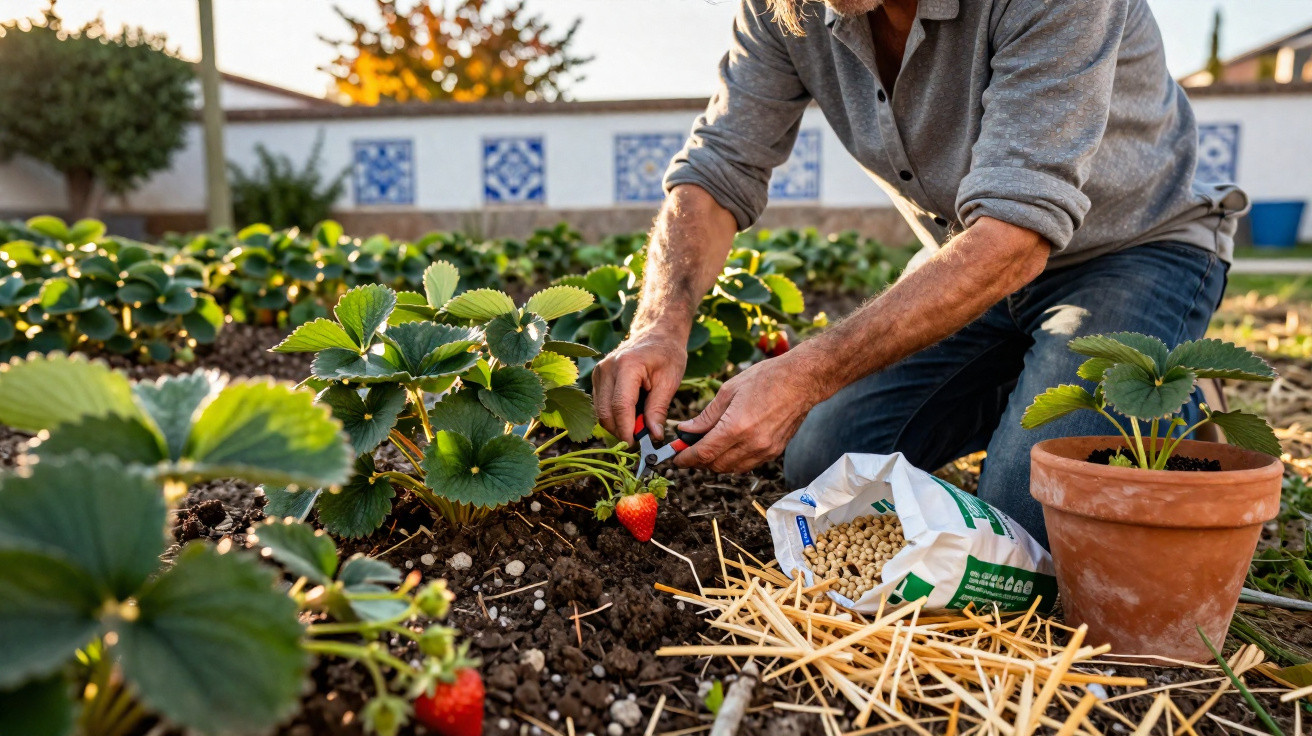
That split second when you decide what to do next determines how smoothly your strawberries move into spring.
As growth slows, the roots keep ticking over and the plant begins building flower buds. Those buds set the limit for next summer’s crop. If you get the autumn jobs right, you increase that potential; get the timing wrong and you throw it away.
Why autumn beats variety
In Britain, strawberry plants form next year’s flower buds as daylight shortens and temperatures hover between 5–15°C. That sweet spot most often lands across September and October. During this phase, the balance of nutrients, moisture, and light dictates how many flower clusters each crown can produce. Cultivar choice still plays a part, but autumn conditions do most of the writing.
Day‑neutral strawberries can keep flowering well into autumn, although temperature still influences how good those buds turn out. June‑bearers usually finish most bud initiation before winter arrives. If plants are stressed now, you’ll typically see fewer trusses and smaller berries later on. Too much nitrogen encourages leafy growth at the expense of flowers. Let the soil dry and crowns shrink; leave it waterlogged and crowns rot.
Most of next summer’s berries are “decided” in autumn. Spring only reveals the work you banked now.
The pre-winter checklist
Clean, thin, and set each crown up to breathe
Strip out leaves that have turned brown, show spotting, or carry signs of grey mould. Pick off and dispose of any mummified fruit, and rake away fallen litter that gives slugs somewhere to hide. Aim for one robust crown per planting station. Snip away surplus runners, keeping only the best‑rooted daughter plant if you’re refreshing the row. Leave roughly 35–40 cm between crowns so air circulates and winter damp can dry quickly after rain.
Confirm the crown sits correctly: the top should be just above the soil surface rather than buried. On heavier ground, raised beds or shallow ridges help water drain away and cut the risk of rot.
Feed for flowers, not leaves
From early autumn, pivot towards potash and calcium. They back bud development, strengthen stems, and improve cold tolerance. A light dressing of sulphate of potash in September can be useful. Steer clear of high‑nitrogen feeds from late August onwards, as nitrogen at this point drives soft new growth that winter is likely to damage.
Keep soil pH close to 5.8–6.5. If your plot runs alkaline, a seaweed‑based tonic can supply trace elements without pushing pH higher. Add only a thin skim of finished compost to support soil biology rather than to build depth, and don’t mound compost up against the crown.
Water smartly before the ground chills
Going into winter, you want soil that’s consistently moist but never saturated. In dry spells, water deeply through October, and into November if your garden misses the rain. Direct water to the root zone and avoid splashing foliage late in the day. Deal with poor drainage where puddles sit; a narrow band of grit or sharp sand along the row can help water move away.
Mulch that protects without smothering
A good mulch limits freeze‑thaw lift and reduces crown damage. Hold off until the first light frost has firmed plants up, then spread 3–5 cm of clean straw, bracken, or shredded, well‑aged leaf mould. Don’t hide the crown. In colder areas, increase cover to 7 cm after a second frost. Once growth restarts in early spring, pull mulch back or remove it from around the crown.
Protect the crown, not the leaves. A thin, airy mulch beats a heavy, wet blanket.
Tackle pests and disease now
If a plant looks weak, check for vine weevil grubs by gently pulling soil back near the crown. The larvae are creamy white, C‑shaped, and usually found close in. Where there are only a few, hand removal can be enough. For slugs, use beer traps and take away damp hiding places. To reduce leaf spot spread, wipe scissors with alcohol between plants. Avoid overhead watering at dusk to lower grey mould pressure.
- Remove runners you don’t need for renewal.
- Reduce crowded patches to one vigorous crown.
- Apply a low‑nitrogen, potash‑rich feed in early autumn.
- Water well during dry spells; don’t allow crowns to sit in puddles.
- Mulch after the first frost and keep crowns visible.
- Check weekly for vine weevil, slugs, and botrytis.
British timing by region
| Region | Clean-up & feed timing | Mulch timing | Typical mulch depth/material |
|---|---|---|---|
| South and south‑west | Final clean-up late September to mid‑October; potash feed by early October | Mulch late October to mid‑November | 3–5 cm straw or bracken |
| Midlands and east | Clean-up early to late October; potash by mid‑October | Mulch early to late November | 4–6 cm straw |
| North and Scotland lowlands | Clean-up late September to early October; potash by early October | Mulch late October to early November | 5–7 cm straw or leaf mould |
| Highlands and frost pockets | Clean-up late September; potash by late September | Mulch soon after first frost | 6–7 cm, check after gales |
For potted strawberries and balconies
Pots lose water quickly and can freeze solid, so they need a different approach. Cluster containers together beside a wall that holds some daytime warmth. For insulation, place pots inside a larger cachepot and pack the gap with scrunched paper or straw. Stand pots on feet so excess water can drain and won’t cause waterlogging. Over winter, keep compost only just moist. Stop feeding in September. Remove runners and any weak, pale foliage. Protect terracotta by wrapping it with hessian or cardboard to reduce cracking.
Resist moving plants into a heated room. Warm conditions can break dormancy and disrupt bud development. A cold frame or a well‑ventilated porch is a better option. Towards late winter, take off any tired surface mulch and add a light fresh layer of compost, leaving crowns clear.
Replace tired beds and bank new runners
After the third year, yields commonly fall as crowns get old. Identify your youngest, strongest plants, then in late summer peg their best runners into fresh soil. If autumn has come early, pot up runners and overwinter them somewhere sheltered. Set those plants into their final positions in spring. To avoid soil‑borne problems, rotate away from previous strawberry ground for at least three years.
One strong crown per planting station gives bigger berries than a clump of weak ones.
The small science behind big crops
For most garden strawberries, cooler weather and shortening days trigger floral induction. Buds created in autumn become the flowers you’ll see next spring. Potassium helps move carbohydrates into the crown, while calcium strengthens cell walls against frost damage. Too much nitrogen blunts these benefits and delays hardening off. Even moisture lets roots store sugars, which work like antifreeze and provide energy for spring growth.
Common mistakes that shrink harvests
- Cutting back or mowing leaves in autumn on June‑bearers. Renovate straight after the summer harvest instead.
- Putting on a thick, damp mulch during October warmth. Wait for frost and keep mulch light.
- Continuing high‑nitrogen feeds beyond August. Leaves increase, flowers decrease.
- Allowing containers to dry out in cold winds. Even dormant plants still lose moisture.
- Skipping vine weevil checks. Grubs can hollow crowns from below.
- Burying crowns when top‑dressing. Keep the growing point above the soil.
What this means for spring
When plants go into winter with plenty of autumn‑formed buds, they produce more trusses, set fruit sooner, and cope better with late frosts. A tidier bed also carries less grey mould into damp May weather. Autumn potash feeding can reduce the gap between first flowering and the first ripe berries. You’re also likely to notice firmer peduncles that support heavier clusters without collapsing onto wet mulch.
Extra tips to stretch results
In autumn, lay cardboard between rows to suppress winter weeds and help keep foliage cleaner. Peg it down and scatter a thin layer of wood chips over the top. In February, low hoops and fleece over a short length of row can bring the first picking forward by one to two weeks; open coverings on bright days to maintain airflow.
Map out a simple rotation now. After year three, move strawberries on, sow a quick green manure in spring where the old bed was, and only return strawberries after a legume break. That pattern supports soil life, reduces disease carry‑over, and spreads the work more evenly across the year.





Comments
No comments yet. Be the first to comment!
Leave a Comment