
Your hands sting with cold after doing the washing-up, the window has misted over, and the radio is droning on about climate targets. Outside it’s wet, black and glistening; inside, the kitchen bin is steadily swallowing up containers that once had a purpose and now feel like nothing more than “rubbish”.
You pause for a heartbeat with your fingers on a jar, then decide not to think too hard and drop it in. It clinks down onto a messy stack of other empties - mustard, olives, pesto - all on their way to that hazy destination we call “recycling”.
Later, as you look at the crowded worktop and the plastic tubs teetering in a pile, the mismatch becomes obvious. You’re discarding solid glass while spending money on more plastic to “organise” the kitchen.
Something about that picture just doesn’t sit right.
Why empty glass jars might be the most valuable things in the kitchen
There’s a familiar winter moment that arrives with every food shop. You unpack the bags, arrange the yoghurts, stack the sauce jars, tuck away the spice mixes… and notice you’ve picked up yet another plastic storage box “for later”. All while a perfectly good glass jar sits there, waiting to be binned tomorrow.
We tend to see packaging as a temporary shell for food, not as a usable object. The branding is what we register; the glass underneath barely gets a look. As soon as the last spoonful has gone, our minds quietly relabel the jar - from “handy” to “waste”.
It happens so quickly it’s almost invisible. The jar hasn’t altered at all: the same weighty glass, the same screw lid, the same capacity to hold something else. What disappears is simply our attention.
Take a look in the bin on a Sunday evening and you can read the pattern instantly. Even in homes that genuinely try to “go green”, the packaging builds up quickly - particularly through colder months, when we lean on jars, sauces, soups and other shop-bought comforts.
In the UK alone, households go through billions of pieces of plastic packaging each year. In the US, estimates suggest over 14 million tonnes of plastic end up in the ocean annually. A lot of it began its life in the most ordinary place: beside a chopping board and a sink, in a kitchen much like yours.
What makes it more frustrating is that plenty of these products could happily be sold and stored in glass instead of plastic. A tomato sauce jar, a honey jar, a jam jar - each is already a ready-made storage solution. No extra manufacturing, no extra delivery, no additional trip to the shops. The problem is that we rarely treat them that way.
A quiet bit of conditioning sits underneath it all. We’ve learned to equate “new” with “better”, and to see “recycled” as the end of our responsibility. So we buy neat, matching plastic boxes and throw away a mismatched assortment of glass jars, reassured that we’re doing the right thing because we’ve put them in the correct recycling.
Glass, though, is built for a different kind of life. It can be cleaned, reused, refilled, sterilised and repurposed. It doesn’t shed microplastics, it won’t warp in the dishwasher, and it doesn’t go cloudy after a few months. And each time you use the jar again, you get more value back from the energy that went into making it.
Using it once is like buying a winter coat and throwing it away after one short walk. Technically you can, but why would you?
Turning empty jars into winter tools: a quiet kitchen revolution with glass jars
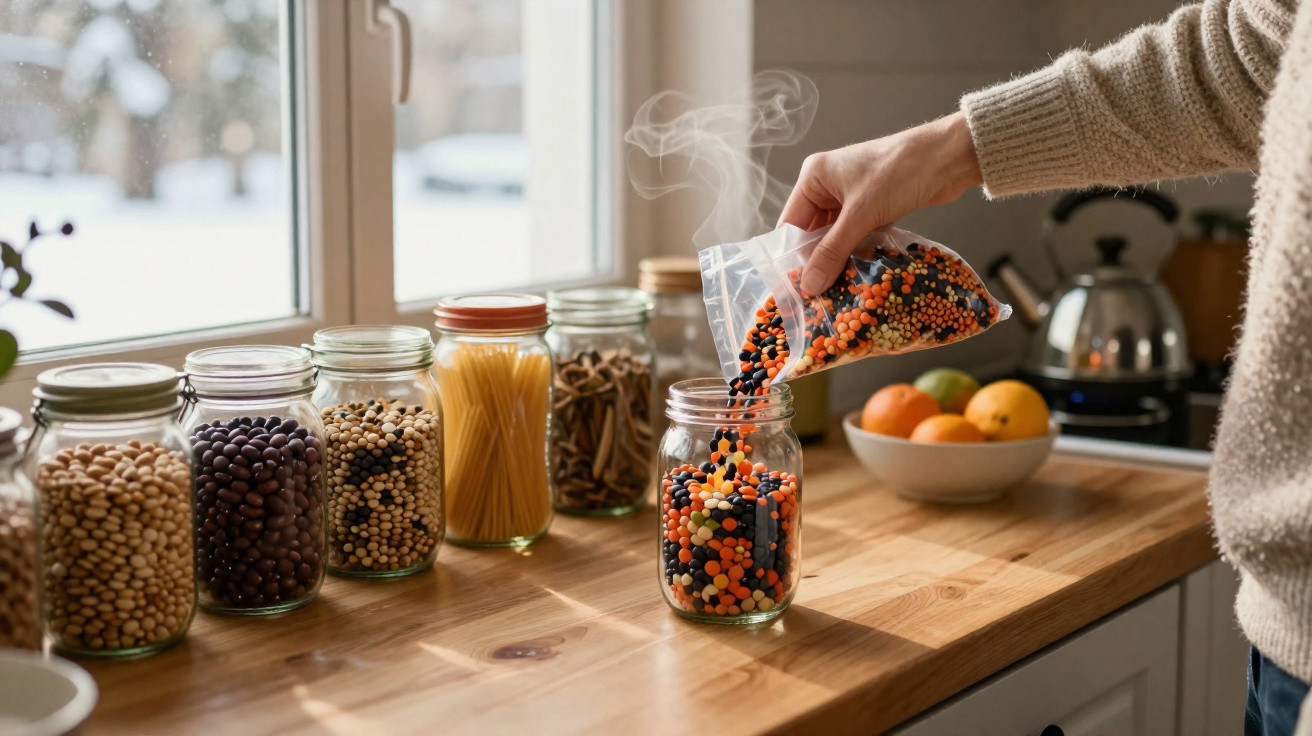
So what if, this winter, you stopped sending every empty jar straight to recycling and started treating it as a tool? Begin modestly. Choose three jars that feel good to handle: perhaps a tall one for pasta, a wider one for nuts, and a small one with a snug lid for spices or tea.
Give them a proper wash, loosen most of the label with hot water plus a little oil or baking soda, then leave them to dry upside down overnight. The next day, tip in whatever you normally keep half-open in a crumpled plastic bag: lentils, rice, oats, that expensive salt you’d forgotten was at the back of the cupboard.
The shelf changes immediately. There’s less plastic crackle and more quiet, clear order. You can see what you already have, so you buy fewer duplicates. And without making a grand plan, you’ve reduced a slice of your plastic demand.
This is where it can become oddly satisfying. Winter kitchens generate lots of small, fiddly leftovers: half an onion, a couple of garlic cloves, a knob of ginger, a bit of homemade vinaigrette, soup that’s too little for a big box but too much to throw away. A jar accommodates all of it with almost comic precision.
One woman I spoke to in London runs what she calls a “soup jar” rotation: three large ex-pickle jars kept permanently in play. On Sundays she pours leftover vegetables, stock and pulses into them, stacks them at the back of the fridge, and suddenly has effortless lunches for the week. No extra tubs, no cling film, and no forgotten Tupperware sulking in the shadows.
There’s a softer, emotional benefit too. On a dull Tuesday evening, opening a jar of homemade hot chocolate mix - cocoa, sugar and a pinch of salt layered neatly - can feel unexpectedly luxurious. It isn’t about being fancy; it’s about the sense of care. The jar turns a random powder blend into a small, repeating ritual.
Under all of this is a simple piece of maths. Each time you reuse a jar, you remove three demands at once: one new plastic container, one extra item of plastic packaging, and one full recycling process. Recycling glass takes energy; reusing the jar means you skip that energy cost entirely, which is a quiet win.
Convenience matters as well. Pulling a jar from your own shelf takes seconds. Ordering storage online, waiting for it to arrive wrapped in more plastic, then reorganising cupboards to accommodate it - that’s effort. The “easy” choice can start to align with the lower-waste one, and habits shift faster than they ever do through guilt.
And the point people rarely say plainly is this: you don’t have to be perfect for it to count. If you keep five jars this winter and they become your standard containers for spices, snacks or soup, that’s five jars that didn’t end their story in a bin lorry. The plastic you never bought won’t appear in any statistics - but you’ll notice the difference every time you open the cupboard.
From recycling guilt to everyday habits: how to make jars work for you
One easy way to start is to set up a small “jar station”. It can be a corner of a shelf, a shoebox, a tray beside the sink - anywhere you can stand four or five clean jars upside down to dry. When a jar becomes empty, don’t take it straight to the recycling; put it in the station for a week.
If seven days pass and it still hasn’t earned a purpose, then recycle it. But you’ll be surprised how often a use turns up: coffee beans to decant, leftover curry, a handful of trail mix for the train. The jar station creates a pause between “this is rubbish” and “this might be useful”.
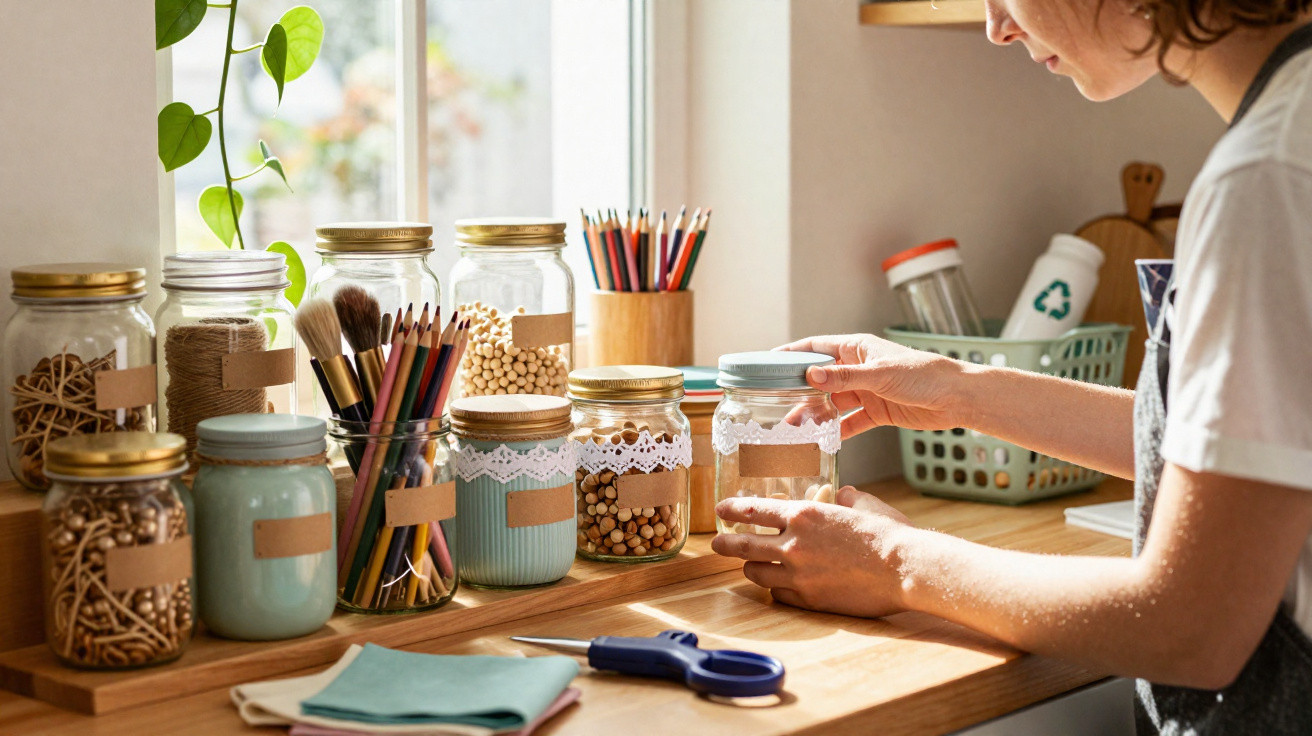
Another helpful approach is to give jars specific jobs. One for homemade dressing, one for overnight oats, one for grated cheese, one as a “winter tea mix” jar with cinnamon, cloves and orange peel ready to drop into a mug. When a jar has a role, it stops reading as clutter and starts functioning like infrastructure.
Most people begin with a burst of enthusiasm and then hit the same snags: labels that cling on stubbornly, shelves full of mismatched sizes, and partners or children who complain everything looks “messy” or can’t tell what’s inside. That’s usually when frustration sets in and the plastic boxes creep back.
Go easy on yourself. This isn’t about creating a Pinterest pantry; it’s about throwing away slightly less and buying slightly less plastic. So only remove the labels that genuinely irritate you - leave the rest if you can. Use masking tape and a pen for contents and dates; it takes ten seconds and saves you from the mystery jar of beige.
And let your collection change over time. If a particular shape annoys you, recycle it next time and keep only the sizes you actually enjoy using. Let’s be honest: nobody does this perfectly every day. Life is busy, winter is draining, and sometimes the jar will end up in the bin. That doesn’t erase the ten occasions when it didn’t.
“The jar is the most underrated object in the modern kitchen,” laughs Marie, a French chef who runs winter cooking workshops. “People pay for plastic that breaks and throw away glass that could last longer than their oven.”
- Use jars for: dry foods (rice, oats, nuts), liquids (sauces, soups, dressings), prepped veg (chopped onions, herbs).
- Avoid jars for: freezing liquids without headspace, very hot contents poured in without cooling, microwave heating with metal lids.
- Quick label hack: date + content on tape; peel off when empty and start again.
That kind of straightforward, almost stubborn practicality is where habits tend to stick - not through guilt, but through small comforts. A calmer shelf. The ease of seeing what you’ve already got. The quiet satisfaction of knowing the jar had a second life before it finally reached the bottle bank.
A winter kitchen that tells a different story
Imagine your kitchen on a cold January night a few weeks from now. The radio still mutters in the background, the window still fogs up, and a couple of pans still wait in the sink. Nothing dramatic - just ordinary life. Yet the room looks subtly changed.
Where there used to be torn packets and flimsy plastic tubs, there’s a row of jars holding small pieces of winter. Porridge oats for dark mornings. Chickpeas ready for a fast stew. The last of the Christmas nuts. A jar of broth made from vegetable scraps you simmered on a quiet Sunday.
You’re not keeping score on “waste saved”. You’re simply moving through a space that feels steadier, less disposable. Twisting a lid onto a jar after making soup or chopping herbs becomes part of the evening’s rhythm - as routine as putting the kettle on.
We don’t often talk about climate or plastic in such small, domestic terms. Yet this is where a lot of change actually happens: not through grand announcements, but through the quiet decision to keep rather than throw away, to repurpose rather than re-buy. One jar at a time, over an entire winter, those decisions begin to show up on your shelves, in your bin and in your shopping basket.
When you’re having a bad day, the world’s plastic problem can feel impossibly vast. On a normal Tuesday, you’re just deciding what to do with an empty pesto jar. That’s the scale at which change feels almost doable. And that may be the real strength of the containers we throw away too quickly: they turn an abstract crisis into a practical gesture - something you can hold, rinse under the tap, and quietly reinvent.
| Key point | Detail | Why it helps you |
|---|---|---|
| Reuse glass jars | Assign a few jars to specific purposes (soups, dry goods, leftovers) | Buy less plastic and make storage simpler |
| Create a “jar station” | A dedicated spot where clean jars wait for a new job | Interrupts the impulse to bin them and encourages new uses |
| Accept imperfection | Rough labels, mixed sizes, flexible routines | Makes the change realistic and sustainable over time |
FAQ:
- Do glass jars really make a difference compared to plastic tubs? Yes. Glass can be reused for years without degrading, doesn’t release microplastics, and every reuse skips a full recycling cycle and a plastic container purchase.
- How many jars should I keep before it becomes clutter? Start with 5–10 in sizes you actually use. If new empties arrive, only keep them if they replace a size or shape you like less.
- What’s the safest way to use jars for hot food in winter? Let food cool a bit before pouring it in, avoid sudden temperature shocks, and don’t screw the lid on tightly until steam has escaped.
- Can I freeze food in glass jars? Yes, if you leave enough empty space at the top for expansion and use thick glass jars. Always thaw gradually in the fridge, not under hot water.
- How do I deal with stubborn labels and smells? Soak jars in hot water, then rub with a mix of oil and baking soda. For odours, leave a spoonful of baking soda inside overnight with the lid off.


Comments
No comments yet. Be the first to comment!
Leave a Comment